


Englishbazar Municipality in West Bengal’s Malda district is facing a new fiscal test after its recently appointed chairman, BJP MLA Amlan Bhaduri, waived a household garbage collection charge, approved a wage increase for contractual workers and introduced a property-tax rebate, according to a report by The Telegraph.
The decisions followed the resignation of Trinamool Congress chairman Krishnendu Narayan Choudhury on September 9. Choudhury cited an acute financial crisis and expressed concern that the municipality would struggle to meet its regular expenses. Bhaduri took charge as chairman on October 7 after a political realignment in the civic body.
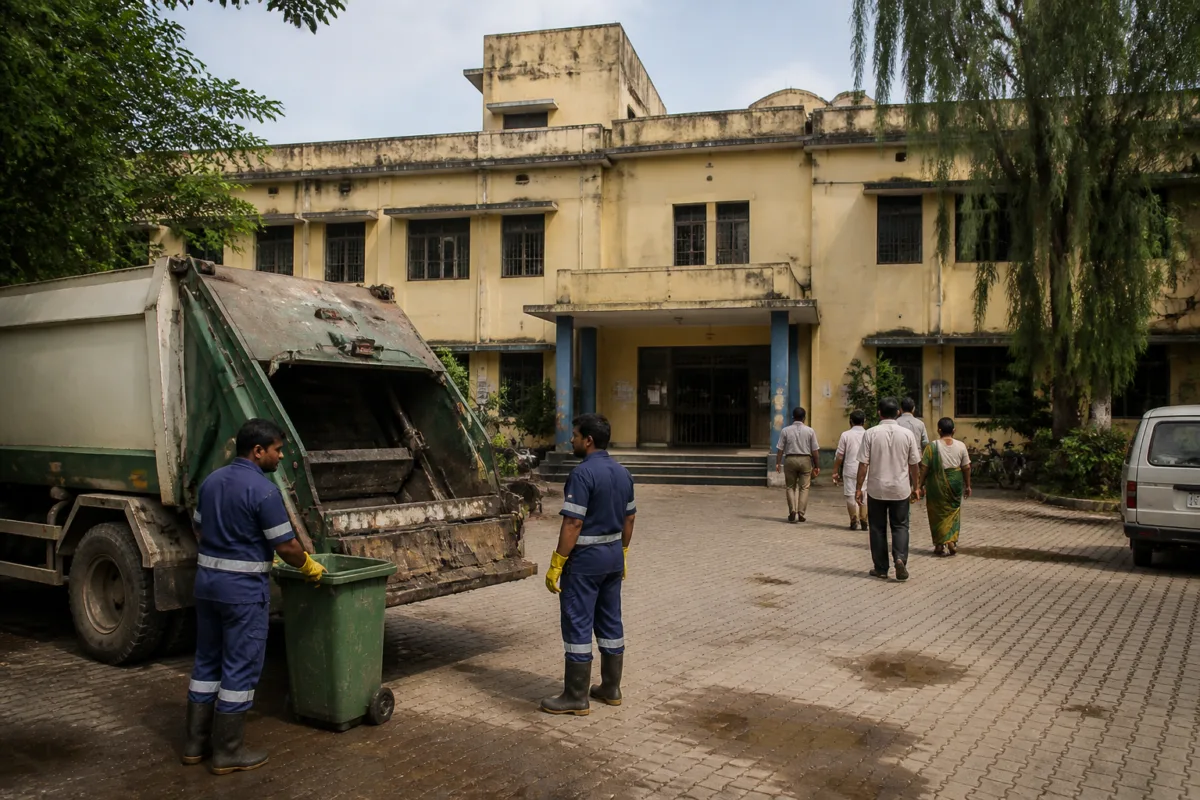
The most immediate revenue decision was the withdrawal of a ₹30 monthly garbage collection charge imposed on households during the previous tenure. The municipality has around 62,000 households. If the charge had been collected from every household, it could have generated about ₹18.6 lakh a month, or approximately ₹2.23 crore a year. Commercial establishments, which were reportedly charged between ₹100 and ₹150 a month, were also exempted.
The charge was a direct link between a municipal service and a dedicated source of revenue. Its removal may provide short-term relief to households and businesses, but it also leaves the civic body with fewer identified funds for waste collection. The report does not establish whether the municipality has secured a replacement funding arrangement or whether service levels will change.
Within a month of taking office, the Bhaduri-led board also announced a 20 per cent wage increase for nearly 1,000 contractual workers. The measure affects a substantial recurring expenditure, although the report does not provide the existing wage bill or the precise monthly cost of the increase.
A 20 per cent rebate for residents who pay property tax within the stipulated period could improve payment compliance and bring forward municipal receipts. However, the immediate effect would be to reduce collections from taxpayers who would have paid on time. Whether the rebate ultimately expands the tax base or simply lowers net revenue will depend on collection performance, taxpayer participation and the municipality’s financial accounting; those figures were not provided in the report.
Englishbazar is also operating under restrictions on the collection of domestic mutation fees and certain other taxes following a court order. The combination of restricted revenue streams, a waived garbage charge, a property-tax rebate and higher contractual wages has therefore raised questions about how the municipality will fund routine operations and public services.
The political change at the municipality adds another layer to the financial debate. In the 2022 municipal elections, Trinamool Congress won 25 of the 29 seats and the BJP won three. After the death of a Trinamool councillor, the party’s strength fell to 24. Eleven Trinamool councillors later declared themselves Independents and supported Bhaduri, enabling him to become chairman despite the BJP’s limited representation in the original election result.
Bhaduri has defended the decisions and said the municipality is exploring alternative revenue sources. He also said the state government would provide financial assistance and that the civic body expected to build a stronger corpus fund. The report does not identify the proposed alternative revenue sources, specify the amount of state support or provide a timeline for building that fund.
The dispute illustrates a central problem in municipal governance: politically popular relief measures can become difficult to sustain when a civic body lacks predictable own-source revenue. Waste collection charges, property taxes, mutation fees and state assistance serve different financial purposes, and replacing one stream with another requires clear estimates, collection systems and public reporting.
For Englishbazar residents, the immediate benefit is lower or deferred payment for selected municipal charges, alongside a potential improvement in contractual workers’ wages. The longer-term question is whether the municipality can maintain waste collection and other routine services without weakening its already constrained finances. That will depend on the board’s promised revenue plan, the scale of any state assistance and transparent disclosure of recurring expenditure and collections.

