


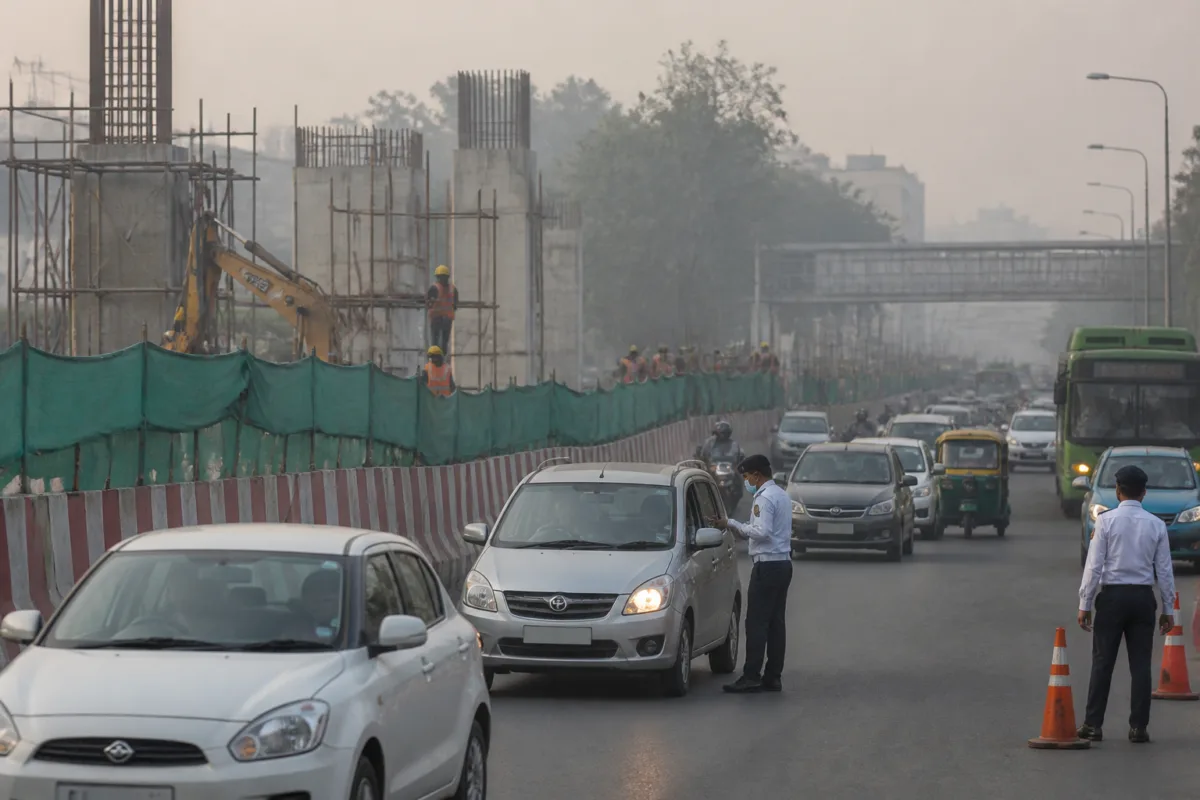
Delhi’s winter pollution curbs take effect on November 1, bringing a ban on dust-generating demolition and outdoor construction activity, restrictions on non-Delhi-registered vehicles below BS-VI standards, mandatory work-from-home for half of office staff and higher parking charges across much of the city.
The fixed-term measures, notified by the Delhi government on June 23, will remain in force until January 31. The doubling of parking charges at authorised parking sites will continue until February 28. The restrictions are intended to address pollution during Delhi’s peak winter pollution window and will apply regardless of the air quality recorded on a particular day.
The construction restrictions cover dust-generating construction and demolition activities. Essential public infrastructure projects are exempted. Finishing, plumbing and electrical work may continue within construction sites, provided projects comply with the Construction and Demolition Waste Management Rules and dust-control requirements.
The vehicle restriction applies to all non-Delhi-registered vehicles below BS-VI emission standards entering or plying in the capital, with exemptions for electric, CNG, emergency and sovereign-duty vehicles. Environment Minister Manjinder Singh Sirsa told The Hindu that enforcement would initially focus on Delhi’s borders. He said he had held discussions with transport department commissioners of neighbouring States and asked them not to send buses below BS-VI standards into Delhi.
The government may take a more gradual approach to enforcement until Deepavali. Mr. Sirsa said the administration would try to avoid inconvenience and would initially request people to follow the directions until the festival. Deepavali falls on November 8, according to the report.
The restrictions also require the Delhi government and private offices to implement 50% work-from-home. Essential and emergency services are exempt. In government offices, administrative Secretaries and Heads of Departments must attend regularly, while officers may be called in when required. Delhi government offices will operate from 10 a.m. to 6:30 p.m., while Municipal Corporation of Delhi offices will work from 8:30 a.m. to 5 p.m. between November 1 and February 28 to stagger travel and reduce congestion.
Parking charges will be doubled at authorised parking facilities, although parking spaces owned and managed by the Delhi Metro Rail Corporation are excluded from the increase. The measure is intended to discourage private vehicle use during the winter pollution period, while the revised office timings seek to spread peak-hour travel.
Special enforcement teams will monitor compliance through automatic number-plate recognition cameras and the artificial intelligence-enabled Integrated Command and Control Centre. Vehicles without a valid Pollution Under Control Certificate will also be denied fuel at petrol stations throughout the year and may face enforcement action under the notification.
The fixed-term plan is separate from the Graded Response Action Plan, under which the Commission for Air Quality Management announces restrictions in stages based on current or forecast air quality. GRAP measures are generally imposed with immediate effect and withdrawn when conditions improve. Delhi’s new measures will remain in place through a defined period, even if air quality temporarily improves.
The Chief Minister’s Office said on October 31 that the Environment Department had completed preparations for implementation. The government’s next steps include border checks for restricted vehicles, deployment of enforcement teams and continued monitoring through cameras and the command centre.

