


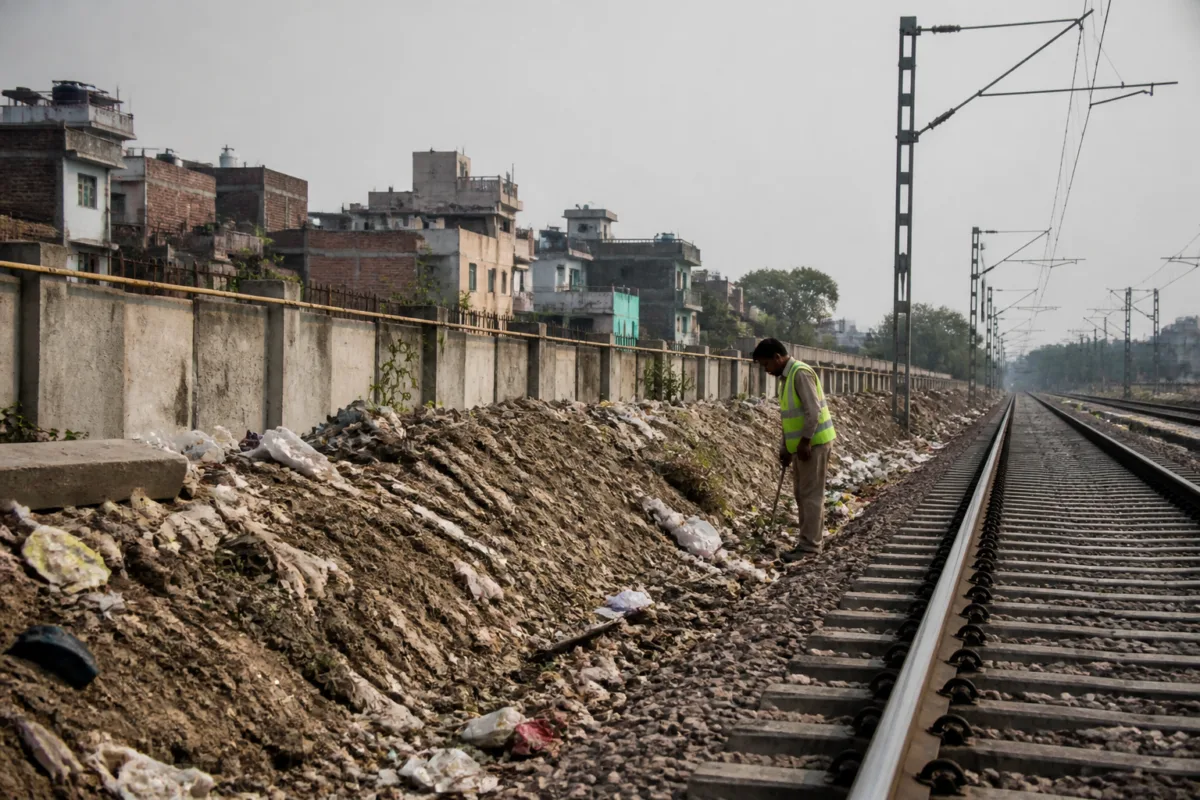
Garbage accumulated along railway tracks in parts of Delhi is creating a recurring sanitation problem and may be adding to local dust pollution, according to a report by Jagran. The issue also raises questions about how waste is cleared from railway edges and whether repeated clean-up drives are preventing fresh dumping.
The report cites a railway assessment that Delhi has 365.2 kilometres of railway tracks, with hazardous garbage and waste reported at 125 locations covering 18.93 kilometres. It identifies Lajpat Nagar, Nand Nagri and the area around Mansarovar Park among the affected locations.
At Lajpat Nagar, near the Bypass A cabin, the report describes a roughly 300-metre stretch carrying accumulated waste beside a protective boundary. Slum settlements are located on one side of the track and the boundary on the other. Cleaning is reported to take place intermittently, but the waste is not removed completely, allowing new accumulation.
In Nand Nagri and Mansarovar Park, railway lines pass through or near residential areas where people are reported to dump waste in relatively secluded locations. The report says residents attributed the repeated dumping partly to the lack of regular cleaning and the accessibility of the trackside spaces.
The urban impact extends beyond visible litter. Dry waste, soil and construction debris can become sources of dust when disturbed by wind, passing trains or nearby activity. The report links this dust to discomfort for nearby residents and says the waste is contributing to concerns about air pollution. It does not provide air-quality measurements or a separate study quantifying the contribution of railway-edge waste to Delhi’s pollution levels.
The Municipal Corporation of Delhi has previously conducted special cleaning campaigns around railway lines. Jagran reported that the civic body claimed to have removed 5,997 tonnes of waste during a campaign held between August and October. It also reported that 18,495 metric tonnes had been removed in April. Despite these efforts, waste was still visible at several locations described in the report.
The civic body is reported to have spent about Rs 6 crore on the work so far. The continuing accumulation suggests that removal alone has not addressed the conditions that enable dumping, including gaps in regular collection, weak control of access to trackside areas and the absence of sustained monitoring. These factors are presented in the report as local observations and reported administrative concerns, rather than as the findings of an independent evaluation.
The issue has also received attention at the central-government level. A meeting chaired by the Union home secretary in the previous fortnight reportedly directed the MCD to prepare a comprehensive action plan within 20 days. The proposed plan includes surveying settlements and colonies near railway lines, providing regular door-to-door waste collection, ensuring proper disposal and taking measures to prevent waste from accumulating again.
For residents living beside railway corridors, the problem is therefore both a public-health concern and a service-delivery issue. A clean-up campaign can remove existing waste, but lasting improvement will depend on whether collection services reach nearby settlements, whether dumping points are controlled and whether the MCD and railway authorities maintain clearly assigned responsibilities. The report provides no update on the completion or public release of the 20-day action plan, leaving implementation and accountability unresolved.

