


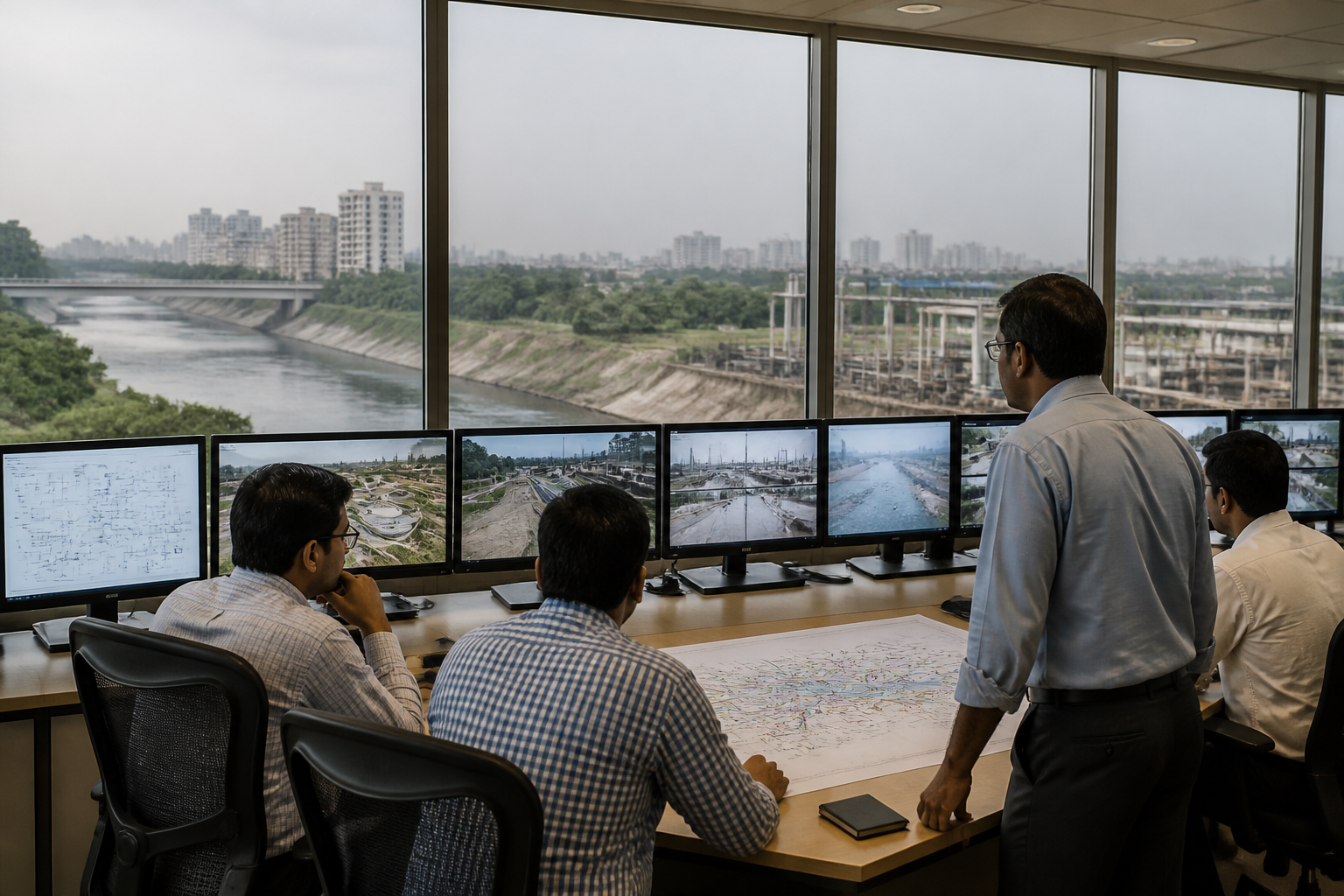
The Delhi Jal Board’s Jal Manthan 2026 conclave placed Delhi’s water security problem in a wider frame: the city cannot treat drinking-water supply, sewage, wastewater reuse, drain management and Yamuna pollution as separate administrative tasks. The two-day meeting, which concluded on September 16, brought these linked functions together under six themes, but the more important question is whether that integrated framing can move from discussion into utility operations.
According to a report by Millennium Post – Delhi, the conclave brought together water experts, technology specialists, utility practitioners, administrators and representatives of multilateral organisations from India and abroad. The Delhi Jal Board identified 24×7 quality water supply, a circular water economy, a future-ready workforce, Digital DJB, financial sustainability and Yamuna rejuvenation as the central themes.
That list is significant because it describes water security as a system rather than as a single supply target. A city may expand the volume of water entering its distribution network and still remain insecure if supply quality is unreliable, sewage is not collected, wastewater is not treated or treated water is not reused. Similarly, the rejuvenation of the Yamuna cannot be separated from the performance of the drains and sewage-treatment infrastructure that carry pollution into the river.
The report says experts at the conclave stressed an integrated approach covering water supply, sewage collection and treatment, wastewater reuse, drain management and pollution control. The emphasis matters institutionally. These functions may be discussed together, but they require coordination across planning, engineering, operations, finance, technology and environmental management. A water utility’s performance is therefore not captured by one headline measure, such as the number of households connected to a network.
The first theme, 24×7 quality water supply, combines two different obligations. Continuous availability concerns the reliability of the network, while quality concerns the condition of the water delivered through it. The source material does not provide a new supply target, coverage figure, water-quality assessment or implementation schedule from the conclave. It does, however, show that the DJB’s stated discussion framework treats quality and continuity as part of the same urban service question.
This distinction is important for how citizens experience water services. A network can exist without providing a dependable service throughout the day. It can also provide intermittent supply while leaving households to manage storage and uncertainty. The report does not quantify these conditions in Delhi, so no conclusion can be drawn from the conclave report about the current performance of the city’s distribution system. What can be established is that the DJB has placed 24×7 quality water supply among its principal areas of concern.
The second theme, a circular water economy, points to a shift away from viewing wastewater only as a disposal problem. The report links the conclave’s broader discussion to sewage collection and treatment and wastewater reuse. In a circular approach, the value of water is considered across multiple stages: supply, use, collection, treatment and potential reuse. For Delhi, that framing connects household and institutional consumption with the operation of sewage networks, treatment facilities and systems for managing the treated output.
The supplied report does not state how much wastewater Delhi currently reuses, which sectors would receive it, or what new infrastructure is being planned. Those details are essential for judging whether the circular water economy theme will produce an operational change. Without them, the conclave can be read as setting an agenda rather than announcing a completed policy or project. The distinction matters because water reuse depends not only on treatment capacity but also on collection networks, quality standards, distribution arrangements and user acceptance, none of which are detailed in the source.
The link to Yamuna rejuvenation makes the system-wide approach more direct. River pollution is often visible at the point where a drain meets the river, but the underlying chain begins earlier with sewage collection and treatment. Drain management and pollution control therefore sit between the city’s built-up areas and the river’s condition. The report records the DJB’s intention to discuss these elements together, but it does not identify specific drains, treatment plants, pollution loads, deadlines or enforcement measures.
That absence does not make the conclave irrelevant. It clarifies what the event has and has not established. It has established a set of six institutional priorities and recorded expert support for an integrated approach. It has not, on the evidence supplied, established a funded implementation plan, a new operating standard or a measurable improvement in Delhi’s water or river conditions.
The inclusion of a future-ready workforce is another indication that the DJB’s challenge is not only about physical infrastructure. Water and wastewater systems require staff who can operate treatment facilities, maintain distribution and sewer networks, interpret data, manage customer-facing services and respond to failures. The source does not specify the proposed skills, recruitment model or training programme. It nevertheless places workforce capacity alongside supply, digital systems and finance, suggesting that institutional capability was treated as part of water security rather than as a separate human-resources issue.
Digital DJB similarly signals a technology and administration agenda. Digital systems can be relevant to asset records, service monitoring, complaints, billing, water-quality information and operational coordination. However, the report does not identify a particular platform, technology procurement, data architecture or delivery timeline. It would therefore be premature to describe the conclave as launching a digital transformation. The evidence supports only the narrower conclusion that digital administration was one of the six themes under discussion.
Financial sustainability is perhaps the theme that connects all the others. Continuous supply, sewage collection, treatment, reuse, digital systems and workforce development require recurring expenditure as well as capital investment. A utility may announce infrastructure expansion, but the service depends on its ability to operate, maintain and eventually renew those systems. The report does not provide DJB revenue figures, expenditure estimates, tariff proposals, funding commitments or a financial model. It does show that the organisers considered finance important enough to place it alongside service delivery and environmental objectives.
This is the central governance challenge exposed by the conclave: water security is a chain, and weak performance at one point can limit gains elsewhere. Better treatment without adequate sewage collection leaves pollution pathways unresolved. More supply without reliable distribution does not automatically produce dependable household service. Digital systems without trained staff and sustainable financing may not improve operations. Yamuna rejuvenation without control over pollution entering through drains cannot be treated as a standalone riverfront exercise.
The event also illustrates the difference between coordination and implementation. Bringing experts, administrators, utility practitioners, technology specialists and multilateral representatives into one forum can help align the language used by institutions working on related problems. But coordination becomes meaningful only when it produces assigned responsibilities, budgets, timelines, measurable service standards and public reporting. None of those outcomes is specified in the supplied report, so the next stage of the DJB’s work remains unclear from the available evidence.
For Delhi residents, the practical test will not be the number of themes discussed at a conclave. It will be whether water arrives reliably and meets quality expectations, whether sewage is collected and treated, whether treated wastewater is put to safe use, and whether pollution-control efforts improve the Yamuna. These are not separate citizen concerns. They are connected experiences of the same urban water system.
The report confirms that the DJB has articulated an integrated agenda through Jal Manthan 2026 and that experts stressed coordination across supply, sewage, reuse, drains and pollution control. It does not yet confirm new targets, funding, infrastructure commitments or performance results. The developments that deserve monitoring are therefore the official next steps from the conclave: whether its six themes become a documented action plan, which institution receives responsibility for each area, and what timelines and measures are set for delivery.
