


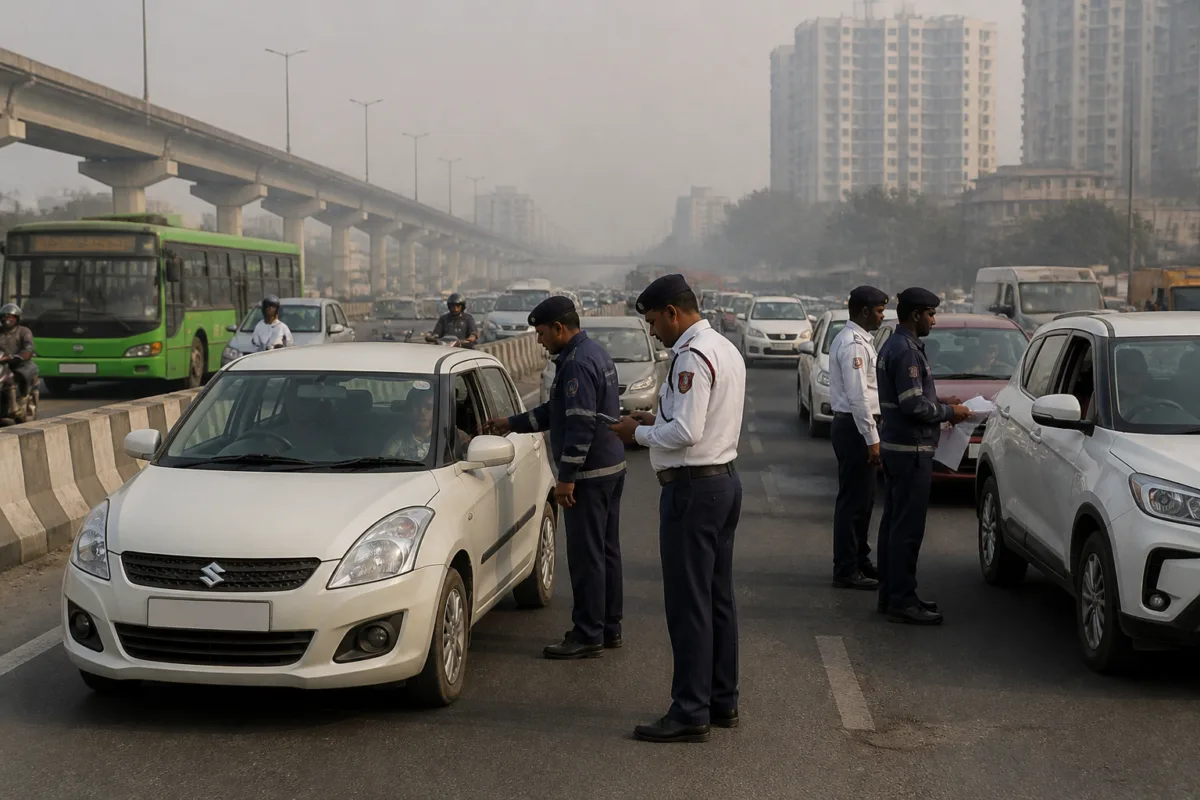
Delhi’s vehicle ban will bar vehicles registered outside the capital that do not meet BS-VI emission standards from entering the city between November 1 and January 31, affecting more than 10 lakh personal and commercial vehicles from neighbouring areas, according to a report by The Times of India.
The restriction is expected to affect commuters travelling into Delhi from Noida, Greater Noida, Ghaziabad, Gurugram and Faridabad. The report estimates that more than four lakh vehicles from Noida and Greater Noida, four lakh from Ghaziabad, and two lakh from Gurugram and Faridabad could be taken off the roads during the enforcement period.
The move has raised practical concerns for people who live in the neighbouring cities but work in Delhi. Questions include how residents will travel to work, collect family members from Indira Gandhi International Airport late at night, or reach hospitals in emergencies when their own vehicles cannot cross into the capital. The report said citizens remained worried and confused about how the restrictions would operate in such situations.
CNG and electric vehicles will be allowed to enter Delhi. Specified emergency and sovereign-duty vehicles, including ambulances, fire tenders and police vehicles, will also be exempt, according to the report. Sources cited in the report said enforcement would take emergencies into account.
The Delhi Metro Rail Corporation has already added 20 weekday trips since October 22, following the invocation of Stage I of the Graded Response Action Plan. A DMRC official said the additional services were introduced to encourage people to use public transport instead of personal vehicles. If Stage II of GRAP comes into effect, another 20 trips will be added, taking the total number of additional trips to 40.
The need for extra capacity is underscored by the Metro’s response during earlier pollution episodes. On November 18, 2024, the system recorded 78.7 lakh passenger boardings as Delhi’s air quality index reached 494, which was then its highest recorded ridership level, the report said. The figure indicates the scale of pressure that can shift onto public transport when road access is restricted and pollution-control measures intensify.
Government and private offices have also been directed to reduce staff strength by 50% from November 1 to January 31, 2027, according to the report. This measure is intended to reduce daily travel demand during the enforcement period, although the report did not specify how individual employers would implement the directive.
The Transport Department will deploy 300 enforcement personnel to implement the vehicle ban. Automatic number plate recognition cameras already installed at petrol pumps will also be used to scan registration plates and identify vehicles based on their registration details and emission-standard eligibility.
The restrictions place the Delhi-NCR transport system under coordinated pressure: road access for older out-of-state vehicles will be limited, Metro services will be expanded, and workplaces will be asked to operate with fewer staff on site. Enforcement is expected to begin on November 1 and continue through January 31, with further Metro trips linked to the possible escalation of GRAP measures.

