


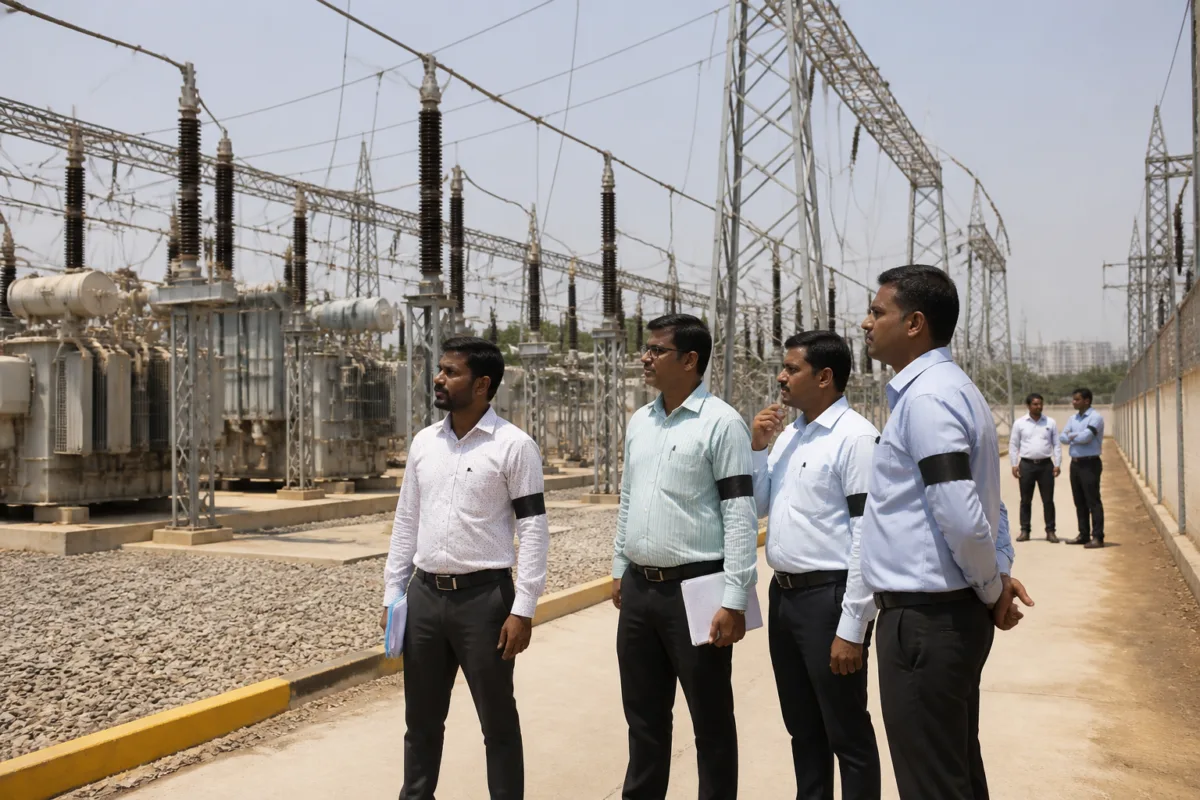
Gujarat power engineers have announced a phased protest against staff shortages and additional workloads, beginning with black-badge demonstrations on October 30 and escalating to work-to-rule from November 1. The Gujarat Electricity Board Engineers Association has demanded recruitment against sanctioned posts and a decision on financial compensation for additional responsibilities.
The association has expressed dissatisfaction with the administrative functioning of state transmission utility GETCO, according to a report by Nav Gujarat Samay. It said engineers have been assigned extra work for a long period without additional financial benefits, increasing the burden on existing staff.
The protest comes after a period in which the risk of a broader power crisis in Gujarat was described as having eased. The association’s concerns centre on the expansion of field infrastructure without a corresponding increase in engineering personnel. It said approximately 100 new substations are added every year, while adequate recruitment has not taken place to manage the growing operational requirements.
Under the announced programme, engineers will wear black bands while performing their duties from October 30 and hold demonstrations outside administrative offices. From November 1, they will follow work-to-rule procedures and stop undertaking additional responsibilities beyond their assigned duties.
The association has called for vacancies to be filled in accordance with the sanctioned staff strength approved by the government. It has also sought an appropriate decision on the additional workload being carried by engineers and the financial benefits linked to those duties.
The announcement does not state that electricity supply will be disrupted or that a power emergency has been declared. Its immediate effect is expected to be on the way engineers undertake work within the transmission system, particularly where existing staff have been handling responsibilities beyond their regular assignments.
The staffing issue reflects the administrative pressure created when electricity infrastructure expands faster than the workforce responsible for operating and maintaining it. The association’s reference to the annual addition of around 100 substations places recruitment at the centre of the dispute rather than treating the protest as a one-day industrial action.
The engineers’ association has warned that the agitation could be intensified if the pending demands are not resolved by the government. The announced next step is the adoption of work-to-rule from November 1, following the black-badge demonstrations and protests outside administrative offices.

