


Delhi will restrict the entry and operation of petrol and diesel vehicles registered outside the capital that do not meet BS-VI emission standards during the winter pollution season, with the annual restriction set to run from 1 November to 31 January. CNG and electric vehicles will be exempt, according to a public notification issued by the Delhi Transport Department.
The restriction is part of Delhi’s winter action plan, when air quality typically deteriorates and vehicle emissions become a major enforcement concern. The government said the measure is intended to limit vehicular emissions and reduce dust generated on roads during the period when pollution levels are at their worst.
From 1 November 2026, out-of-state-registered commercial goods vehicles that do not meet BS-VI standards will not be allowed to enter Delhi. The restriction covers large, medium and heavy goods vehicles. Buses operating under All India Tourist Permits and other arrangements will also be barred if they do not meet the applicable BS-VI requirement.
The rule is intended to be applied every year between 1 November and 31 January, making it a recurring seasonal restriction rather than a one-time emergency measure. Its effect will extend beyond Delhi’s borders because a large share of goods movement, inter-city bus services and daily commuting in the National Capital Region depends on vehicles registered in neighbouring states.
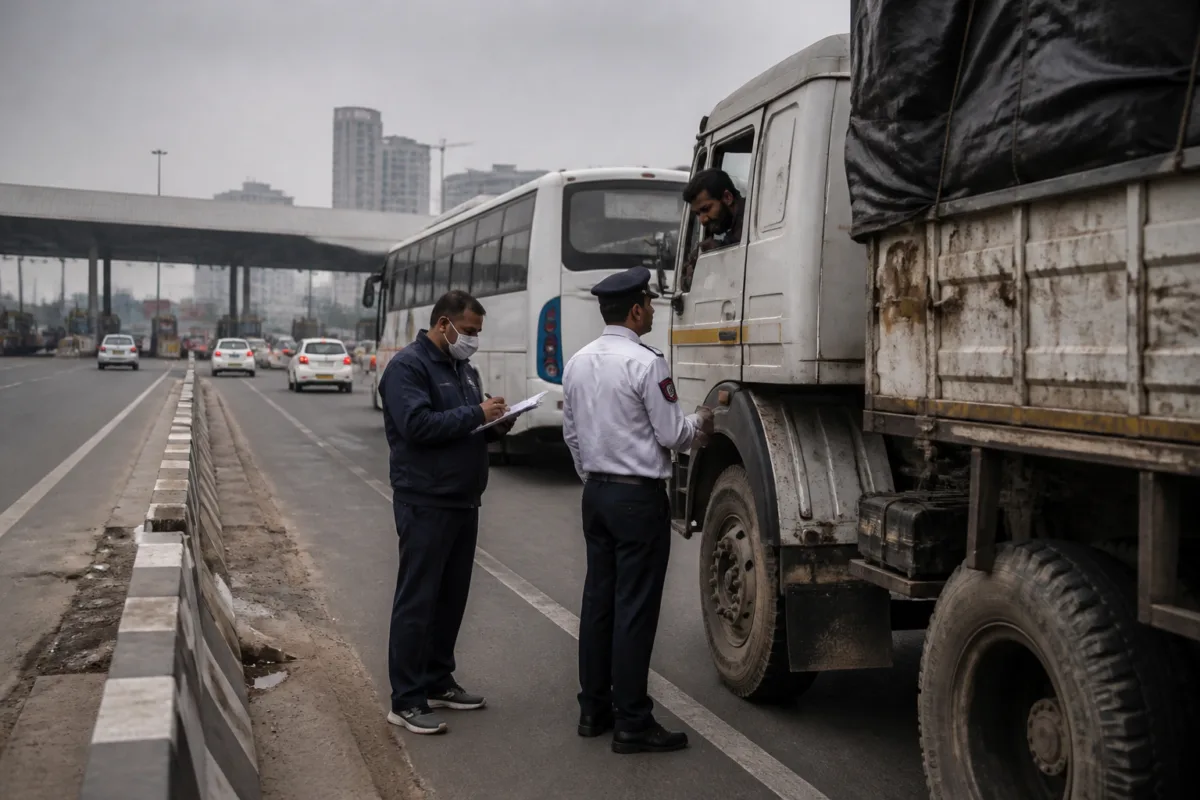
The Transport Department has deployed about 250 enforcement personnel at major entry points, toll plazas and locations identified as heavily polluted. Personnel have been stationed at the DND border, Rajokari on National Highway 48, Ghazipur, Singhu Border, Tikri and Badarpur, among other major entry points and toll locations.
The enforcement arrangement places the border points at the centre of the policy. Vehicles approaching Delhi from Uttar Pradesh, Haryana, Punjab, Himachal Pradesh and other states may face checks before entering the capital. The department has also written to neighbouring states, including Punjab, Uttar Pradesh and Himachal Pradesh, urging them to encourage electric vehicles and support the conversion of diesel vehicles to BS-VI standards, according to officials cited in the report.
The exemption for CNG and electric vehicles is significant for inter-city operators and commercial users because it preserves access for vehicles using fuels classified by the authorities as cleaner alternatives under the winter plan. The supplied notification does not specify the process for exemptions, vehicle conversion certification or the penalties that will apply to non-compliant vehicles.
The announcement comes as the Commission for Air Quality Management has already activated Stage III measures under the Graded Response Action Plan in Delhi-NCR because of deteriorating air quality. The transport restriction therefore forms part of a wider emergency response framework, although the Transport Department’s notification establishes the vehicle-entry rule as an annual winter measure.
The immediate implementation challenge will be coordinating checks across Delhi’s multiple borders while keeping freight, bus and commuter movements compliant. The next operational steps are the enforcement of the notification at the identified entry points and continued coordination with neighbouring states before and during the 1 November to 31 January restriction period.

