


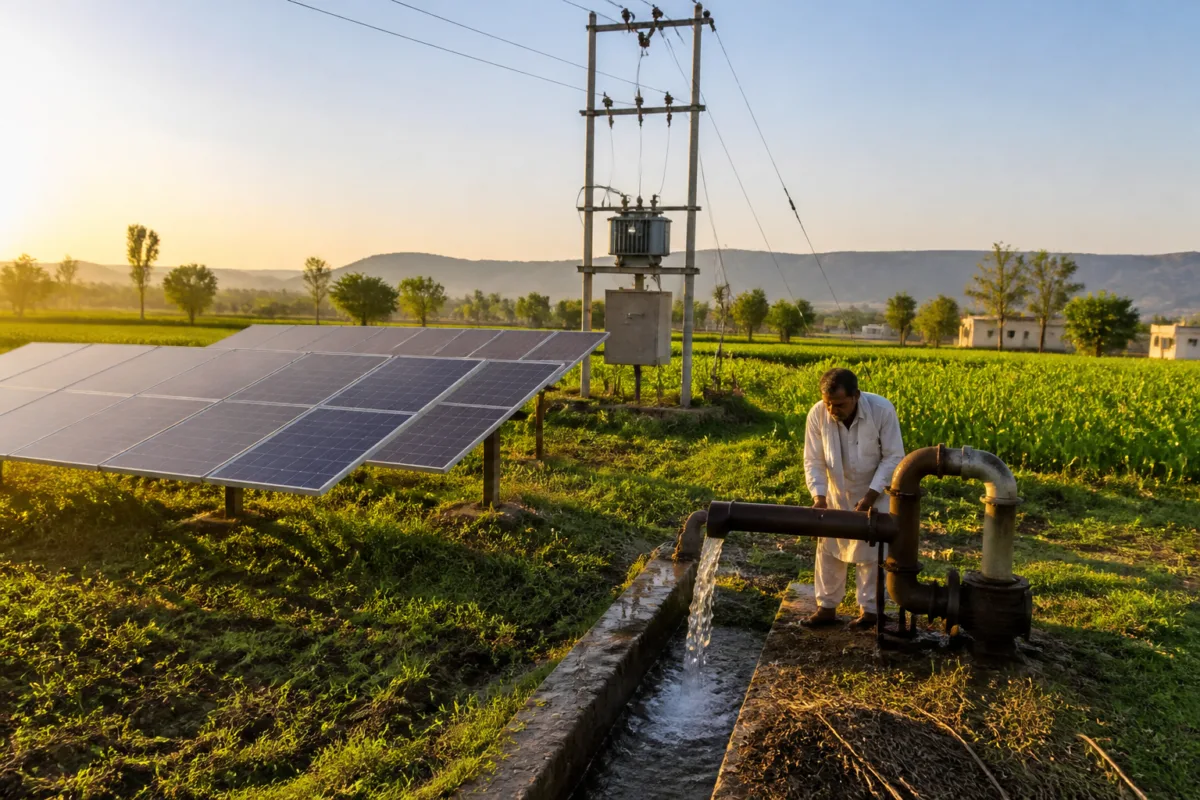
Maharashtra’s solar scheme is now supplying daytime electricity to 80% of agricultural pumps, with the state planning to extend solar-powered daytime supply to all farm pumps by the end of March next year, according to Mahavitaran.
The progress has been reported under the Chief Minister Solar Agriculture Feeder Scheme 2.0, which is being implemented on the lines of the Centre’s PM-KUSUM programme. The scheme aims to improve the availability of electricity for irrigation by adding decentralised solar-generation capacity across the state.
Under the plan, solar power projects with a combined capacity of 16,000 megawatts are to be developed in a distributed manner. Around 7,000 megawatts of projects have been completed so far, Mahavitaran said. Electricity generated by these projects, along with other technical measures, has enabled daytime power supply for 80% of agricultural pumps.
The shift is significant for farmers who have traditionally depended on power availability at different times of the day for irrigation. Mahavitaran said solar energy is providing farmers with a dependable source for irrigation and allowing them to operate pumps when required, rather than adjusting irrigation activity around uncertain supply timings.
According to the utility, access to daytime solar power is also helping reduce water wastage. Farmers can irrigate at a time when they need to, while the utility said it has observed improvements in agricultural productivity associated with the availability of solar power. The report did not provide crop-wise productivity figures or details of the number of pumps covered.
Maharashtra has also taken a leading position in the installation of solar agricultural pumps. Mahavitaran said 65% of the total solar agricultural pumps installed in India are located in the state. The figure places Maharashtra at the centre of the country’s effort to connect farm irrigation more closely with decentralised renewable-energy generation.
The state’s next stated milestone is to provide daytime solar electricity to 100% of agricultural pumps by the end of March next year. Achieving that target will depend on the completion and commissioning of the remaining projects, as well as the technical integration needed to extend supply across the uncovered agricultural feeders. Mahavitaran has not provided a district-wise schedule for reaching full coverage.

