Delhi PWD Decongestion Plan Reshapes Traffic Network
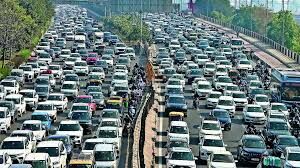
Delhi is preparing a large-scale road infrastructure push aimed at easing chronic traffic congestion across some of its busiest corridors, with the Public Works Department outlining a network of new flyovers, underpasses and upgraded road links spanning nearly 150 kilometres. The plan targets long-standing choke points that disrupt daily commutes and economic activity across the capital. The proposed interventions include close to 46 kilometres of grade-separated structures—flyovers and underpasses—focused on high-density traffic zones such as ITO, Ring Road, central business districts, and key airport-bound routes.
These locations have historically struggled with bottlenecks caused by mixed traffic flows, signal delays and limited right-of-way. Beyond isolated junction upgrades, the approach signals a shift towards corridor-based planning. Elevated stretches and new link roads are being considered across multiple zones, including outer and peri-urban areas, to improve connectivity between residential clusters and employment hubs. Urban planners note that such integrated corridors can reduce travel time while redistributing traffic loads more evenly across the network.
However, the scale of the Delhi decongestion plan also raises questions about long-term sustainability. While flyovers and underpasses offer immediate relief, they often risk inducing additional traffic demand over time—a phenomenon widely observed in expanding metropolitan regions. Experts argue that without parallel investment in public transport and non-motorised mobility, infrastructure-led solutions may offer only temporary gains. The planning process appears to incorporate technical assessments, with feasibility studies examining traffic patterns, land use constraints and cost-benefit outcomes before finalising designs. This includes evaluating whether specific stretches require elevated roads, tunnels or signal-free corridors. Such studies are expected to factor in not just engineering feasibility but also environmental and social impacts. For citizens, the implications are immediate. Reduced congestion could mean shorter commute times, lower fuel consumption and improved air quality in heavily polluted corridors. Yet, construction phases may temporarily disrupt mobility and local economies, particularly in dense neighbourhoods where road space is already constrained.
There is also a broader urban development angle. Delhi’s growth has increasingly been shaped by peripheral expansion, leading to longer travel distances and higher reliance on private vehicles. In this context, the Delhi decongestion plan can be seen as both a response to and a reflection of evolving land-use patterns. Mobility experts suggest that the effectiveness of such interventions will depend on integration. Linking road upgrades with bus priority systems, metro connectivity and pedestrian infrastructure could help ensure that capacity gains translate into inclusive mobility rather than car-centric growth. As feasibility studies progress and project timelines are defined, the initiative will test whether infrastructure expansion alone can resolve congestion in one of India’s most complex urban systems. The outcome will likely influence how future city planning balances speed, sustainability and equitable access in a rapidly growing capital.