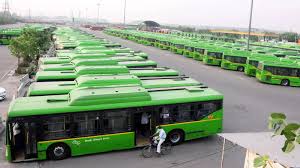
Delhi’s public bus operator is showing early signs of financial recovery after years of sustained losses, with a notable rise in earnings in the current fiscal year signalling a potential shift in how urban mobility systems can stabilise through operational and policy adjustments. Recent financial data indicates that the Delhi Transport Corporation (DTC) recorded an increase of approximately ₹173 crore in total income during 2025–26, taking overall earnings close to ₹1,000 crore.
This marks a significant turnaround for a system long burdened by mounting liabilities and operational inefficiencies. The improvement reflects a broader recalibration within Delhi’s public transport ecosystem. Analysts tracking urban mobility point to a combination of higher ridership, diversified revenue streams, and incremental efficiency gains. Monthly earnings have also seen a substantial jump, rising by over 30% compared to the previous year, indicating sustained momentum rather than a one-off spike. For a city grappling with congestion, pollution, and inequitable access to mobility, the revival of its bus network carries implications beyond balance sheets. Public buses remain the most accessible mode of transport for low- and middle-income residents. A financially stable system allows for better fleet maintenance, route expansion, and service reliability—critical factors in shifting commuters away from private vehicles.
Revenue gains have been supported by multiple streams, including ticketing, pass sales, and non-fare sources such as advertisements and special services. Policy-driven subsidies, particularly those aimed at improving women’s mobility, continue to play a role in sustaining ridership while shaping a more inclusive transport network. However, the recovery remains partial when viewed against the corporation’s historical financial stress. DTC has accumulated significant liabilities over the years, and experts caution that revenue growth alone may not be sufficient without structural reforms. These include route rationalisation, fleet modernisation, and a transition towards electric buses to reduce operating costs and emissions. Urban planners also highlight the need to align financial recovery with sustainability goals. A stronger bus network can support Delhi’s climate commitments by reducing dependence on private vehicles, lowering emissions, and improving air quality. Integrating buses with metro systems and last-mile connectivity solutions is seen as essential for building a cohesive, low-carbon transport grid.
There is also a governance dimension. The recent uptick suggests that targeted administrative interventions—such as better route planning and utilisation of assets—can yield measurable outcomes. Yet, long-term viability will depend on consistent policy support, transparent financial management, and investments in infrastructure. As Delhi continues to expand its transport infrastructure, the performance of its bus system will remain a critical indicator of whether growth is translating into equitable and sustainable urban mobility. The current trajectory offers cautious optimism, but maintaining momentum will require balancing financial discipline with the social role public transport is expected to serve.