


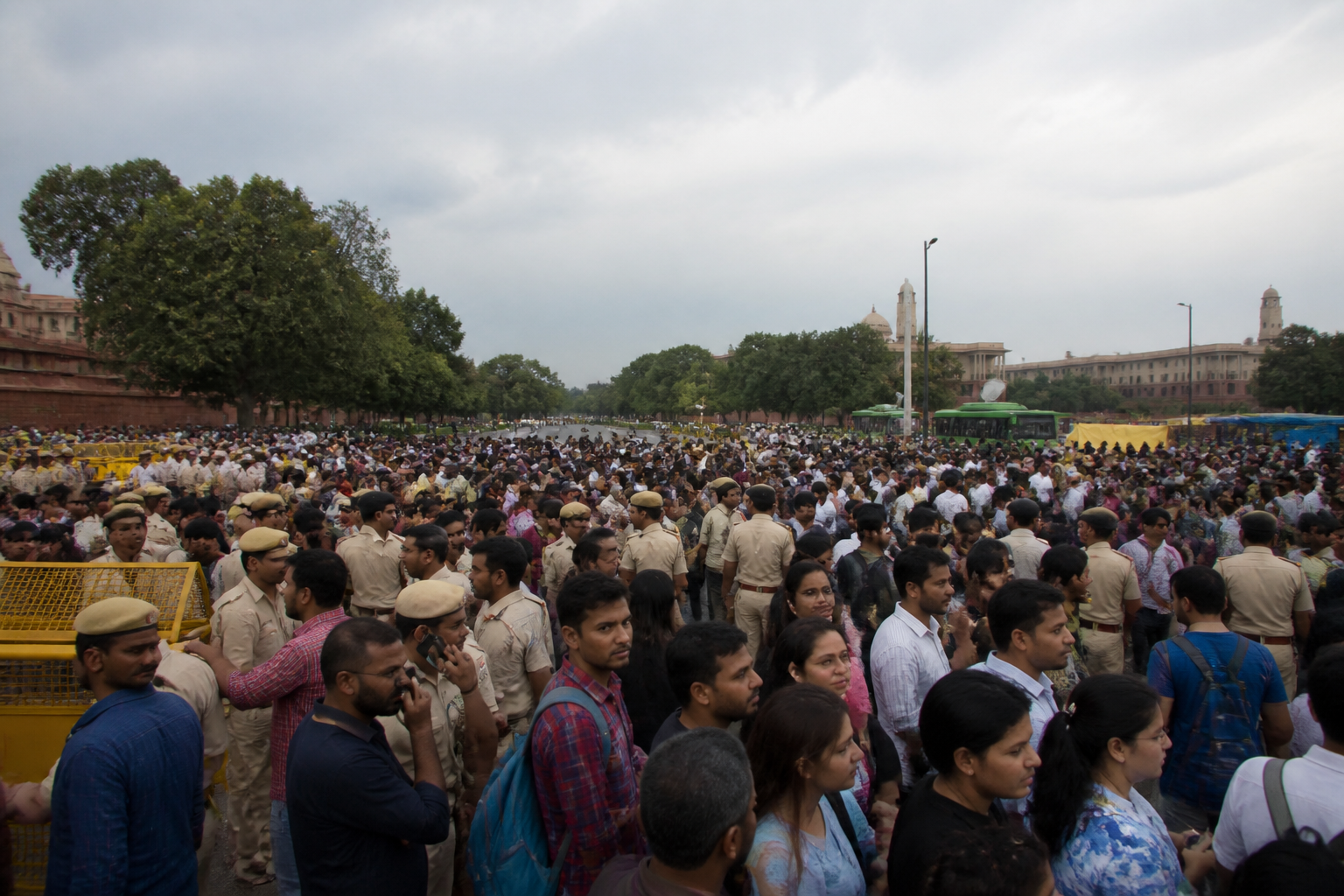
A protest in central Delhi over alleged irregularities in the Special Intensive Revision of electoral rolls led to the detention of more than 500 demonstrators on October 2, while authorities imposed restrictions near Jantar Mantar, closed entry and exit at 12 metro stations and suspended internet services in the area for 12 hours, according to a report by Live Hindustan – NCR.
The demonstration involved opposition parties, student organisations and other groups demanding the resignation of Chief Election Commissioner Gyanesh Kumar. The protesters alleged irregularities in the SIR process and the deletion of voters’ names on a large scale. The report said the police imposed restrictions under Section 163 of the Bharatiya Nagarik Suraksha Sanhita in the Jantar Mantar area.
Among those detained were Aam Aadmi Party leaders Saurabh Bharadwaj, Atishi and Sanjay Singh, according to the report. Police also detained other protesters as groups attempted to reach the designated protest area. A police source cited by Live Hindustan – NCR said more than 500 demonstrators had been taken into custody.
The police action followed attempts by several organisations to reach Jantar Mantar. The report said around 700 Students’ Federation of India workers were stopped at the Ashoka Road roundabout. SFI general secretary Aishe Ghosh said several Democratic Youth Federation of India and SFI workers had also been detained. Her comments criticised the police response and linked the action to the groups’ demand for accountability over the electoral-roll revision process.
Bharadwaj said in a post on X that he and Sanjeev Jha had been detained despite participating in what he described as a peaceful protest. He urged party workers and supporters to continue the movement and reach Jantar Mantar. In a separate video message, Bharadwaj said police had told him that permission for the demonstration had not been granted. He questioned the need for permission to protest at Jantar Mantar, which is a designated demonstration site, and said his party had submitted a request about a week earlier.
The restrictions also disrupted public transport access to central Delhi. According to the report, Delhi Metro closed entry and exit at 12 stations, including Rajiv Chowk, Central Secretariat and Jantar Mantar. Commuters were advised to travel to the nearest open station and, where possible, walk towards their destinations. The closures affected access around one of the capital’s most important administrative and protest districts, where metro stations normally serve commuters, visitors and demonstrators.
Internet services around Jantar Mantar were suspended for 12 hours amid the protest. The report did not specify the authority that issued the internet suspension order or provide details of the geographic limits of the restriction. The metro closures and communications shutdown remained the key operational measures reported during the police action.
