


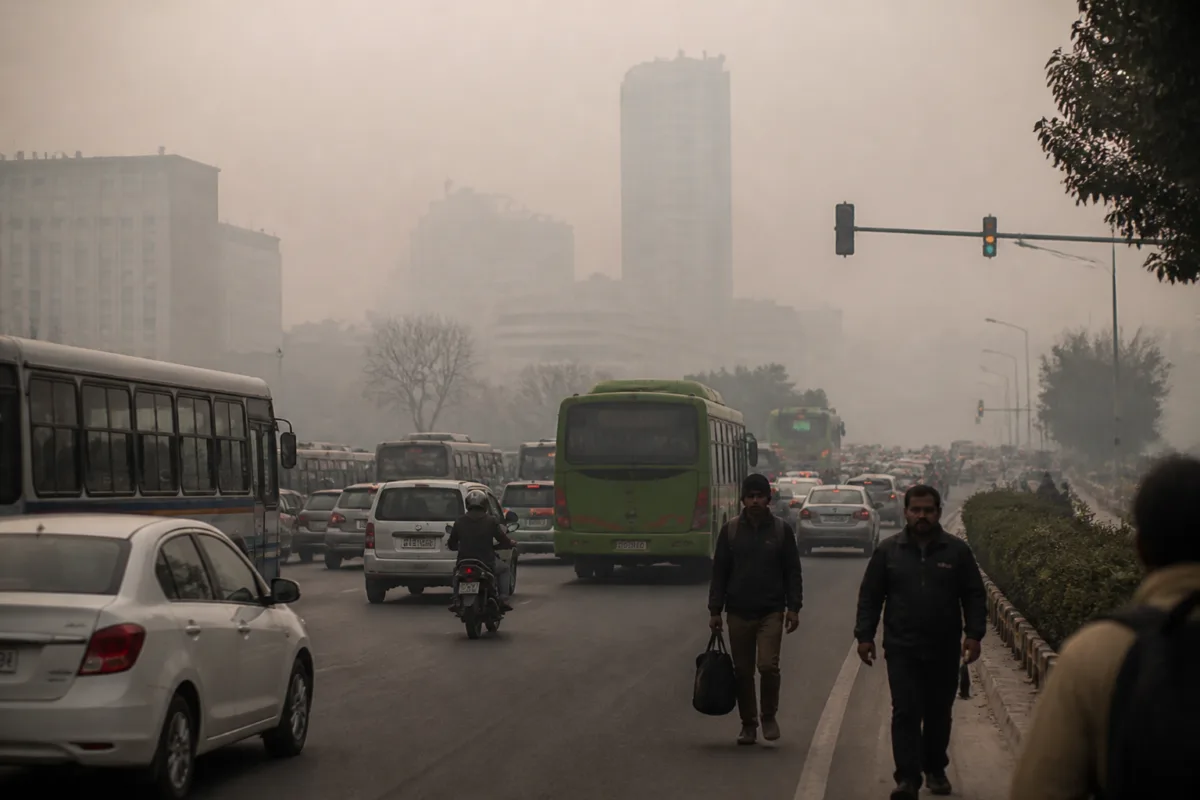
Delhi pollution remained at dangerous levels on Sunday morning, with the Air Quality Index crossing 400 at ITO even as forecasts indicated that rain over the next two days could bring only limited relief across the National Capital Region.
At around 5:30 am, ITO recorded an AQI of 415, placing the area in the ‘severe’ category under Central Pollution Control Board classification. Other monitoring locations also reported ‘very poor’ air quality. Sarai Kale Khan recorded an AQI of 355 at about 6 am, while the areas around Akshardham Temple and Anand Vihar each recorded an AQI of 365.
The readings show that pollution remained unevenly distributed across the capital, with several major transport and high-traffic areas recording concentrations in the very poor range. The data was reported from monitoring locations during the early morning, when low dispersion conditions can allow pollutants and haze to remain concentrated near the ground.
According to the report, Delhi-NCR has continued to experience pollution and reduced visibility, with the overall air quality ranging from very poor to severe. The conditions affect daily travel and outdoor activity across the region, particularly in areas surrounding major roads, intersections and transport corridors.
The India Meteorological Department has forecast a possibility of rain over the coming two days. The report said the rainfall could lead to a marginal improvement in air quality. The Air Quality Early Warning System has also estimated a decline in the levels of particulate pollutants PM2.5 and PM10 during the same period.
The expected improvement remains weather-dependent and has been described as marginal rather than a complete resolution of the pollution episode. The report does not provide a citywide average AQI, details of any new emergency restrictions or a breakdown of pollution sources behind the readings.
The latest measurements underline the continuing exposure of Delhi’s urban population to elevated particulate pollution. Locations such as ITO, Anand Vihar and Sarai Kale Khan are important road and movement corridors, making their air-quality readings relevant to commuters, pedestrians and people living or working nearby.
The next significant indicator will be whether the forecast rain produces a sustained fall in PM2.5 and PM10 levels and whether monitoring stations across Delhi-NCR move out of the very poor and severe categories. The Air Quality Early Warning System’s next assessment and the region’s monitoring data will determine whether the improvement is temporary or widespread.

