


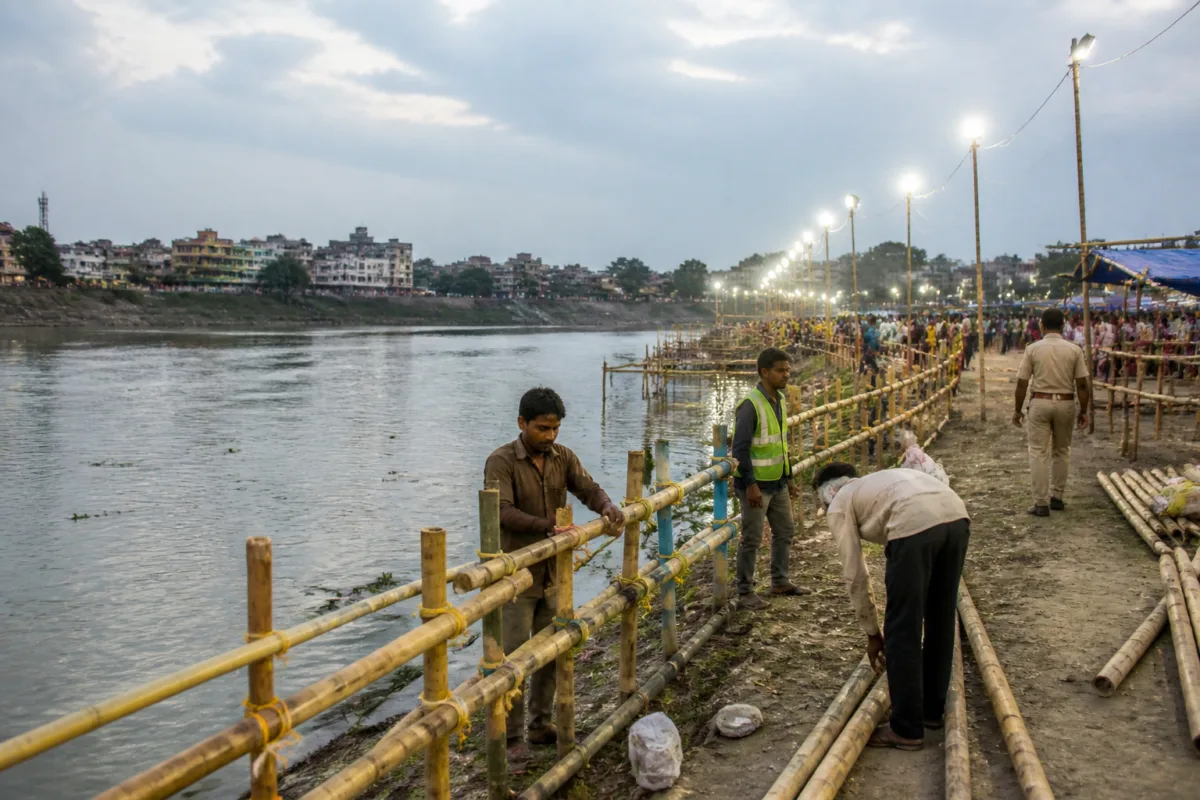
The Siliguri administration has prohibited DJs, speakers and high-volume sound systems during Chhath Puja, as thousands of devotees prepare to gather at 87 temporary ghats across the city and surrounding areas. The restriction will apply during rituals beginning on Sunday evening and concluding with morning offerings on Monday.
Shankar Ghosh, Siliguri MLA and state tourism minister, announced the decision during a visit to several ghats on Saturday with officials from the Siliguri Municipal Corporation (SMC). He said the restriction followed the chief minister’s instructions and extended measures already imposed during Durga Puja and Kali Puja.
“Following the chief minister’s instructions, DJs were prohibited during Durga Puja and Kali Puja. We have now decided to extend the same restriction to Chhath Puja as well,” Ghosh said.
The temporary ghats have been established along the Mahananda river and other rivers and waterbodies in and around Siliguri. Devotees are expected to visit these locations to offer prayers during the evening and morning rituals, creating a significant public-management requirement for the municipal administration.
The decision comes after criticism from non-governmental organisations and citizens over the alleged failure to prevent the use of banned firecrackers during Diwali. Environmental groups have raised concerns about noise and air pollution, saying the combined impact of festive activity contributed to a deterioration in the city’s air quality.
Ghosh said official data showed that Siliguri recorded a comparatively lower rise in the Air Quality Index this year than in previous years. The report did not provide the AQI figures or specify the monitoring locations used for the comparison.
During the inspection, the minister also instructed SMC officials to prepare a detailed report on the arrangements and measures undertaken for this year’s celebrations. According to Ghosh, the report would help identify gaps in festival management and support planning for future events.
Environmental organisations welcomed the prohibition on DJs but said sound-system restrictions alone would not address the wider pollution and waterbody-management challenges associated with large festivals. Animesh Bose, vice-president of Sabuj Mancha, a joint forum of 64 NGOs, urged the administration to prevent banned firecrackers and protect rivers and other waterbodies during the celebrations.
“We appreciate the administration’s initiative to ban DJs. We would also appeal to the minister to take a proactive role in maintaining the cleanliness of rivers and waterbodies and preventing air and noise pollution caused by banned firecrackers during the festival,” Bose said.
The administration’s immediate focus is on managing the 87 temporary ghats and implementing the sound-system restriction during the evening and morning Chhath rituals. The detailed SMC report is expected to document the arrangements and measures taken during this year’s festival.

