


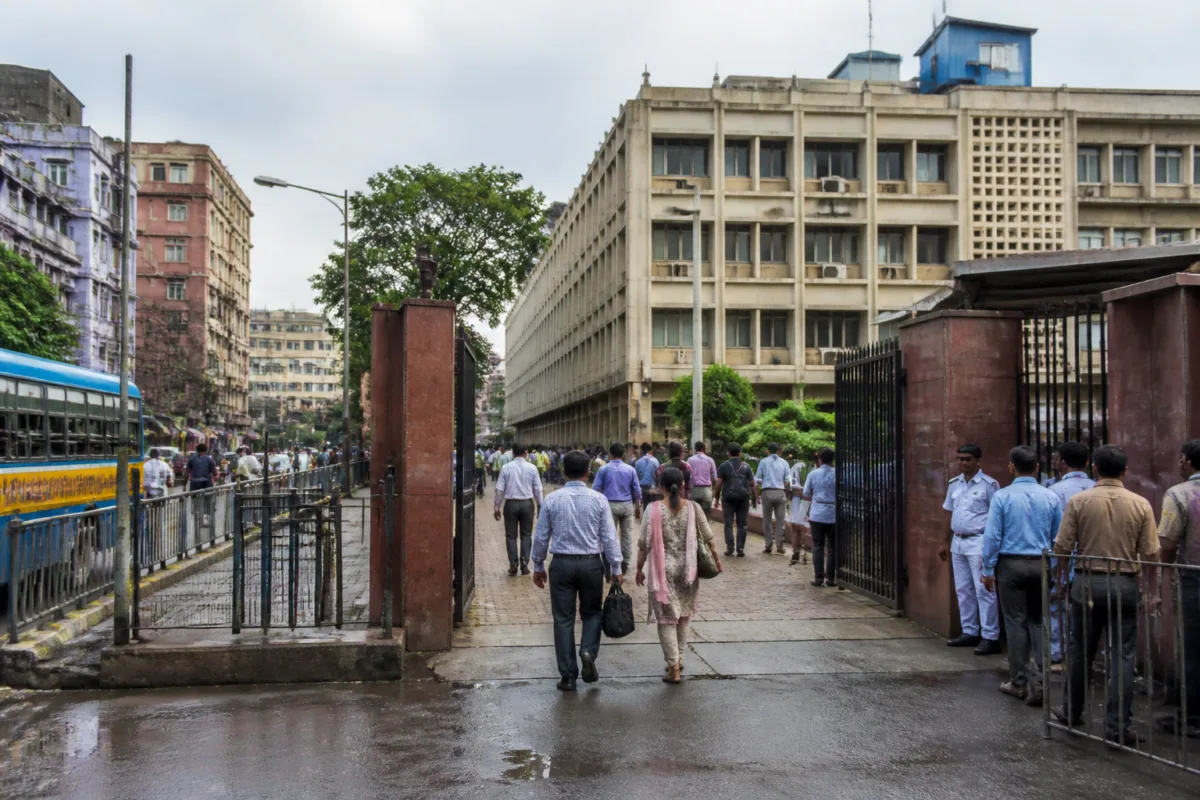
The West Bengal government’s plan to reduce holidays for its employees in 2027 is being presented as an investment and work-culture reform. But the more important issue is not simply whether the state has 50 holidays or whether that number falls to around 40. It is how the availability, responsiveness and performance of public institutions shape the everyday experience of businesses, workers and citizens.
According to a report in The Telegraph, senior officials said West Bengal had 50 holidays for government employees in 2026, apart from weekly holidays on Saturdays and Sundays. The officials described the number as the highest in the country and said it sent a negative message about the state’s work culture. The finance department is still preparing the holiday list for 2027, so the number of holidays to be removed has not been finalised.
The proposal therefore remains a policy intention rather than a completed administrative decision. Officials cited in the report said the state government was likely to remove about 10 additional holidays in 2027, rather than eliminate all of the holidays added over the past 15 years at one go. The reported approach reflects an attempt to change the calendar without creating immediate opposition among employees.
That distinction matters. A holiday notification is easy to count, but the functioning of a government office cannot be assessed by the calendar alone. The number of formal closures is one visible measure of administrative availability. It does not, by itself, establish how quickly files are processed, how reliably public services are delivered, how departments coordinate or how effectively officials work on days when offices are open.
The figures cited by officials nevertheless show how the holiday calendar became part of West Bengal’s political and administrative history. During the Left Front regime, government employees reportedly had 35 holidays a year. The previous Trinamool Congress government added at least 15 holidays after 2011, according to officials quoted in the report. Several of these were linked to major festivals, including Durga Puja, Kali Puja, Bhatri Dwitiya, Chhath Puja, Eid-ul-Fitr and Id-ud-Zoha.
The changes around Durga Puja illustrate how the calendar was expanded. Officials said holidays that earlier began on Maha Sasthi were extended to Maha Chaturthi and Maha Panchami. Government offices that previously reopened on Ekadashi, the day after Bijoya Dashami, later remained closed for three days between Bijoya Dashami and Lakshmi Puja. The reported additions were therefore not arbitrary administrative closures; they were also a reflection of how the state recognised festivals and responded to social and political expectations.
This is where the reform becomes more complicated than a comparison of holiday totals. Public holidays perform more than one function. They recognise cultural and religious observances, provide rest to employees and shape the rhythm of public life. At the same time, government offices are part of the infrastructure through which citizens obtain certificates, permissions, welfare support, registrations and other services. When offices close, the cost is not limited to a lost working day. It can also affect the timing of decisions that depend on several departments.
The officials’ argument is centred on investment. One senior bureaucrat said investors would be less interested in a state where government offices remained closed for 154 days a year, including holidays and Saturdays and Sundays. Another official compared West Bengal with Maharashtra, which was cited as having 25 holidays in 2026—24 public holidays and one additional holiday. Maharashtra was presented as an example of a highly industrialised state with fewer holidays.
The comparison establishes the political and administrative case being made by the West Bengal government, but it does not establish a direct relationship between the number of holidays and the volume of investment received by a state. The report does not provide comparative figures on investment approvals, project clearances, departmental response times or the number of working days actually lost to administrative delays. Nor does it explain whether the holiday counts in the two states are calculated under identical rules.
That missing evidence is central to the debate. If the government wants to use the holiday calendar as an investment reform, it will need to connect the change to measurable improvements in institutional performance. A shorter list of holidays may increase the number of days on which offices are open, but investors and citizens also depend on predictable procedures, clear timelines, reliable online systems and coordination between departments. The report does not indicate whether these accompanying reforms are part of the proposed policy.
The stated concern about work culture also raises a question about how administrative performance is defined. Officials quoted in the report described the previous increase in holidays as an attempt to keep employees satisfied, particularly because government employees had not received as much dearness allowance as their counterparts in other states. A bureaucrat said the new government had now granted 20 per cent dearness allowance and therefore had the right to ensure that offices did not remain closed unnecessarily.
This argument links employee compensation to attendance and public administration. It also shows that the holiday question is being treated as part of a broader bargain between the state and its employees. The government appears to be saying that improved compensation should be accompanied by greater administrative availability. Employees, however, are affected not only by the total number of holidays but also by the timing of holidays, the nature of their work, existing service rules and the operational demands of different departments.
The proposed reduction could therefore have different effects across the state apparatus. A department dealing with routine public-facing services may experience a direct change in citizen access when a holiday is removed. A department whose work is largely digital or internally scheduled may experience a smaller operational difference. The supplied report does not provide department-wise data, so it is not possible to determine where the greatest impact would occur.
The reported decision to reduce holidays gradually is also institutionally significant. Officials said the government might remove 10 additional holidays in 2027 because cutting all the additional holidays at once could make employees unhappy. That suggests the administration is balancing two objectives: signalling a tougher work culture to potential investors and avoiding a sudden rupture with its workforce.
The policy’s implementation will depend on the final holiday notification issued by the finance department. Until that list is published, the precise number of holidays, the festivals affected and the departments covered remain uncertain. The report also does not specify whether the government is considering compensatory arrangements, changes to office hours or different rules for essential public services.
For citizens, the practical test will not be the headline number of holidays but whether government services become more predictable. A reduction from 50 holidays to approximately 40 would create more scheduled working days. It would not automatically guarantee faster permissions, fewer pending files or better access to public offices. Those outcomes would require service standards and performance data that are not included in the reported proposal.
For investors, the same distinction applies. Office availability can be an important part of the business environment, particularly when projects require permissions from multiple authorities. But the evidence supplied in the report supports only the government’s intention to improve the work calendar and its belief that this will strengthen Bengal’s investment appeal. It does not yet demonstrate that fewer holidays will produce higher investment or faster project delivery.
The larger urban governance question is whether administrative reform is being reduced to a count of closed days. Public institutions are part of the built environment’s operating system: they approve land use, regulate construction, provide utilities, manage records and enable businesses to function. Their effectiveness is experienced through processes, not only through office doors being open. A calendar reform can be meaningful, but its value will ultimately depend on what happens during the additional working days.
West Bengal’s 2027 holiday list will therefore be the first concrete test of the government’s proposal. The next questions are how many holidays are removed, which observances are affected and whether the change is accompanied by evidence on office performance, service delivery and investment approvals. Until those details are available, the reform remains a clear administrative signal but not yet a demonstrated improvement in Bengal’s work culture.

