


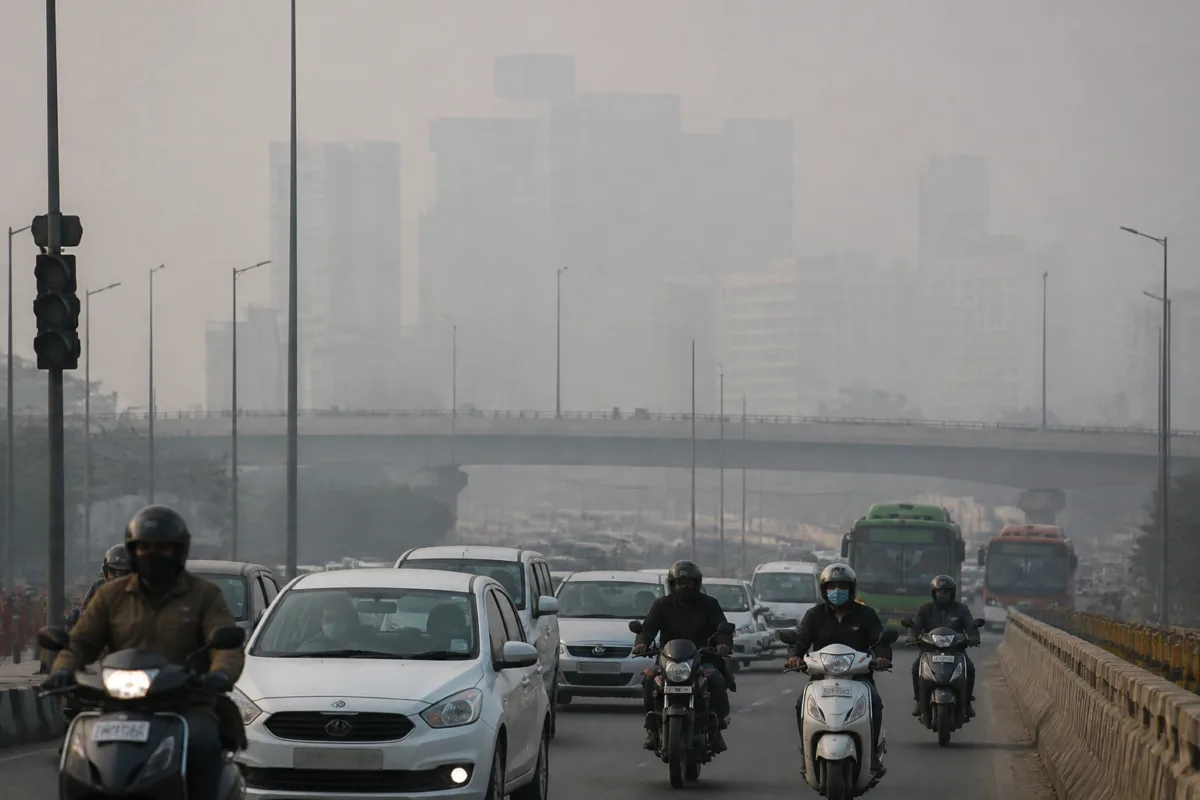
Delhi pollution worsened sharply on Tuesday as the city’s Air Quality Index reached 350, the poorest reading recorded in 287 days, while the Commission for Air Quality Management issued show-cause notices to the deputy commissioners and senior superintendents of police of Punjab’s Gurdaspur and Kapurthala districts over stubble-burning incidents.
Ten monitoring stations in Delhi recorded air quality in the severe category, with pollution levels crossing an AQI of 400, according to the report. The Decision Support System estimated that crop-residue burning accounted for 15.3% of Delhi’s pollution on Tuesday. Vehicular emissions had a slightly higher estimated contribution of 15.8%.
The notices were issued after CAQM, which functions under the Union environment ministry, took note of the increase in farm-fire incidents in Punjab. The action places responsibility on both district administrations and police authorities to explain the steps taken to prevent and control stubble burning.
CAQM data cited in the report recorded 100 farm-fire incidents in Gurdaspur between September 15 and November 2. That was higher than the 53 incidents recorded in the district during the same period in 2025. The commission also issued similar notices to the deputy commissioner and senior superintendent of police of Kapurthala.
Satellite-based monitoring recorded 219 stubble-burning incidents across six states surrounding Delhi on November 2. Punjab accounted for the highest number, with 98 incidents, followed by Rajasthan with 67 and Madhya Pradesh with 48. Uttar Pradesh recorded four incidents and Haryana two.
The cumulative figures for the period from September 15 to November 2 also placed Punjab at the top. Across the six states, 3,535 incidents were recorded. Punjab accounted for 1,612, followed by Rajasthan with 738, Madhya Pradesh with 614, Uttar Pradesh with 349, Uttarakhand with 176 and Haryana with 44. Delhi recorded two incidents during the same period.
The figures show the administrative challenge of managing air pollution across state boundaries. Delhi’s air quality is monitored within the city, but a share of the pollution is linked to activities in neighbouring states and is therefore dependent on enforcement by district administrations outside the capital. CAQM’s notices seek an explanation from the officials responsible for two Punjab districts where the reported incident count has risen year on year.
The crop-residue burning season is expected to continue through November 30, according to the report. This leaves the district administrations and police authorities named in the notices with the task of responding to CAQM while the wider period of farm-fire activity remains ongoing.

