


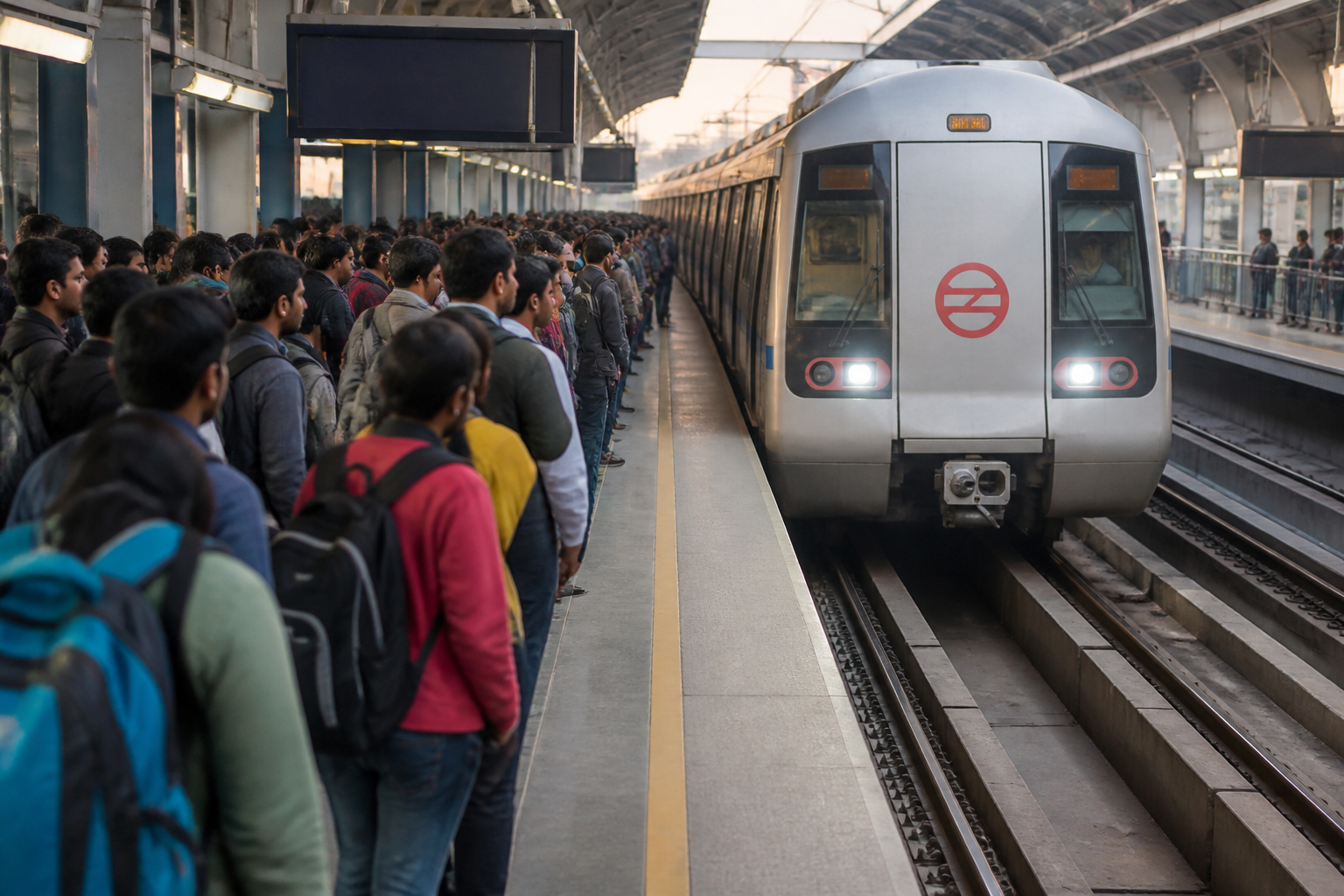
Delhi Metro recorded its highest-ever daily ridership on 17 September 2026, with 82,44,903 passenger journeys as commuters shifted to the network during an ongoing strike by Delhi Transport Corporation bus drivers.
The Delhi Metro Rail Corporation said the figure broke all previous daily ridership records. The corporation announced the milestone through its official X account, making it the latest indication of how disruption in one part of Delhi’s public transport system can rapidly increase pressure on another.
The DTC drivers’ strike began on Tuesday over wage-related demands and has affected bus services across the city. The strike is supported by the DTC Karmachari Ekta Sangathan. With buses unavailable on several routes, passengers who would ordinarily rely on DTC services have been using the Metro to travel between locations.
To manage the additional demand, DMRC has deployed eight extra trains and added 20 additional train trips. The operational measures are intended to handle the increase in passenger numbers, particularly during peak hours when trains and major stations already experience heavy crowding.
The record was set against a wider pattern in which Delhi Metro ridership rises during periods of increased road traffic, festivals and other special occasions. The disruption to DTC bus services has added a more immediate pressure, redirecting passengers from surface public transport to the rail network.
The episode also highlights the connected nature of Delhi’s public transport system. DTC buses serve thousands of daily passengers and provide access to locations that may not be directly connected by Metro. When bus operations are interrupted, the impact is not limited to bus users: it can increase demand at Metro stations, intensify crowding on trains and add pressure to interchange points and last-mile connections.
Delhi Transport Minister Pankaj Singh appealed to protesting DTC drivers on Thursday to end the strike and return to work. According to the report, the minister said that most of the employees’ demands had been accepted. The drivers, however, have raised concerns about low payments compared with the salaries received by permanent DTC drivers for similar work.
The strike has therefore combined a labour dispute with an immediate mobility challenge for the city. While DMRC has added capacity to respond to the surge, the record ridership figure reflects passenger movement during a period when the wider public transport network is operating under stress.
The next official developments will depend on the resolution of the DTC drivers’ strike and the restoration of normal bus services. Until then, DMRC’s additional trains and trips remain the stated operational response to the increased passenger demand.
