


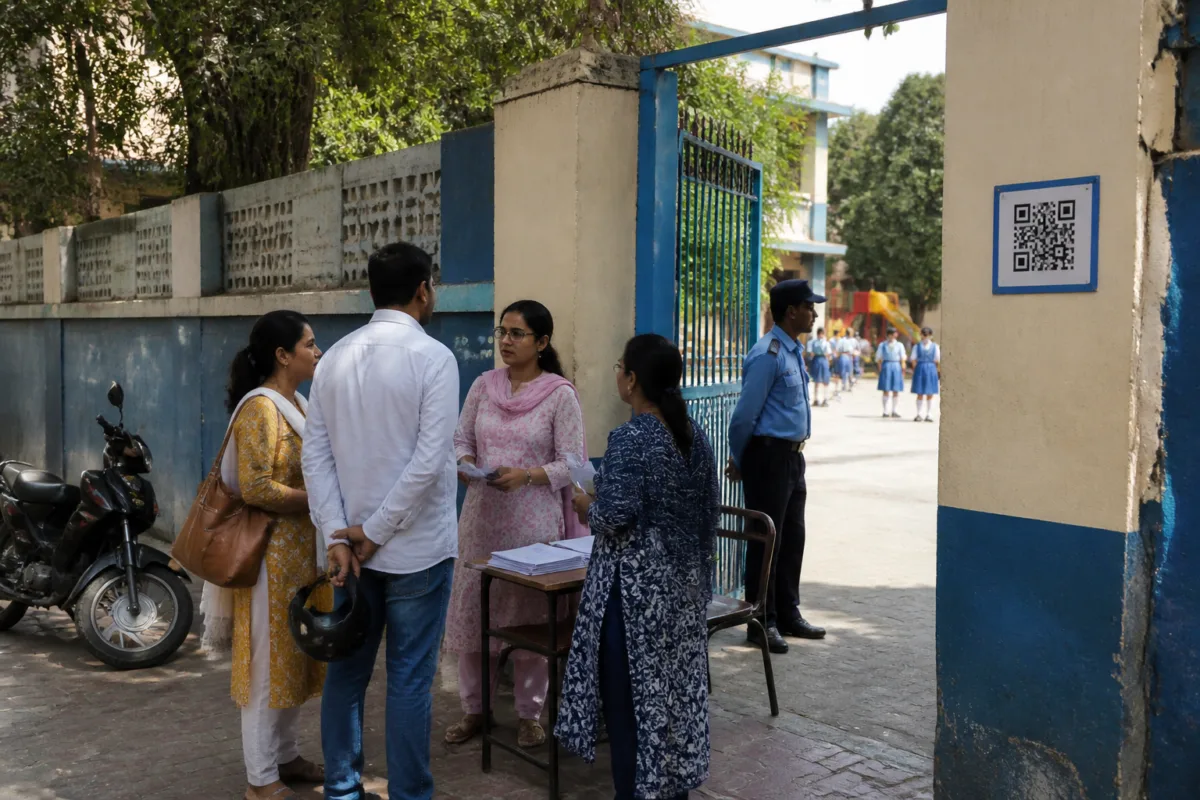
Delhi Municipal Corporation schools will introduce QR codes at school gates to support admissions, while the civic body plans to advance recruitment for about 3,000 sanitation workers and chowkidars, according to decisions reported from the MCD education committee’s meeting on Wednesday.
The QR codes will allow parents to scan and submit their details from outside the schools. School principals and teachers will then contact the parents to complete the admission process, education committee chairperson Yogesh Verma said, according to Live Hindustan.
The MCD also plans to start online registration through its education portal. A nodal officer is being appointed at the Civic Centre to forward applications received on the portal to the nearest relevant school. Officials have been directed to ensure that principals and teachers follow up with parents and process admissions.
The proposed system is intended to help the civic body increase enrolment in its primary schools. The report does not specify the number of schools that will initially receive QR codes, the launch date for the system or the technical arrangements for handling and protecting applicants’ information.
The committee has also directed the additional commissioner to move the file related to recruiting about 3,000 sanitation workers and chowkidars within a week. Verma said the civic body would also begin the process of regularising chowkidars who have worked for a long period. The report does not provide a recruitment calendar, staffing allocation by school or details of the proposed regularisation process.
The measures extend beyond admissions and staffing. The committee has asked the horticulture department to prepare a proposal for appointing workers and gardeners to maintain parks and playgrounds in MCD schools according to prescribed standards. The stated aim is to improve the cleanliness and usability of spaces used by schoolchildren.
In an initial phase, 250 MCD schools are to be made free of litter through regular cleaning, waste disposal and monitoring arrangements, the report said. The committee chairperson also said that construction and repair work was being carried out in schools, but principals were not always being informed about the work by the maintenance department.
To improve transparency and accountability, the MCD has directed the maintenance department to provide the relevant work order to the principal before a project begins. After completion, the principal will be required to provide a no-objection certificate. The junior engineer for the area will also be kept informed of the full details of the work.
Together, the decisions link school enrolment with basic campus management. The QR and portal measures are intended to make it easier for parents to register interest, while the proposed staffing, cleaning and maintenance changes address the operational conditions that shape how municipal schools function. Their impact will depend on whether the recruitment, waste-monitoring, grounds-maintenance and work-order procedures move from committee directions to documented implementation at individual schools.

