


Delhi’s heritage sites are set to receive a new documentation and public-access framework, with the Delhi Development Authority (DDA) and the Delhi chapter of the Indian National Trust for Art and Cultural Heritage (INTACH) planning to record about 1,500 structures across the capital.
The initiative, titled “Rediscovering Delhi: Connecting People, Places and Heritage”, will cover well-known monuments as well as lesser-known sites that have not yet been included on official heritage lists. The two organisations signed a memorandum of understanding for the project on November 16, according to a report by Jagran.
The agreement was signed in the presence of DDA vice-chairperson N. Sarvan Kumar. The report said the initiative was launched under the directions of Lieutenant Governor Taranjit Singh Sandhu, with the stated aim of making heritage more accessible to residents rather than limiting the effort to conservation documentation.
The proposed inventory will include monuments, archaeological remains, historic buildings, modern architectural heritage, traditional markets and heritage streets. INTACH will examine archival documents, old photographs, historical records and existing heritage lists while preparing the documentation.
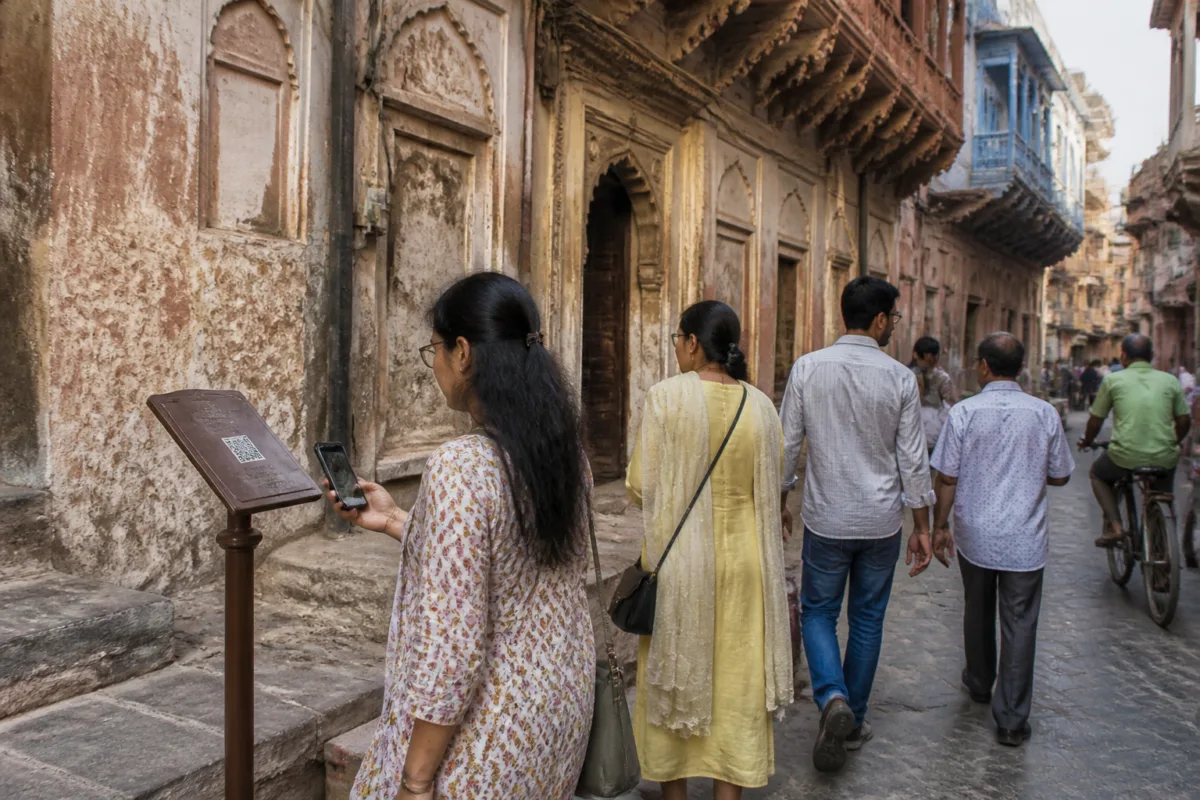
The project also proposes QR-enabled signboards and information panels at identified sites. Visitors will be able to scan the codes using mobile phones to access information about a site’s history and significance. An interactive digital map is expected to help users locate the places, while heritage trails and pedestrian routes will be developed for public visits.
A digital e-book and visitor booklet are also planned. These will contain site information, photographs and suggested walking routes, according to the report. Together, the physical signs and digital resources could make dispersed heritage assets easier to identify and connect, although the report does not provide details on the proposed locations, design standards or maintenance arrangements for the installations.
The documentation is intended to support work under Delhi’s Master Plan-2047, including the identification and development of heritage zones, cultural areas and archaeological parks. It is also expected to inform the adaptive reuse of historic buildings, the revival of traditional markets and the development of circuits linking heritage sites.
The report said the project could support cultural tourism, traditional crafts and local businesses. Those outcomes will depend on how the identified sites are integrated with public access, pedestrian movement and local-area management. The available details do not specify how site selection will be reviewed, how privately owned or disputed properties will be handled, or what conservation protections will accompany any proposed reuse.
Research, documentation and design work are scheduled to be completed within one year of the agreement. The exercise will include sites that were not covered in an e-book produced through an earlier DDA-INTACH initiative on the Ridge’s heritage, dated April 2, 2026.
By combining archival research with digital mapping, the initiative places heritage documentation within Delhi’s wider planning process. Its public value will ultimately depend on whether the inventory remains accurate, the information is maintained and the proposed trails and signs are accessible to residents as well as visitors.

