


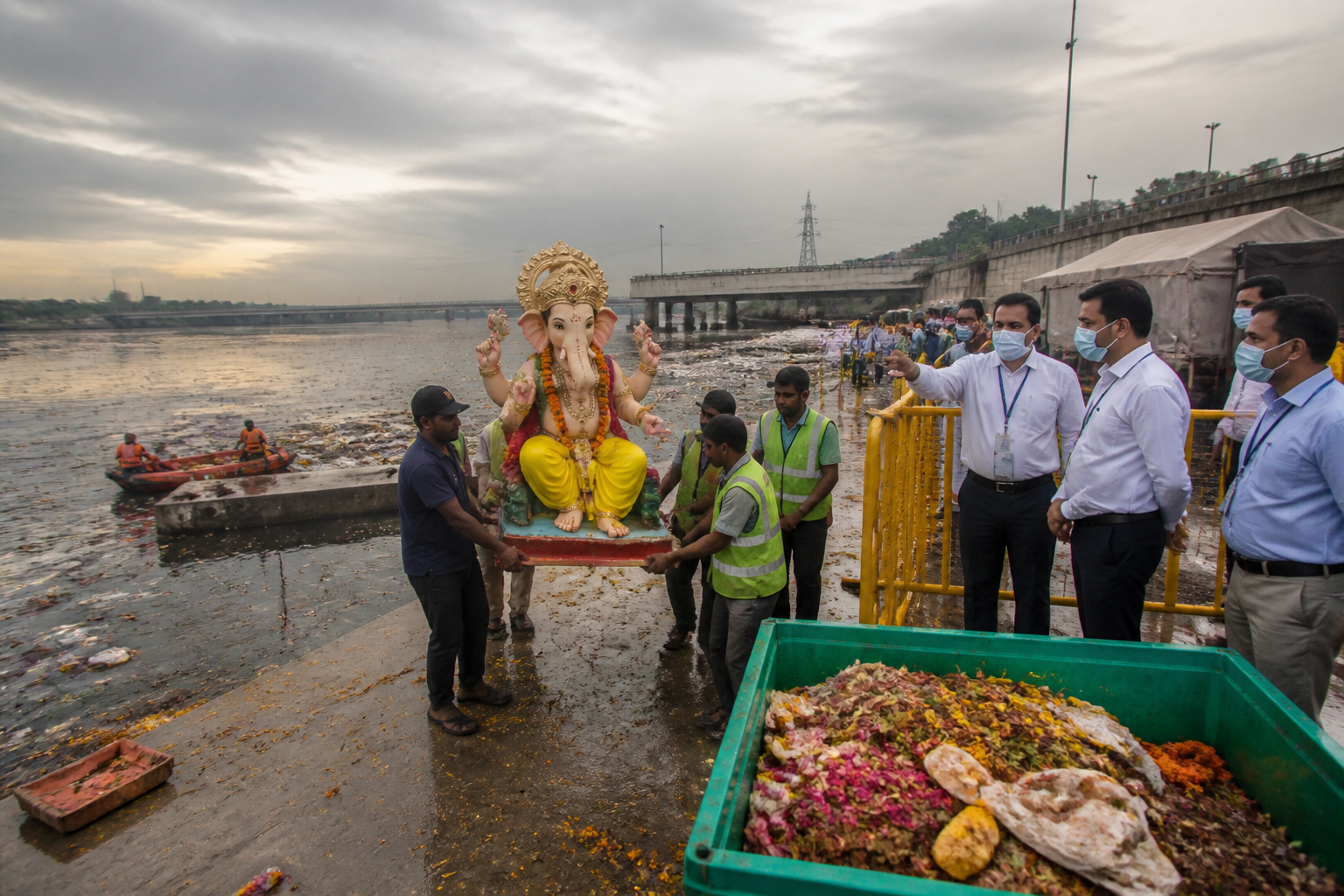
The Delhi Pollution Control Committee has prohibited idol immersion in the Yamuna and other water bodies across the national capital, allowing it only at designated sites identified by local authorities during Ganeshotsav and Durga Puja celebrations.
The directions were issued on September 9 under Section 33A of the Water (Prevention and Control of Pollution) Act, 1974. The order also directs idol makers and sellers to use natural clay, biodegradable materials and natural dyes, while disallowing idols made from plaster of Paris for immersion in water bodies.
The restrictions apply to immersion in rivers, lakes, ponds and wells, a practice associated with the conclusion of several religious festivals. The DPCC said idol immersion contributes to silting and deterioration in water quality, including changes in conductivity, biochemical oxygen demand and heavy-metal concentrations.
According to the committee, chemical paints and dyes used on idols may contain hazardous elements such as mercury, chromium, lead and cadmium. These substances can pose risks to aquatic life and public health when they enter water bodies, the DPCC said.
The directions were issued in accordance with revised guidelines released by the Central Pollution Control Board in May 2020. They also refer to National Green Tribunal orders dated January 13 and September 16, 2015, which prohibit the disposal of waste, puja material, food grains, oil and other materials into the Yamuna except at designated locations.
The order places responsibility for enforcement on district magistrates, who have been directed to ensure compliance with the restrictions. Local authorities have also been identified as responsible for determining the sites where immersion may take place.
Violators may be liable to pay environmental compensation of Rs 50,000. The amount, according to the DPCC order, will be deposited with the pollution control committee.
The restrictions come as Delhi prepares for Ganeshotsav and Durga Puja celebrations. By limiting immersion to designated locations and requiring less polluting materials, the order seeks to control the entry of solid waste, sediments and potentially hazardous substances into the capital’s water bodies. Enforcement by district administrations and the availability of designated sites will determine how the directions are implemented during the festival period.
