


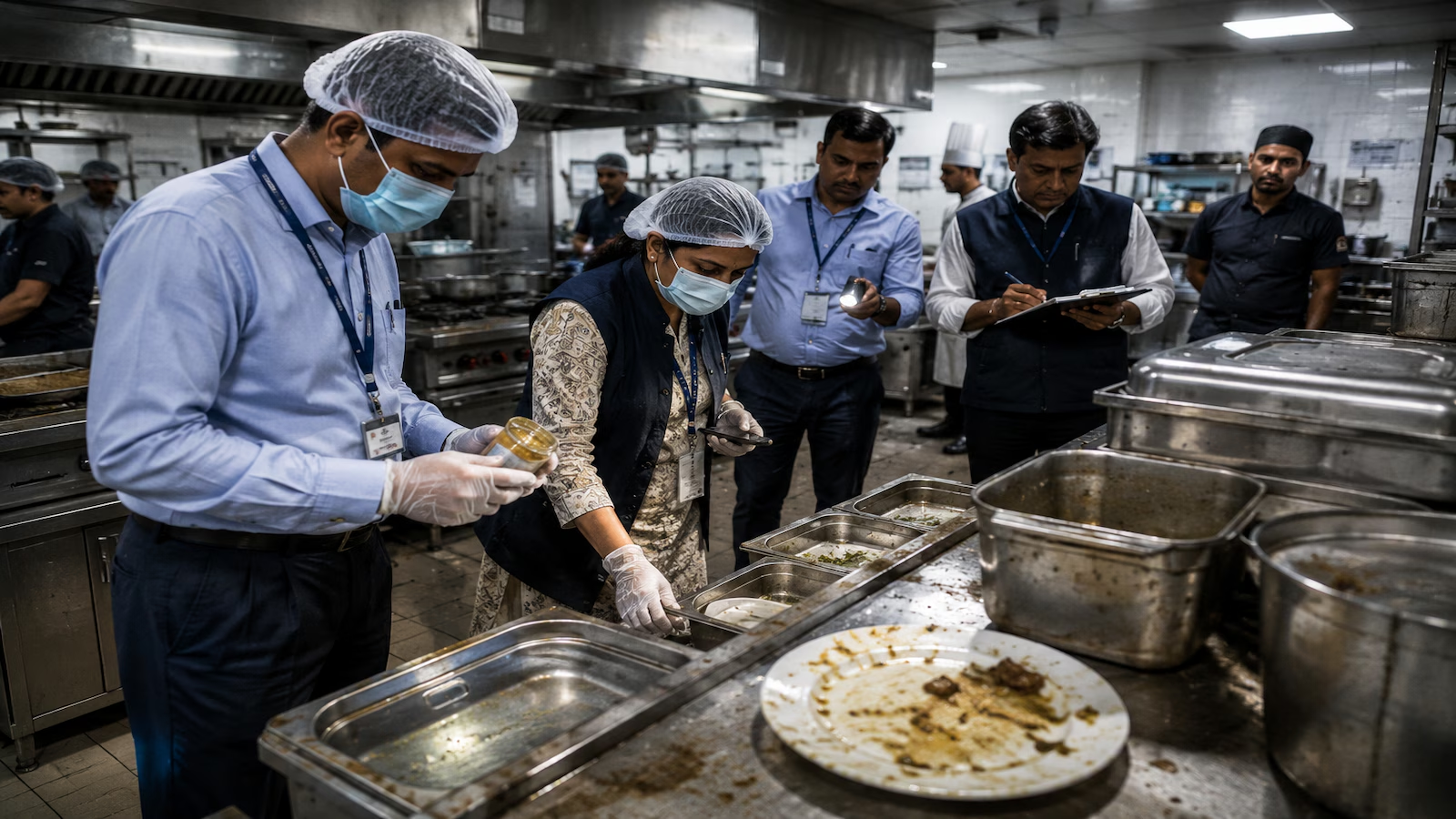
The Maharashtra Food and Drug Administration’s latest food-safety action in Mumbai has turned a routine inspection drive into a wider test of how the city regulates the places where millions of people eat. The FDA inspected 38 establishments, collected 47 food samples and suspended the licences of nine establishments during its Ganeshotsav food-safety drive between September 11 and 14, according to a report by Times of India – Mumbai. The action included Café Mondegar, a 94-year-old Colaba landmark, where officials flagged food-safety, hygiene and structural deficiencies during an inspection on September 12.
The significance of the crackdown lies not only in the identity of the establishments facing action. The timeline supplied in the report shows that the FDA’s scrutiny has extended across a wide range of Mumbai’s food economy: iconic eateries, clubs, bakeries, hotels, restaurant chains, sweet shops, institutional facilities and food outlets linked to quick-commerce platforms. That spread makes food safety an urban administration issue rather than a concern limited to informal roadside vending.
For consumers, the central problem is visibility. Diners can see a restaurant’s frontage, menu and service, but cannot easily assess whether its kitchen is maintaining safe storage, handling ingredients correctly, reusing cooking oil or complying with licensing requirements. This information gap becomes more serious when well-known establishments and organised brands appear in enforcement actions. The report quoted Mumbai residents who said the findings had made them more cautious about eating out, including when dining with children.
The FDA’s action against Café Mondegar illustrates how public reputation and regulatory compliance operate on separate tracks. The Colaba establishment is associated with old-world charm and Mario Miranda murals, but its cultural visibility does not substitute for compliance with food-safety and structural requirements. A popular or historic restaurant remains part of the city’s regulated food infrastructure, and the same basic obligations apply to it as to less prominent businesses.
The reported timeline suggests that the current enforcement effort has been building for months. On June 30, the FDA announced action against establishments including Flint & Waarsa at the National Centre for the Performing Arts, M. K. Bakery, Hotel Shrikrishna, Hotel Gopal Krishna, Karak Enterprises and Madras Diaries. K. Rustom & Co. faced action on July 7, followed by establishments such as Shalimar Hospitality, Noor Mohammadi Hotel and Rehmania Restaurant on July 13 and 14.
Further action was reported against Parsi Dairy Farm and Poornima Restaurant from July 16 onwards. Inspectors reportedly found fungal growth on stored vegetables and bananas at Poornima. The report also lists suspensions involving several prominent clubs, including CCI, RK Juhu Gymkhana, MIG Cricket Club, Aparna Juhu Gymkhana, Willingdon Sports Club and Goregaon Sports Club between July 24 and 27.
The pattern continued in August. Domino’s outlets in Vile Parle West, Borivali West and R-City Mall faced action. On August 15, food outlets linked to Blinkit, Instamart and Zepto, along with Bhagwati Stores, were included in the enforcement action. Other establishments named in the August 18-20 period included Otters Club, Daily Fresh Bakers, Prince of Wales Restaurant, Café Sifarish, Zepto Chembur, Hotel Radha and Janata Tawa and Grill.
The FDA also acted against the Bombay Presidency Radio Club, McDonald’s Metro House, Khar Gymkhana and other establishments between August 21 and 22. The Maharashtra Cricket Association’s facility in BKC, Status Restaurant, Novaara Kitchens, Bajrang Sweet Mart and ASM Hotels and Hospitality Services were also listed among businesses whose food-business licences were suspended.
This breadth points to a regulatory system dealing with a highly fragmented food landscape. Mumbai’s diners are served by independent restaurants, clubs, bakeries, hotels, chain outlets and newer delivery-oriented businesses. Each operates through different ownership structures, supply chains and kitchen systems, but each becomes part of the same public-health environment once food is prepared and sold to consumers.
The report does not establish that every establishment named in the timeline presented the same level or type of risk. The violations described vary, including food-safety, hygiene and structural deficiencies, as well as the reported presence of fungal growth on stored produce. That distinction matters because enforcement lists can otherwise flatten very different compliance failures into a single perception of danger. The available material also does not state the final legal or operational outcome for every establishment named.
What the report does show is that inspections can create pressure for corrective action. One Mumbai eatery said it had stopped using artificial colour in its sweet chutney, stopped reusing frying oil and strengthened staff hygiene measures after FDA action. This suggests that inspections are not only punitive events. They can also expose operating practices that businesses may otherwise treat as routine and push them towards documented changes.
The institutional question is whether such improvements remain temporary responses or become part of regular kitchen management. The FDA’s enforcement role includes inspection, sample collection and action against establishments that fail to meet requirements. Consumers, meanwhile, generally encounter the regulator only when a suspension becomes public. Between these points lies the less visible work of repeated inspection, compliance monitoring and communication about what businesses must correct.
FDA Commissioner Tukaram Mundhe, according to the report, urged consumers not to stop eating out but to become more mindful. His advice included checking cleanliness and sanitation and ensuring that an establishment is properly registered and licensed. That message places part of the responsibility on diners, but it cannot replace formal enforcement. Consumers may observe visible cleanliness; they cannot independently verify storage temperatures, food-sample results, staff practices or structural conditions inside a commercial kitchen.
The enforcement drive also raises a question about how Mumbai communicates food-safety information. The supplied report identifies establishments facing action and describes some findings, but it does not provide a complete public account of the inspection methodology, the specific statutory provisions applied in every case, or the process through which suspended licences can be restored. Without that information, consumers may learn that action occurred without understanding what corrective measures were required or whether compliance was later demonstrated.
That gap affects both public trust and businesses. Diners need reliable information that distinguishes an inspection, a suspension, a sample failure, a corrective direction and a final resolution. Food businesses need clarity about the standards they are expected to meet and the steps required to return to compliance. A regulatory announcement is most useful when it is followed by transparent information about outcomes.
The Mumbai crackdown therefore reveals two parallel realities. First, enforcement is reaching establishments that many residents recognise and use, showing that visibility or commercial scale does not guarantee compliance. Second, the city’s food-safety system remains difficult for ordinary consumers to read because the inspection process is largely hidden until an action becomes news.
The evidence supplied in the report confirms a substantial enforcement campaign spanning June, July, August and the September Ganeshotsav drive. It also confirms that the latest inspections affected a wide range of businesses and prompted renewed concern among diners. What remains unclear from the available material is how many establishments subsequently corrected the cited deficiencies, how long suspensions lasted and whether the FDA will publish a consolidated record of outcomes. Those details will determine whether the current crackdown becomes a sustained improvement in Mumbai’s food-safety oversight or remains a series of high-profile enforcement episodes.
