


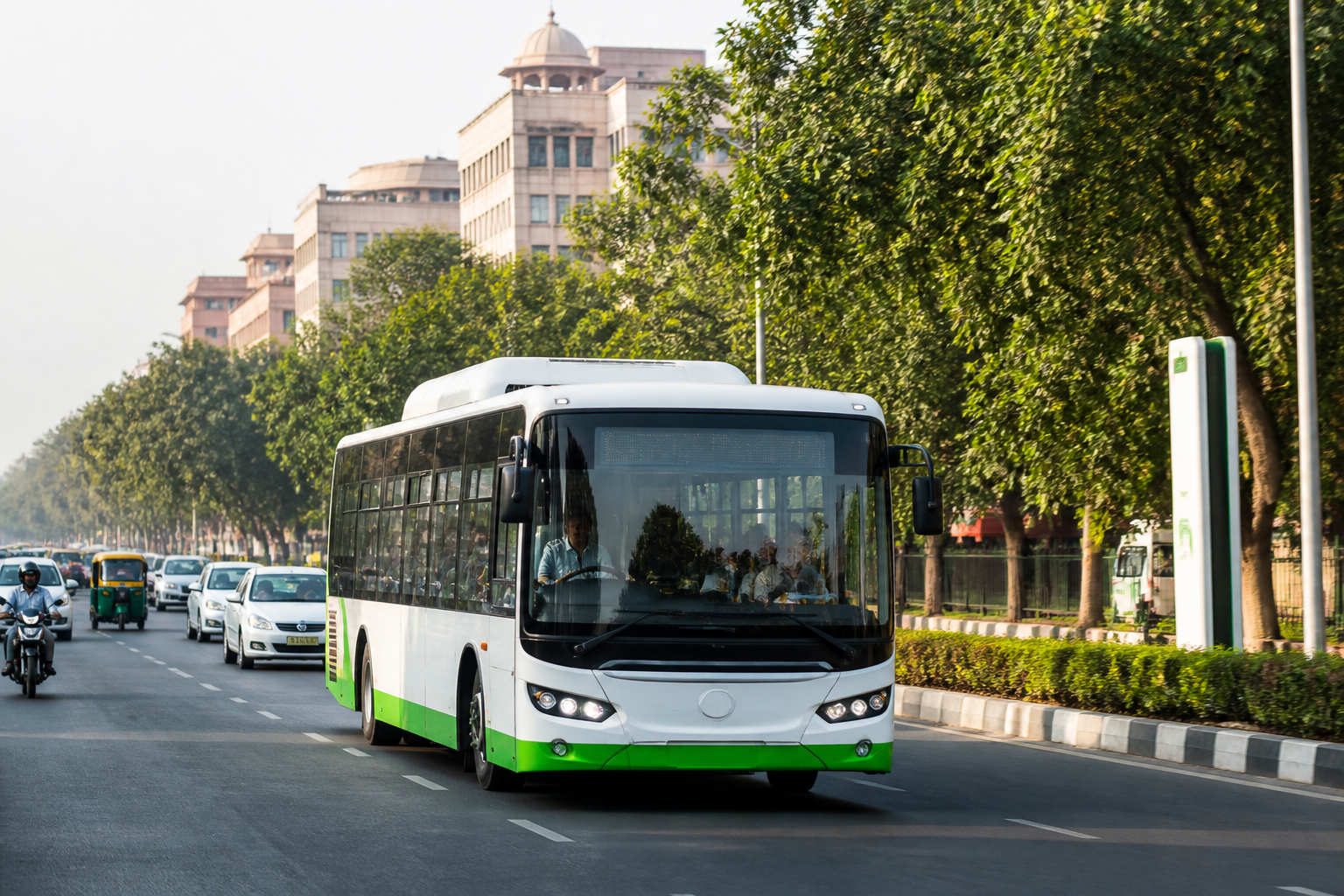
Delhi has secured the top position in the India Electric Mobility Index 2025, scoring 84 points in an assessment of electric transport, charging infrastructure, and research and innovation across States and Union Territories. The ranking, released by NITI Aayog and reported by the Delhi government, comes as the capital expands electric public transport and prepares to deploy 14,000 electric buses by 2028-29.
The India Electric Mobility Index is designed to track progress, challenges and opportunities in the electric vehicle ecosystem. NITI Aayog’s official material describes it as a framework covering 16 key indicators related to electric mobility. These indicators assess not only the number of electric vehicles in use but also the supporting systems required to make the transition viable, including charging facilities and innovation capacity.
The Delhi government said the capital’s position reflected its efforts to develop a wider electric mobility ecosystem. Transport Minister Pankaj Kumar Singh said the ranking reflected the development of Delhi’s electric mobility ecosystem and the government’s focus on clean and sustainable transport.
Delhi’s stated target of deploying 14,000 electric buses by 2028-29 places public transport at the centre of its electrification plans. The government also said work was under way to increase the availability of electric vehicle charging facilities across the capital. Together, these measures address two of the practical requirements of a larger EV transition: expanding the publicly accessible fleet and ensuring that vehicles can be charged.
The government attributed the progress to measures under the Delhi EV Policy 2026, including financial incentives for electric vehicle buyers and the expansion of charging infrastructure. According to the government, the policy focus is not limited to increasing the number of electric vehicles. It also includes supporting infrastructure and the electrification of public transport.
That distinction is important for interpreting the index result. A higher number of electric vehicles does not by itself establish a complete mobility transition. The index’s inclusion of transport electrification, charging infrastructure, and research and innovation indicates that the assessment looks at several parts of the system. For Delhi, the ranking therefore coincides with an ongoing effort to build the facilities and public transport capacity needed to support greater EV use.
The 14,000-bus target also represents a future implementation milestone rather than a completed deployment. The material supplied by the Delhi government does not specify how many electric buses are currently operating, the number of charging stations available, or the timetable for reaching the target. It also does not provide a detailed breakdown of Delhi’s performance across the index’s 16 indicators.
The ranking nevertheless places Delhi’s transport electrification programme within a wider national comparison. By assessing States and Union Territories through a common index, NITI Aayog intends to facilitate the sharing of policies and practices between jurisdictions. Delhi’s result will therefore be read alongside the implementation challenges faced by other regions as electric mobility expands.
The next phase of Delhi’s electric mobility effort will centre on delivery: increasing charging access, implementing the electric bus target and sustaining the policy measures identified by the government. Further details on deployment, infrastructure capacity and indicator-level performance will be needed to assess how the capital converts its leading index position into everyday transport services.
