


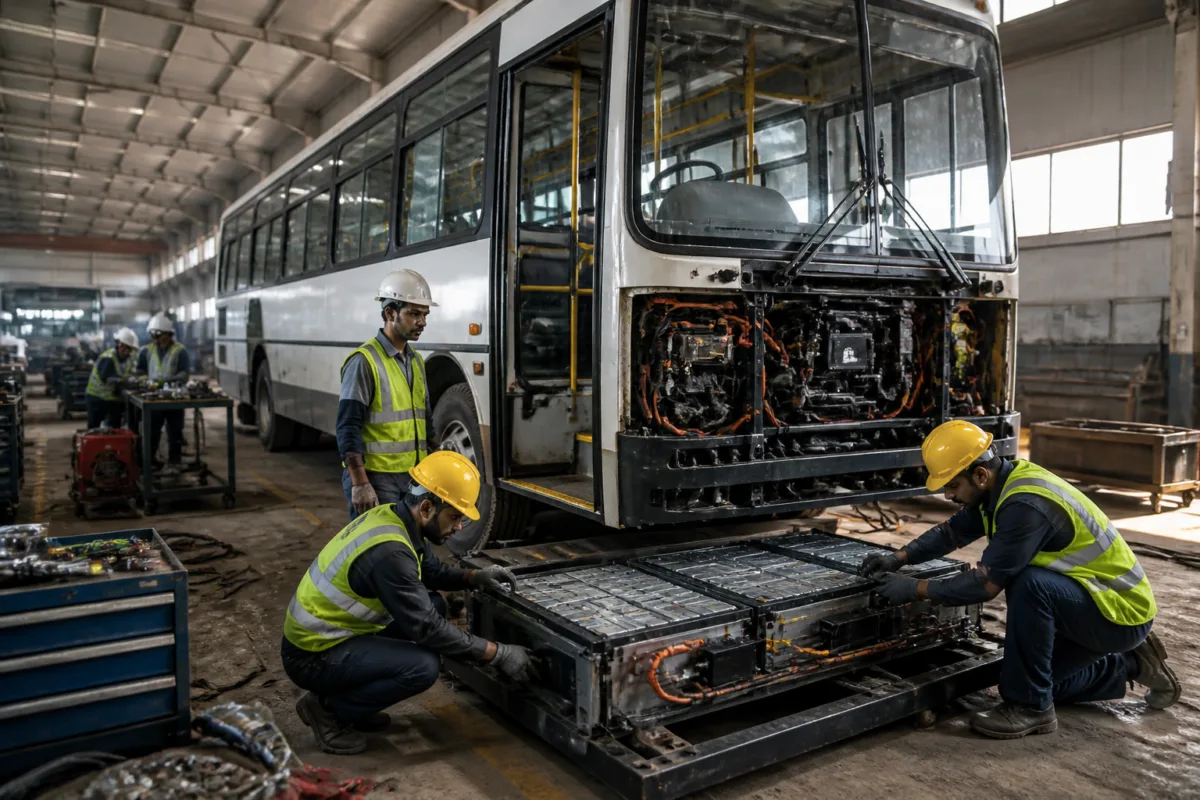
TGSRTC has accelerated its diesel-to-electric bus conversion programme in Hyderabad, with about 250 buses now undergoing retrofitting at workshops in Uppal and Miyapur. The upgraded vehicles are being fitted with 300 kWh lithium-ion battery packs and are expected to travel up to 250 km on a single charge, according to Telangana Today, citing RTC authorities.
The work is being carried out on 200 buses at the Uppal workshop and another 40 at the Miyapur workshop. The reported combined figure is about 250 vehicles, indicating that the programme total includes additional buses beyond the workshop-wise numbers specified in the report.
The converted buses are expected to cover between 230 km and 250 km per charge. RTC authorities said the vehicles should be able to meet their required operating range even when charging is restricted to 80 per cent. The restriction is intended to improve battery longevity, according to the report.
The retrofit programme is focused on converting existing diesel buses rather than relying only on the purchase of new electric vehicles. That makes the workshop process central to the rollout, with the Uppal and Miyapur facilities handling the current batch of conversions.
Operating cost is another stated objective of the initiative. The upgraded buses are expected to consume less than one unit of electricity per kilometre. RTC officials estimate that the converted vehicles could save nearly Rs 20 per kilometre compared with conventional diesel buses.
The report places the operating cost of diesel buses at around Rs 80 to Rs 85 per kilometre. The figures provide the financial basis cited by the RTC for expanding the diesel-to-electric conversion programme, although the final operating cost of the retrofitted buses was not separately stated.
For TGSRTC, the programme links fleet modernisation with the economics of daily bus operations. The stated range of the converted vehicles will determine how they can be deployed, while the charging limit and battery capacity will be relevant to keeping them in service for their required operating schedules.
The retrofit also places greater importance on workshop capacity and charging arrangements. As the current batch is processed at Uppal and Miyapur, the ability to complete conversions and support the buses after they enter service will shape the pace of the programme.
The RTC authorities have not disclosed in the supplied report the routes on which the converted buses will operate, their expected commissioning dates, or the total cost of the retrofit programme. For now, the next reported milestone is the completion of work on the buses being processed at the two Hyderabad workshops.

