


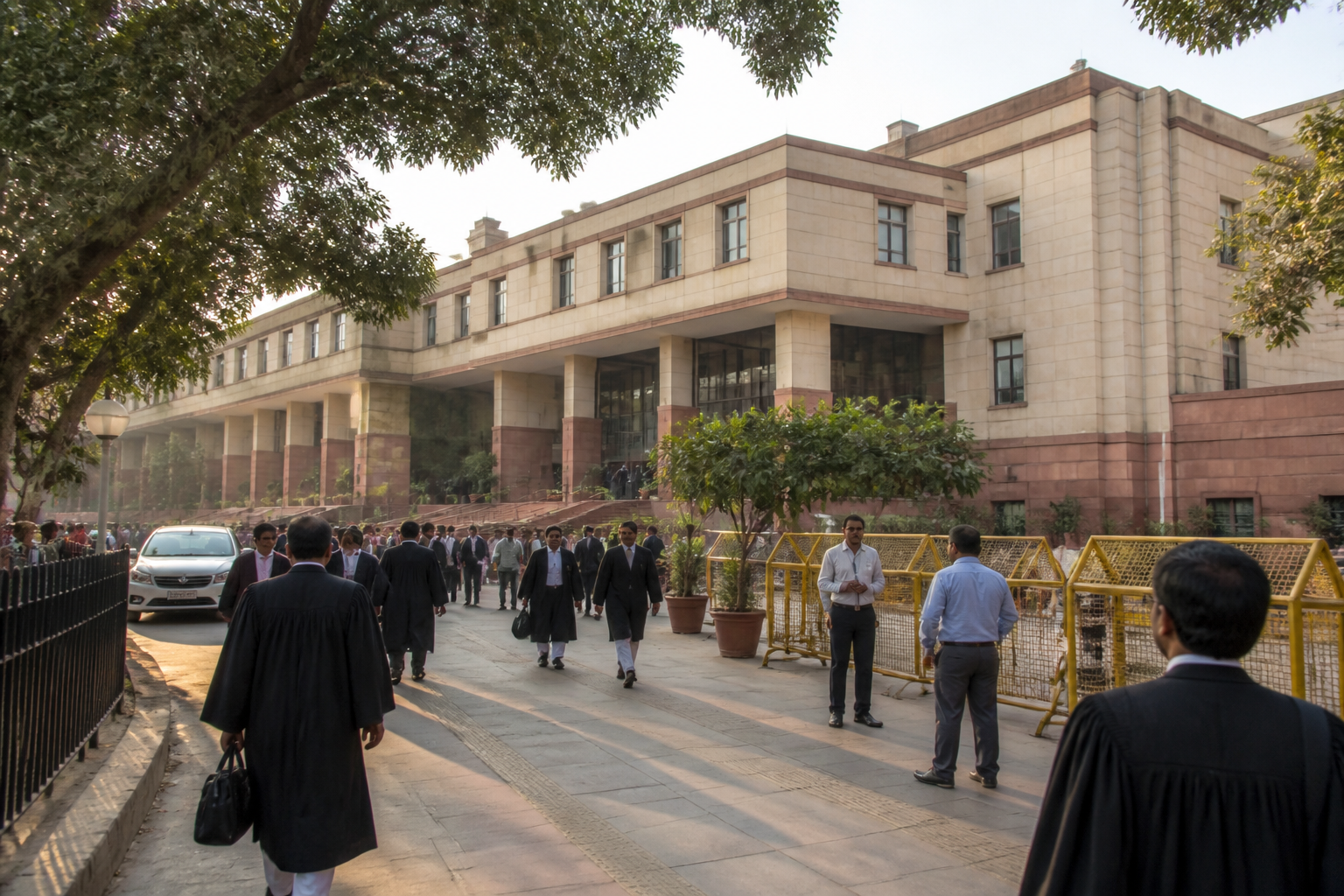
The Delhi High Court is operating with 50 judges against a sanctioned strength of 60 while more than 125,000 cases remain pending, and the number is expected to fall to 46 after four judges retire in the coming three months.
The figures highlight a continuing capacity gap in the country’s highest court in the National Capital, where a 2014 decision increased the sanctioned strength from 48 to 60 judges. According to a report by Jagran, the approved increase has not translated into a sustained working strength of 60 judges over the past 12 years.
The current strength of 50 judges was reached after seven judges from the service quota were promoted to the High Court and took oath. The report described this as the first time that seven judges from the service quota had been promoted together, taking the total number of judges to 50.
The High Court’s judge strength had earlier reached 47 on June 2, 2022, after three new judges were appointed. However, the current increase is not expected to last for long because four sitting judges are due to retire between October and December.
Justice Chandrashekharan Sudha is scheduled to retire on October 8, followed by Justice Anil Khetrapal on November 18. Justices Manoj Jain and Girish Kathpalia are expected to retire in December. After these retirements, the Delhi High Court could have 46 judges, according to the report.
The reduction would leave the court 14 judges short of its sanctioned strength. It would also place additional pressure on a judicial system already dealing with a backlog of more than 125,000 cases. The source report said the shortage could make it difficult to hear the pending matters within a reasonable timeframe.
The sanctioned strength includes a provision for 20 judges to be appointed through the promotion of trial court judges. With 17 of the current 50 judges having risen through the service quota, their share has reached 35 per cent of the High Court’s present strength.
The recent promotions have brought experienced trial court judges into the High Court at a time when the institution is facing a substantial pending-case burden. However, the upcoming retirements mean that the immediate increase in strength will be temporary unless further appointments are made.
For litigants, the issue is not limited to the number of sanctioned posts. The gap between approved capacity and judges actually serving affects how quickly civil, criminal, commercial and constitutional matters can be listed, heard and decided. The report did not provide a category-wise breakup of the pending cases or a timeline for filling the vacancies.
The immediate change expected at the Delhi High Court is therefore a further decline in its working strength after the scheduled retirements. The report did not specify whether new appointments will be completed before the four judges leave office.
