


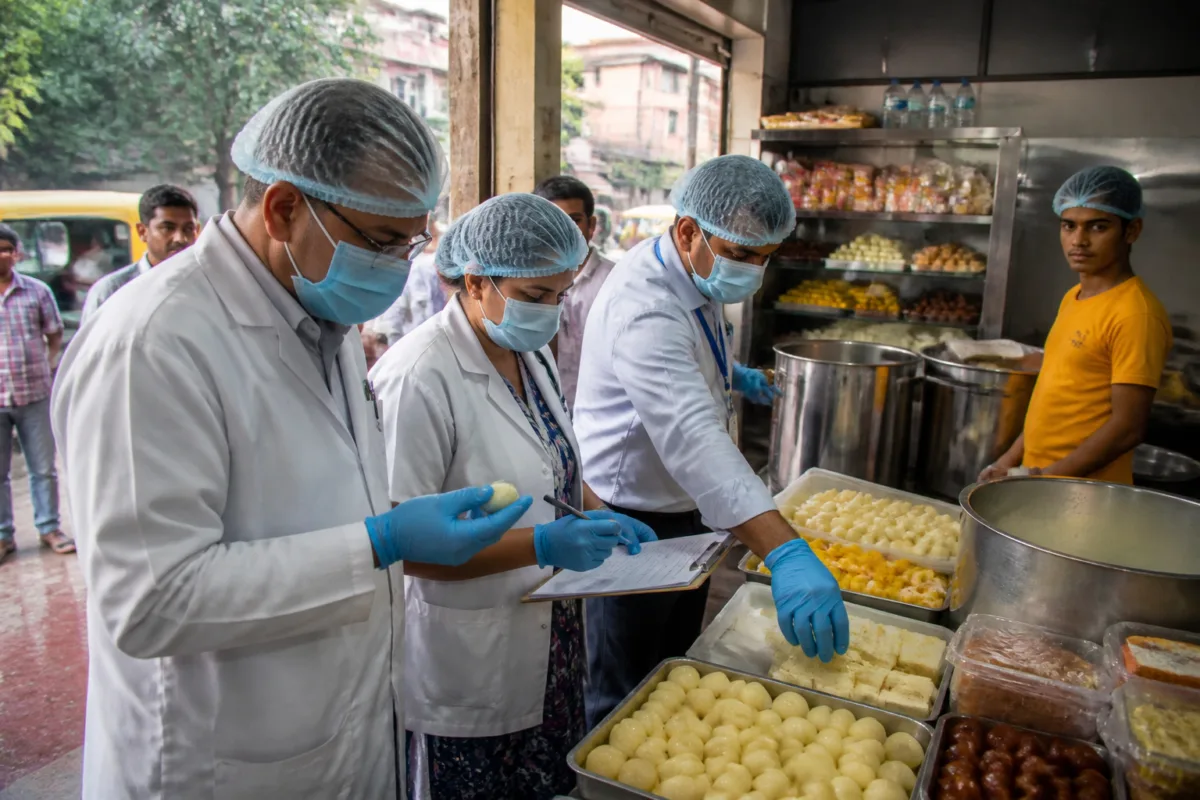
Delhi food safety inspections ahead of Deepavali have resulted in 40 samples being collected and nearly 100 kg of food material being destroyed after officials found products unfit for consumption across several parts of the city.
The Delhi government’s Food Safety Department inspected sweet shops, dairies and food manufacturing units in North-East, East, Shahdara, South and South-East Delhi. Improvement notices were issued to eight establishments over deficiencies in hygiene and sanitation standards, according to a report by Millennium Post – Delhi.
During an inspection at a dairy in Mandoli Extension, officials found foul-smelling khoya and rasgullas, along with milk contaminated by mosquitoes and flies. Nearly 100 kg of the material was destroyed following the inspection.
The action covered both retail outlets and production premises, bringing attention to the conditions under which commonly consumed festive foods are prepared, stored and sold. In South and South-East Delhi, officials inspected 12 establishments and collected 18 samples of sweets, khoya, paneer, ghee and other dairy products.
A separate inspection at a sweet manufacturing unit in Nihal Vihar was conducted after a complaint. Officials found that the unit was operating without registration from the Food Safety and Standards Authority of India, or FSSAI. Three samples were collected from the premises for further examination.
In North-East Delhi, East Delhi and Shahdara, food safety teams collected 22 samples, including khoya, paneer, ghee, kalakand and other sweets. The sampling drive is intended to establish whether the products comply with food safety requirements, with further action to be based on laboratory reports and inspection findings.
Delhi Chief Minister Rekha Gupta said food adulteration, the sale of contaminated items and disregard for hygiene standards were serious issues directly linked to public health. She said the Delhi Government would not tolerate negligence and had directed officials to conduct regular inspections and take strict action against violators.
The inspection drive places enforcement and laboratory testing at the centre of the city’s festive-season food safety response. While the destruction of visibly unsuitable material prevents those products from entering the market, the final regulatory action in the sampled cases will depend on the laboratory results and the findings recorded by the department.
The department’s next steps are to examine the collected samples and proceed on the basis of the laboratory reports and inspection findings. The government has also directed officials to continue regular inspections of food establishments.

