


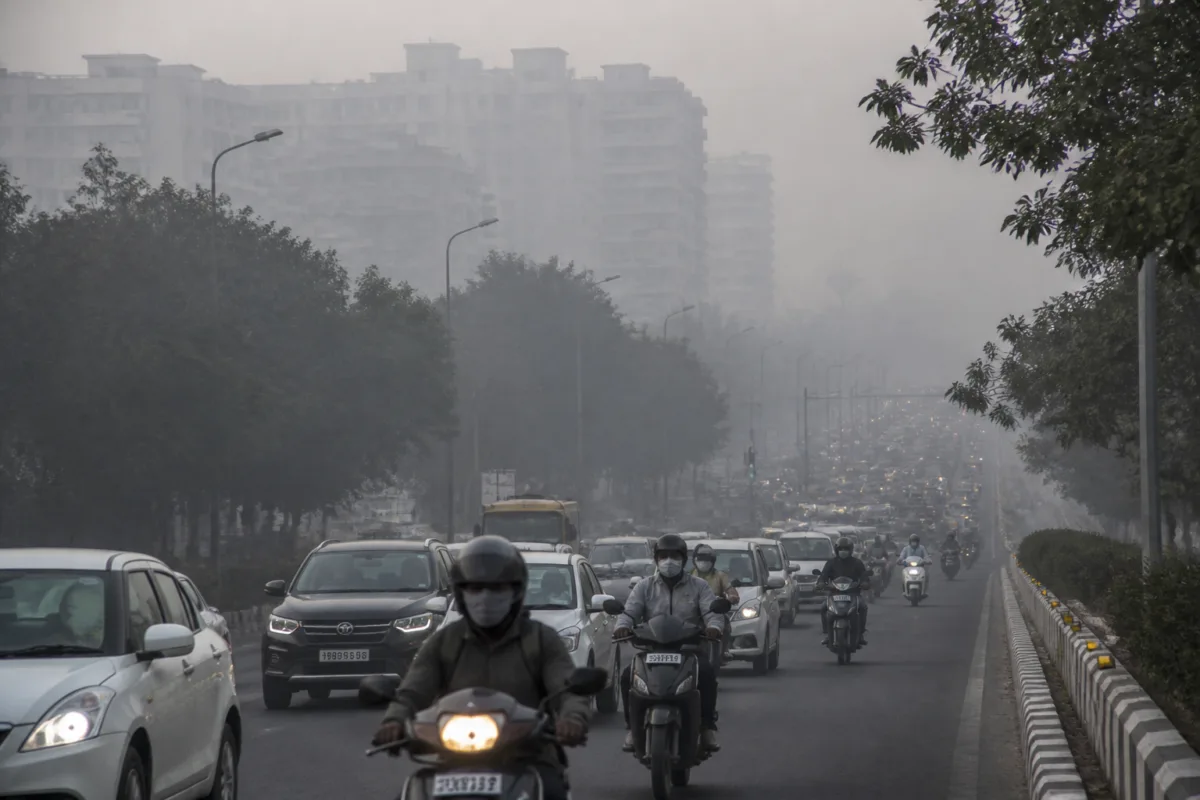
Delhi AQI remained in the ‘very poor’ category on 7 November, with the city recording an average reading of 369 at 4 pm, according to a report by Live Hindustan. The report said weak wind speeds and unfavourable weather conditions were preventing pollutants from dispersing, leaving residents without immediate relief from deteriorating air quality.
The reported AQI was marginally better than the previous day’s reading of 382, recorded at 4 pm on 6 November. Despite the improvement, both readings remained within the ‘very poor’ category, indicating that the change was limited and did not represent a substantial improvement in Delhi’s air conditions.
The report attributed the stagnant pollution levels to weather conditions that were not favourable for the spread and removal of pollutants. When wind movement is weak, emissions can remain concentrated near the ground, increasing exposure for people living and working across the capital and the wider National Capital Region.
Live Hindustan reported that the India Meteorological Department had forecast light to moderate fog during morning hours across Delhi and NCR. It also said that skies were expected to remain clear during the day. The report further stated that weather conditions on 8 and 9 November were unlikely to provide significant relief from pollution.
The report also cited the possibility of a further rise in pollution during Diwali because of fireworks. It did not provide a quantified estimate of the expected contribution from firecracker emissions or specify how the forecast would affect individual NCR districts.
The information has a direct bearing on the daily functioning of Delhi and its surrounding urban region. Persistent very poor air quality can affect outdoor travel, work, schooling and public-health decisions, particularly for people with respiratory or cardiovascular conditions. However, the supplied report does not provide an official health advisory, district-wise AQI readings, pollutant-specific concentrations or details of any emergency measures being implemented by civic or pollution-control authorities.
There is also a date discrepancy in the supplied report. While the article is published on 7 November, its forecast section refers to conditions expected until 13 October. That inconsistency makes the forecast period unclear and requires confirmation before the timeline is treated as established. The reported AQI readings for 6 and 7 November are presented separately in the source and remain the clearest current facts available in the supplied material.
Further reporting should establish the official forecast period, the latest district-wise AQI readings and whether authorities have issued restrictions or public-health guidance for Delhi and NCR. Until then, the available report supports a finding of continued very poor air quality, but not a fully verified forecast for the coming days.

