


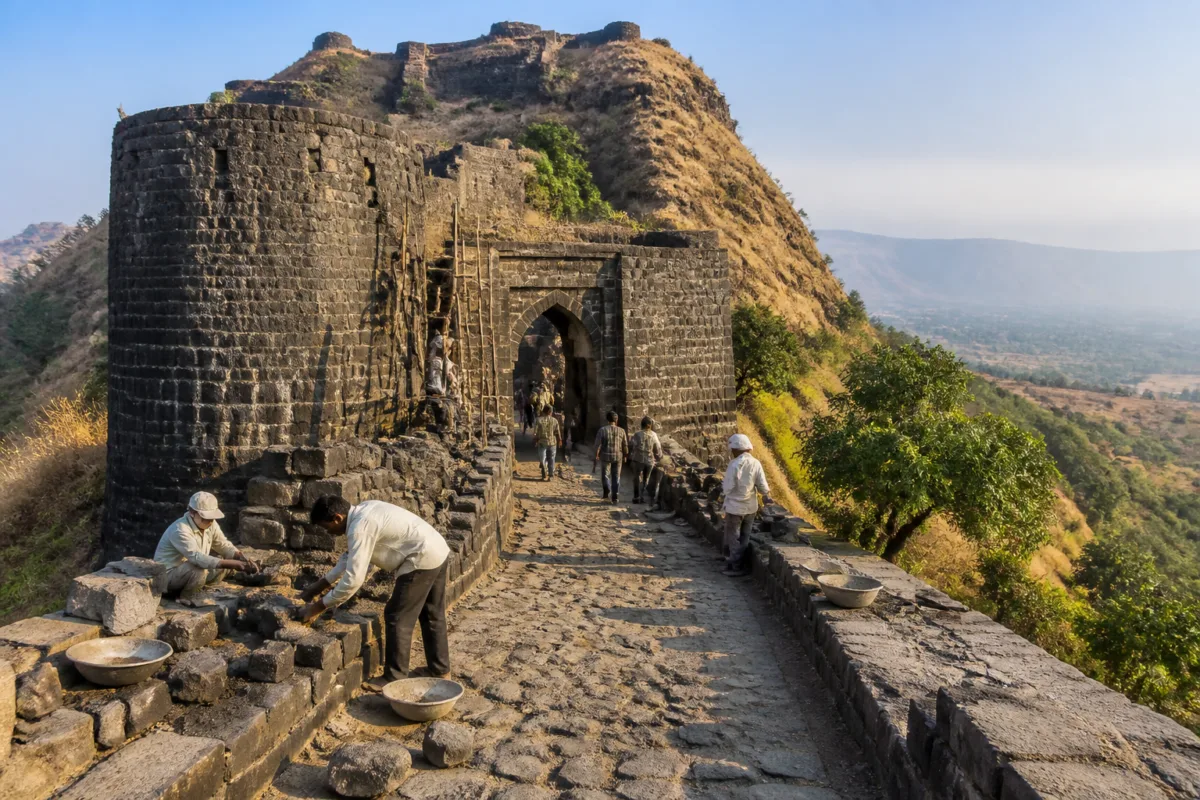
Sinhagad Fort conservation work is set to receive an estimated Rs 9 crore allocation in Maharashtra’s 2026-27 financial year, with repairs to its historic gates, ramparts and visitor pathways included in a plan prepared by the Archaeology Department. Pune district authorities have said the tender process has begun.
The plan covers the restoration of all three entrances of Pune Darwaza, repairs to stone steps and the parapet wall along the approach path, and construction of a roughly 750-metre stone walkway from the parking area to the memorial of Tanaji Malusare. Information and directional signage is also proposed in accordance with UNESCO guidelines.
Pune District Collector Jitendra Dudi said the District Planning Committee had reserved approximately Rs 9 crore for the conservation programme during 2026-27. The information was reported by Lokmat – Pune based on a presentation by the Archaeology Department and statements from the district administration.
A subsequent phase of the plan proposes repairs to approximately 315 running metres of damaged protected fortification. The work is expected to include strengthening sections of the ramparts, repairing bastions, stone paving, cleaning masonry and carrying out grouting. Observations in the department’s presentation reportedly identified dislodged sections of stone construction, damaged steps and the accumulation of soil and silt along parts of the fortifications.
The proposed conservation approach calls for repair methods and materials compatible with the original stone construction. The plan also includes scientific excavation in selected areas and conservation of the structure at Devtake. The walls and roof of the Devtake structure are proposed for repair as part of the wider heritage works.
A significant visitor-oriented element is the proposed conversion of the old wada behind the memorial of Chhatrapati Rajaram Maharaj into a museum and exhibition space. The concept includes an information centre, historical displays, directional signs and interpretation panels intended to help visitors understand the fort’s history. The presentation also proposes the use of digital tools such as augmented reality and virtual reality, along with a small refreshment facility linked to the museum.
Sinhagad, historically known as Kondhana, occupied a strategic position on the route connecting Pune and the Konkan region. It is closely associated with the 1670 Battle of Sinhagad and the role of Tanaji Malusare. The fort covers approximately 85 acres, while the wider Ghera Sinhagad area extends across 7,760 acres and includes Moradari, Kalyan, Mogarwadi, Khamgaon Maval, Bhagatwadi, Sambarewadi and Atekarwadi.
The administration has described Sinhagad as an important symbol of Pune district and said its conservation is necessary. The immediate next step identified by the authorities is the tender process for the proposed works.

