


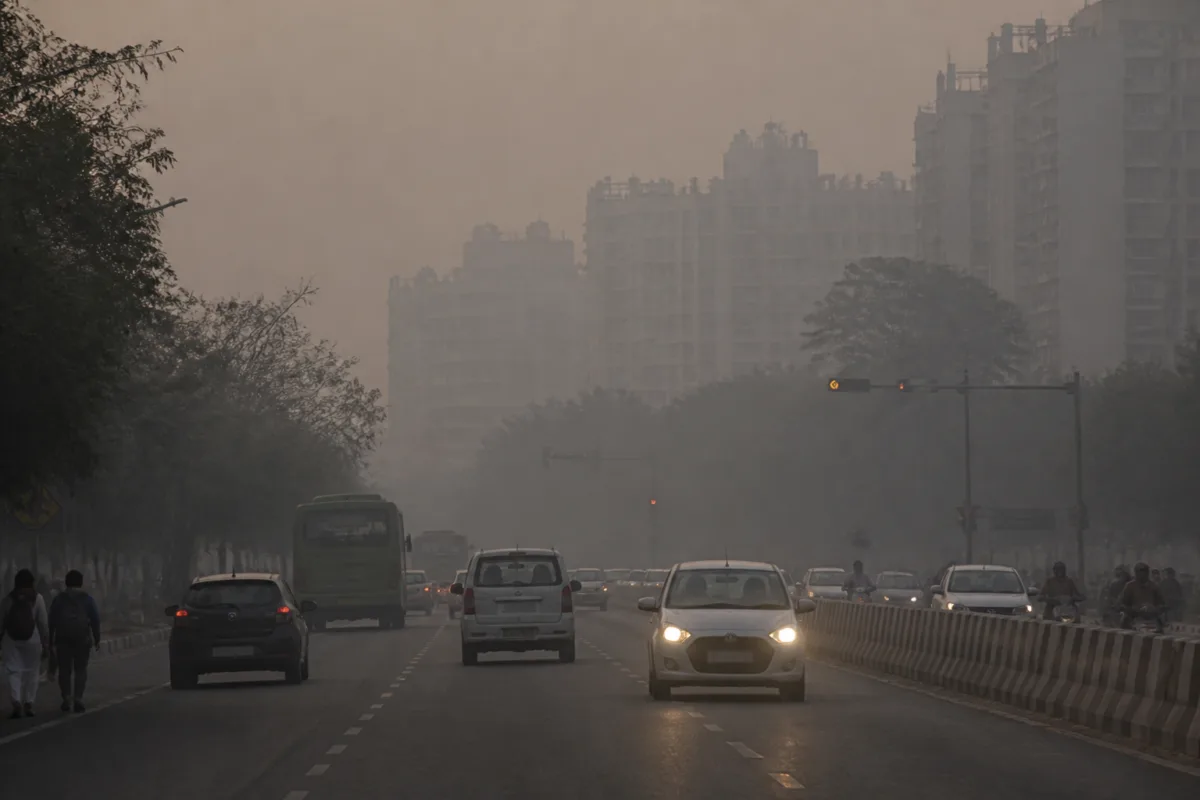
Delhi’s air quality remained in the ‘very poor’ category on November 7, with weather conditions offering little immediate relief and light to moderate fog expected across Delhi-NCR in the mornings, according to a report by Live Hindustan.
The average Air Quality Index (AQI) in Delhi was recorded at 369 at 4 pm on November 7. This was a marginal improvement from the previous day, when the city recorded an average AQI of 382 at the same time. Despite the decline, air quality continued to remain in the ‘very poor’ range.
The report said low wind speed and unfavourable weather conditions were preventing pollutants from dispersing. With limited movement of air, emissions and particulate matter can remain concentrated near the ground, allowing pollution levels to stay elevated across the urban region.
The India Meteorological Department has forecast light to moderate fog during the morning hours in Delhi and adjoining National Capital Region areas. Skies are expected to remain clear during the day, but the reported weather pattern is not expected to produce a substantial improvement in air quality in the immediate term.
According to the report, adverse meteorological conditions are expected to continue on November 8 and 9, when pollution levels may remain high. The report cited experts as warning that fireworks during Diwali could add to pollution levels, although the extent of any increase was not specified.
The AQI reading offers a snapshot of the pressure facing Delhi’s urban environment as winter weather begins to restrict the movement of pollutants. The report does not provide a detailed source-wise breakdown of the city’s pollution, nor does it identify the contribution of transport, construction, industry, dust or seasonal burning to the recorded level.
For residents, the combination of poor air quality and morning fog can affect visibility and outdoor activity. The supplied report does not cite any new restrictions, school advisories, traffic measures or emergency actions by Delhi or NCR authorities in response to the readings.
The immediate forecast cited in the report points to continued monitoring of both weather conditions and AQI levels. Delhi’s average AQI reading and the expected conditions on November 8 and 9 will determine whether the marginal improvement recorded on November 7 develops into a sustained decline or remains a short-term fluctuation.

