


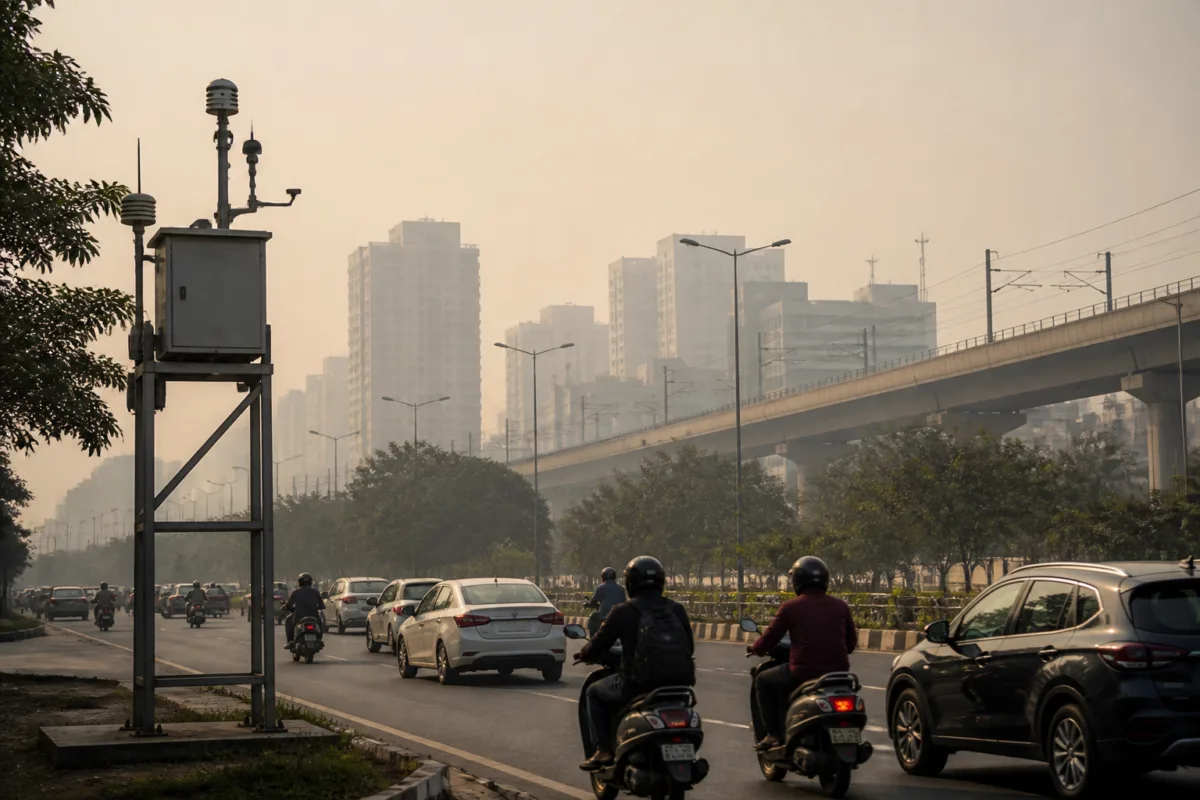
Delhi’s air quality deteriorated from the satisfactory to the moderate category within 24 hours, with the city’s Air Quality Index rising from 60 to 117 as changing weather conditions began to weaken the recent improvement. The Air Quality Early Warning System has indicated that Delhi’s air could remain in the poor to very poor categories over the next six days.
The deterioration followed a sharp improvement recorded on Friday, when Delhi’s AQI stood at 60. The reading was reported as the cleanest October air recorded in the city in the past four years. The previous comparable October reading was an AQI of 44 on 10 October 2022.
On Saturday, 24 of Delhi’s 58 monitoring stations recorded air in the satisfactory category, while 32 stations reported moderate air quality. Two stations recorded poor air. Jahangirpuri recorded the highest AQI among the locations mentioned in the report, at 243.
According to the Air Quality Early Warning System, Delhi’s AQI was expected to remain in the moderate category on Sunday. The system also projected that air quality could move into the poor to very poor range during the following six days. These changes are linked in the report to shifts in weather conditions and wind movement, which influence the dispersal or accumulation of pollutants across the National Capital Region.
The India Meteorological Department has forecast clear weather in Delhi and the NCR from 1 November to 6 November. Winds are expected to strengthen slightly on 1 November. Maximum temperatures are likely to remain between 28 and 30 degrees Celsius from 1 to 3 November and again on 5 and 6 November. The maximum temperature on 4 November is expected to be between 27 and 29 degrees Celsius.
The weather outlook comes as another system develops over the Bay of Bengal following Cyclone Arnab, according to the report. The IMD said the system over the south-east Bay of Bengal could intensify into a severe low-pressure area during the next 24 hours and move towards the Andhra Pradesh coast by the evening of 2 November. The system is expected to bring heavy rain to several parts of the country, but no impact on Delhi-NCR’s weather is expected from it.
Delhi’s monitoring figures show how quickly air-quality conditions can change even after a significant short-term improvement. The gap between an AQI of 60 on Friday and 117 on Saturday also reflects the importance of wind direction, atmospheric conditions and local pollution sources in determining day-to-day exposure for residents.
The next official air-quality assessment is expected on Sunday, followed by continued monitoring through the six-day period during which the early-warning system has forecast a possible deterioration into the poor and very poor categories.

