


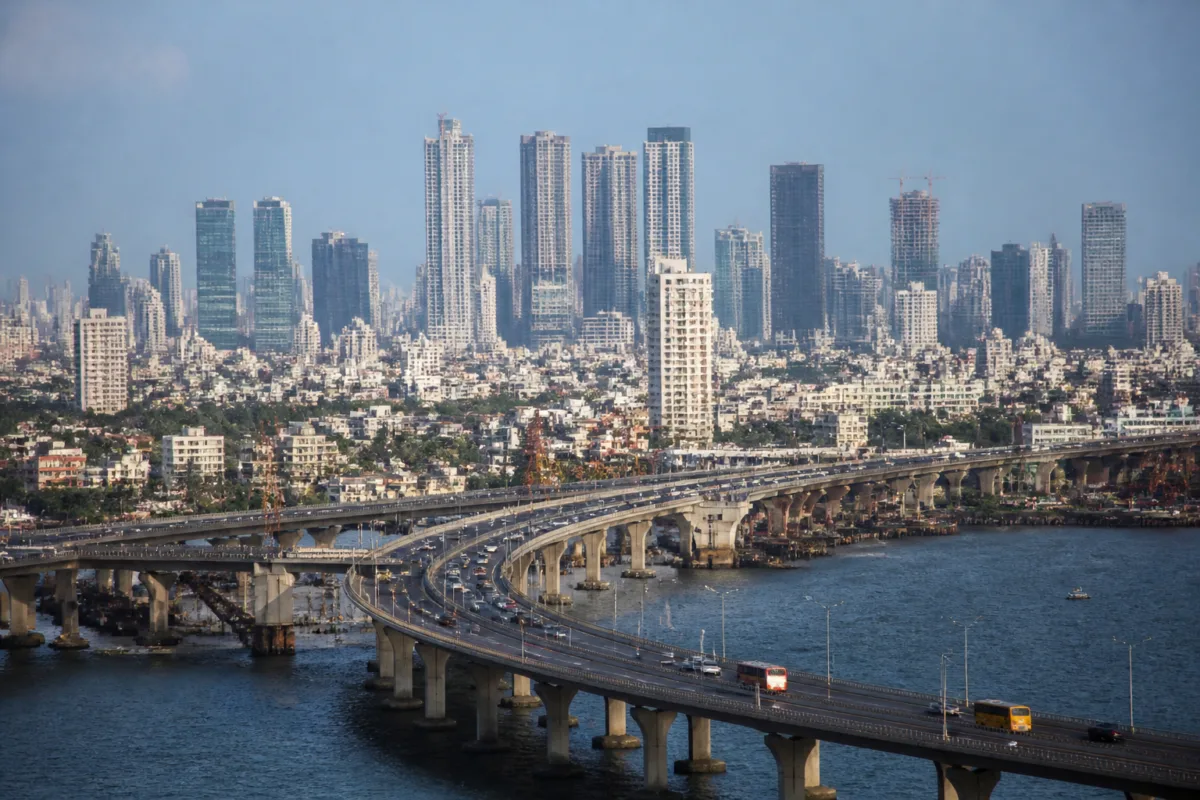
Mumbai has entered the top 10 preferred Asia-Pacific destinations for cross-border real-estate investment, according to Colliers’ 2027 Global Investor Outlook report, with the city’s appeal linked to infrastructure development, occupier demand and a deeper pool of investment-grade assets.
Colliers said Mumbai’s ranking reflected increased global confidence in India’s established markets and their long-term growth potential. The report identified infrastructure upgrades, strong demand from occupiers and greater institutional participation as factors strengthening the city’s investment proposition.
The assessment covers several parts of the metropolitan real-estate market. Indian cities are seeing investment activity across residential, industrial and logistics, data centres, hospitality and other asset classes, the report said. In Mumbai, the combination of demand and infrastructure investment is expected to support interest in higher-quality assets.
Two major projects highlighted in the report are the Mumbai Trans Harbour Link and Navi Mumbai International Airport. Colliers said these developments were improving regional connectivity and could unlock new growth corridors across the metropolitan region. The report did not provide a quantified estimate of the additional development or investment that could result from either project.
The investment outlook is also being shaped by financing conditions. Asia-Pacific investors are navigating higher financing costs, while 60 per cent of capital deployment in the region is focused on value-add and opportunistic strategies, according to the report. This indicates a more selective approach, with investors favouring markets and sectors that offer income growth, value creation and long-term stability.
In India, Grade A office assets in Mumbai, Bengaluru, Delhi-NCR, Hyderabad and Pune are expected to remain the preferred investment choice. Colliers attributed this preference partly to occupier demand from global capability centres, which continue to support demand for high-quality office space.
Office assets accounted for 37 per cent of total real-estate investments in India during the first nine months of 2026, the report said. At the same time, investment in alternative and hospitality assets rose six to seven times compared with the corresponding period in 2025.
Mumbai is also seeing renewed investor interest in data centres, according to Colliers. The report linked this interest to growing hyperscale requirements and expanding enterprise data usage. It also identified asset repositioning, sustainability initiatives, operational improvements and artificial-intelligence-led transformation as key investment themes for 2027.
For Mumbai and the wider metropolitan region, the report points to a market where infrastructure connectivity and the availability of institutional-quality assets are increasingly connected. Better links between established business districts, transport infrastructure and emerging development areas may improve the attractiveness of locations beyond traditional commercial centres. However, the report’s findings describe investment preferences rather than guaranteed development outcomes.
Globally, Tokyo ranked first among preferred Asia-Pacific destinations for cross-border investment, followed by Osaka and Sydney. Melbourne, Singapore, Brisbane, Sapporo and Seoul were among the other preferred destinations listed by Colliers.
The report’s outlook suggests that Mumbai’s continued appeal will depend not only on investor interest but also on the city’s ability to provide well-connected, high-quality and efficiently operated real-estate assets. It also places offices alongside logistics, hospitality, residential, data-centre and other alternative assets in the next phase of institutional activity.

