


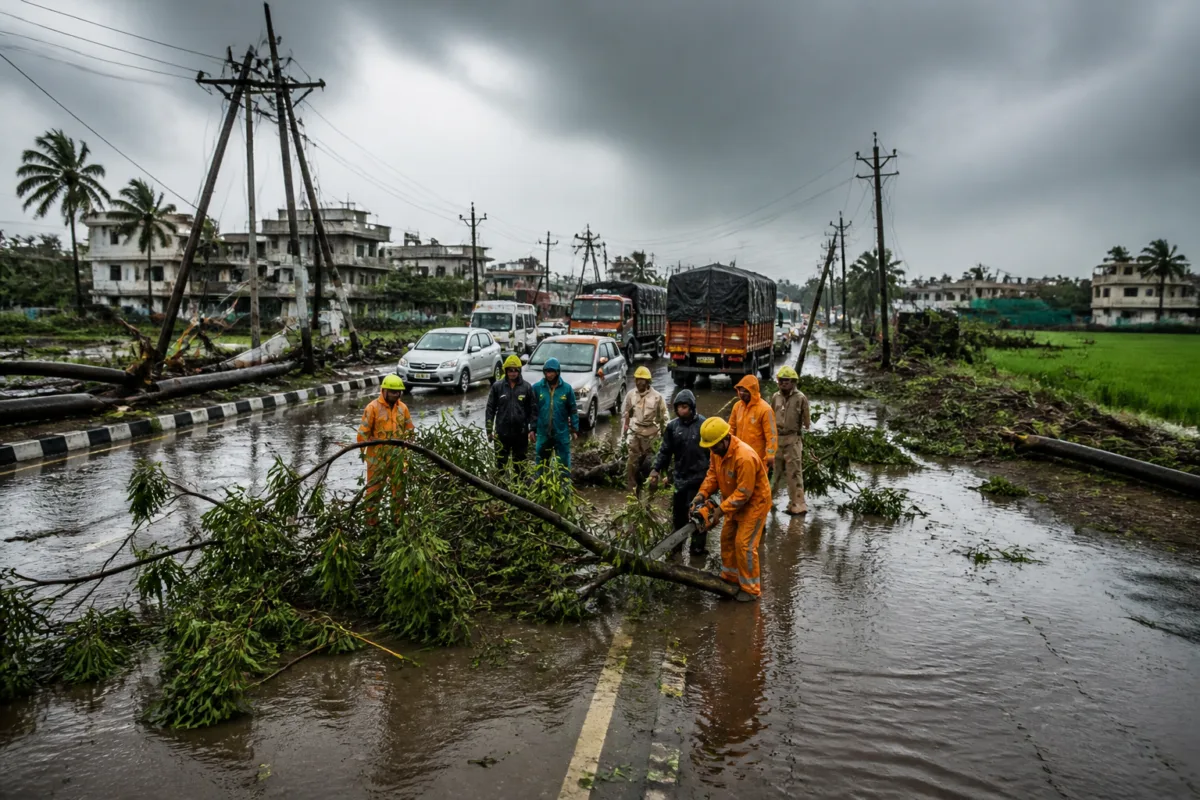
Cyclone Murasu disrupted normal life across Andhra Pradesh on Tuesday after crossing the south Andhra Pradesh coast with winds of 100-110 kmph and gusts reaching 120 kmph, damaging standing crops, roads, electric poles and fishing boats across several districts.
Chief Minister N Chandrababu Naidu said the state machinery was coordinating with Central teams to carry out rescue, relief and road-clearing operations. He thanked the Centre for what he described as its “prompt support and solidarity” during the severe cyclonic storm.
Naidu said the state government and Central agencies were working together to execute rescue, relief and road-clearing work without delay. He added that the coordinated response would focus on ensuring safety and supporting recovery across the affected areas.
Union Home Minister Amit Shah said he had spoken to Naidu by telephone to take stock of the cyclone’s impact. In a post on X, Shah said the Centre had assured Andhra Pradesh of “every possible assistance” and that National Disaster Response Force and State Disaster Response Force teams were already operating on the ground.
The cyclone left a trail of damage along the Andhra Pradesh coast, uprooting thousands of trees, damaging hundreds of electric poles and wrecking fishing boats, according to the report. The damage has affected key public infrastructure and local livelihoods, while response teams have been tasked with assisting residents and restoring access on blocked routes.
Bapatla and Prakasam districts recorded heavy rainfall and gusty winds, with standing crops damaged across thousands of acres in 15 districts. Several areas were inundated, adding pressure on local authorities managing rescue and relief operations.
Road transport was also affected. Vehicles were stranded on national highways as heavy rain and strong winds reduced visibility. Motorists faced difficulty navigating the affected stretches, leaving commuters stranded at several locations. Road clearing has therefore become a central part of the immediate response, alongside assistance to affected households and the restoration of damaged infrastructure.
According to the Meteorological Department, Cyclone Murasu crossed the coast between Nellore and Narasapur, near Ongole, between 3.30 am and 5.30 am on Tuesday. The storm’s passage through the south Andhra coast brought high winds and heavy rain to districts located along and near its track.
The immediate response involves state agencies working with Central teams, including the NDRF and SDRF. The authorities’ stated priorities are rescue, relief, assistance to affected people and clearing roads so that movement can resume in cyclone-hit areas. Further action will depend on the assessment of damage to crops, transport routes, power infrastructure and coastal livelihoods.

