


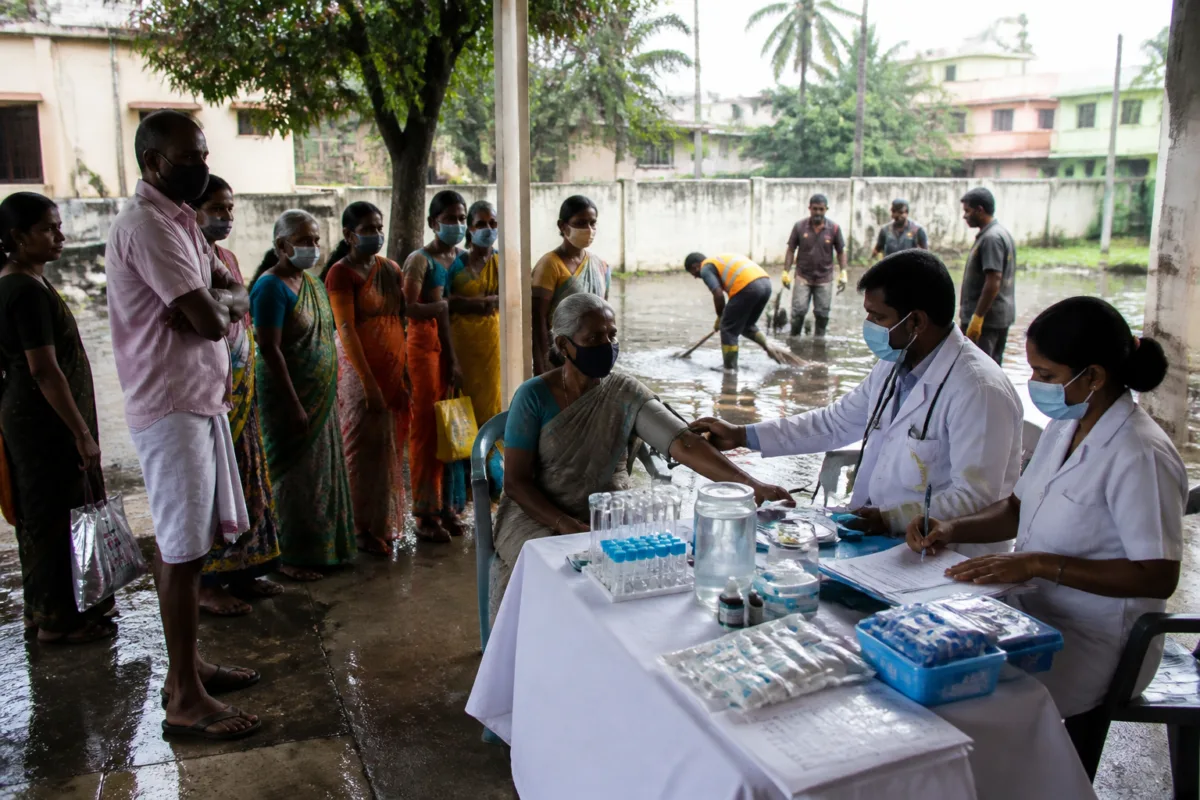
Coimbatore corporation’s monsoon medical camps screened 1,813 people on their first day after recent heavy rainfall, with health teams deployed across 33 locations linked to the city’s urban primary health centres. The six-day drive is focused on areas affected by water accumulation, low-lying zones and locations vulnerable to stagnant water and infections.
Each camp has a three-member team comprising a doctor, a nurse and an assistant. Camps were held in areas including Ram Nagar, Sastri Nagar, Selvapuram North Housing Unit, Nesavalar Colony and Government Officers Colony. Rainwater had accumulated in these localities before being cleared by corporation workers.
City health officer Dr V C Subash Gandhi said nine of the 1,813 people examined on Tuesday were diagnosed with fever. They were referred to government hospitals for further evaluation and blood tests, he said. The camps are scheduled to continue for the next five days, with different locations to be covered each day.
The corporation said the deployment would focus on inundated areas and places where water stagnation could increase the risk of infection. Mobile teams and RBSK teams will also be used to expand coverage, with RBSK focusing on school children.
The response combines medical screening with preventive measures. Health teams distributed oral rehydration solution and a Siddha herbal formulation at the camps. Health inspectors checked chlorine levels in drinking water, while sanitation teams carried out mass cleaning and sprayed disinfectants in affected localities.
Residents were advised to drink only boiled water to reduce the risk of water-borne illnesses, including diarrhoea, typhoid and jaundice. Officials also warned residents to avoid contact with potentially contaminated water, which can transmit leptospirosis, particularly after heavy rainfall and flooding.
The corporation’s instructions also address mosquito-borne disease risks associated with stagnant water. Residents have been asked to remove water collected in discarded containers, tyres, coconut shells and flowerpots, which can become breeding sites for mosquitoes linked to dengue and other diseases.
The six-day schedule places the corporation’s response at the intersection of public-health surveillance, sanitation and local drainage conditions. Rather than limiting the intervention to clinic-based treatment, the teams are combining screening, drinking-water checks, disinfection and household-level precautions in areas affected by recent rainfall.
The camps will continue over the next five days, with mobile teams covering additional locations and school-focused teams extending screening among children.

