


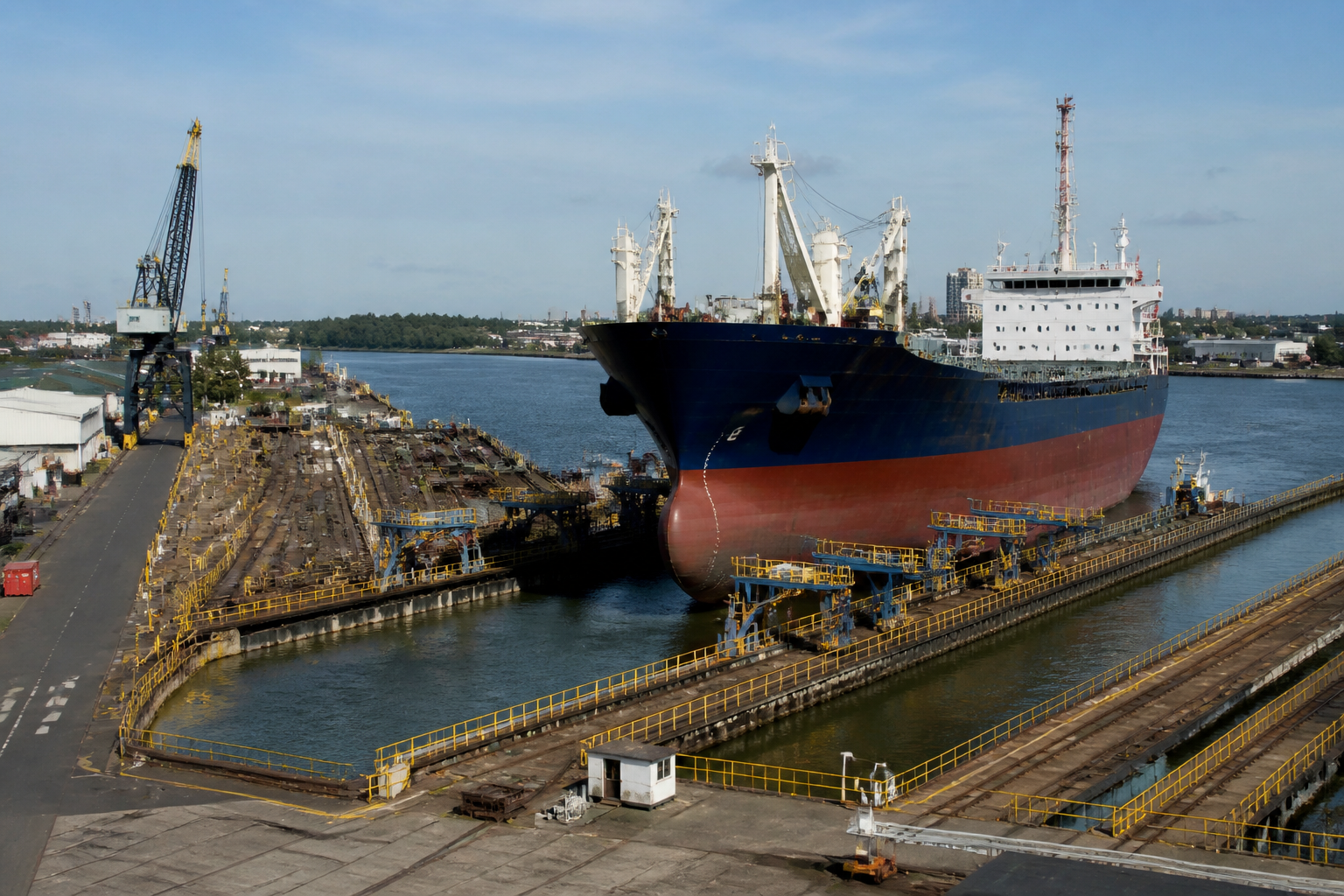
Cochin Shipyard’s proposed Rs 1,800 crore joint venture with DP World’s Drydocks World Dubai is more than a corporate restructuring of a Kochi facility. It is a test of whether India can turn its growing maritime presence into a stronger domestic ship repair ecosystem.
The state-run shipbuilder has approved a proposal to create a 50:50 joint venture with Drydocks World Dubai FZCO to operate and manage the International Ship Repair Facility at Willingdon Island. Cochin Shipyard plans to transfer the facility to the joint venture through a slump sale. Half of the consideration would be received in cash and the remaining half in the form of shares in the joint venture.
The arrangement places a recently commissioned strategic asset into a partnership in which the international operator will have a stronger management role. Drydocks World is expected to nominate three of the joint venture’s five directors and, where applicable, senior executives including the chief executive, chief financial officer and chief operating officer. Cochin Shipyard would nominate the remaining two directors.
That structure makes the proposed transaction relevant to the way public infrastructure is operated, not only to the valuation of one company asset. The International Ship Repair Facility was built at a cost of Rs 970 crore and began commercial operations in August 2024. Its transfer valuation has been placed at about Rs 1,800 crore by an independent valuer, equivalent to around 30.55% of Cochin Shipyard’s net worth as of March 31, 2026.
The facility occupies around 30 hectares on Willingdon Island. It has a 6,000-tonne ship lift and transfer system, six workstations and about 1,400 metres of berthing space. Its stated capacity allows it to repair up to six vessels at the same time and handle as many as 82 ships annually. The proposed joint venture would also add 10 workstations, expanding the facility’s physical operating capacity.
The numbers indicate an asset that is still in the early phase of its commercial life. The facility generated revenue of Rs 207.33 crore in FY26, contributing about 4.81% of Cochin Shipyard’s revenue from operations. The proposed transaction therefore combines a significant capital asset with an operating business that has only recently begun building its revenue base.
The central question is whether a global partnership can accelerate that ramp-up. Cochin Shipyard has said the objective is to combine its shipbuilding and repair capabilities with Drydocks World’s international experience, advanced technologies and operating processes. The expected outcomes include improved quality, greater efficiency, shorter turnaround times and the ability to undertake more complex and high-value repair projects in India.
Drydocks World brings a larger international operating platform to the arrangement. The Dubai-based marine and offshore services company has more than four decades of experience and undertakes more than 300 projects annually, according to the information released about the proposed transaction. Its Dubai facility is described as the largest ship repair facility in the Middle East, and the company has completed more than 9,000 ship repair, maintenance and upgrade projects since its establishment.
The partnership’s urban and infrastructure significance begins with Kochi’s location. Willingdon Island is part of the city’s port system, where industrial land, marine access, logistics networks and public-sector infrastructure intersect. A ship repair facility is not an isolated industrial site: its performance depends on berthing, vessel movement, access to skilled labour, supply chains, port coordination and the availability of specialised services around the asset.
A larger repair operation could deepen those connections. Ship repair supports activity across engineering, fabrication, electrical systems, marine equipment, inspection, logistics and technical services. However, the supplied information does not establish the number of jobs the joint venture could create, the expected increase in local procurement or the wider economic impact on Kochi. Those outcomes will depend on the facility’s utilisation, the type of vessels it attracts and how effectively the partners integrate the site into regional and international shipping routes.
The facility is designed to handle commercial and naval vessels below 130 metres in length and weighing up to 6,000 tonnes. That operating envelope gives the joint venture a defined market, while also indicating that the proposed expansion is not an unlimited increase in capability. The addition of 10 workstations may improve throughput, but the information available does not specify the revised annual vessel capacity or the capital cost and completion schedule for the expansion.
This is important because ship repair competitiveness is measured not only by physical capacity. Turnaround time, repair quality, pricing, berth availability and the ability to manage complex maintenance work all influence whether vessel owners choose a facility. Cochin Shipyard and Drydocks World have framed the partnership around these operational factors, but the proposal has not yet demonstrated how performance will change after the joint venture begins work.
The governance arrangement will also shape the outcome. Although ownership is evenly divided, management representation is not. Drydocks World’s right to nominate three of five directors and key senior management personnel gives it greater influence over daily operations and strategic execution. That may allow the facility to adopt the partner’s practices more quickly, but it also makes the agreement’s implementation framework important: responsibilities, performance targets, investment commitments and accountability will determine how the partnership works in practice.
The transaction remains subject to several approvals. These include permissions from the Cochin Port Authority, the Ministry of Ports, Shipping and Waterways, the Department of Investment and Public Asset Management and Cochin Shipyard’s shareholders. The two companies have finalised the joint venture, shareholders, business transfer and licence agreements. The joint venture agreement is proposed to be signed on September 11, with implementation expected before the end of the current financial year, subject to the required approvals.
Those approvals place the proposed transfer within a broader public-sector asset and port-governance framework. Cochin Shipyard is a state-run company, while the facility is located within a port-linked industrial environment. As a result, the transaction requires coordination between the company, port authorities, the central ministry responsible for shipping, the government department overseeing public-sector investment and shareholders.
The institutional structure matters because the facility’s commercial performance will be connected to public infrastructure and regulatory permissions. The proposal is not simply a private sale of an industrial property. It involves transferring an operating maritime facility into a jointly owned entity while retaining a public-sector shareholder and requiring approvals from multiple authorities.
The available figures show both the scale of the opportunity and the uncertainty that remains. The facility cost Rs 970 crore to build, has been valued at Rs 1,800 crore and generated Rs 207.33 crore in FY26 revenue. It has six workstations, 1,400 metres of berthing space and a stated annual capacity of up to 82 ships. The proposed joint venture would add 10 workstations, but no revised revenue target, investment schedule or utilisation forecast has been disclosed in the supplied material.
That gap is significant for assessing the proposal. A higher valuation does not by itself establish that the facility has reached its potential, while early revenue does not show how the asset will perform over a longer operating cycle. The partnership’s stated rationale is therefore built around future operational improvement, even though the precise targets against which that improvement will be measured have not been provided.
The announcement also does not establish whether naval and commercial repair work will be allocated differently, how the facility will prioritise vessels during periods of high demand or whether additional supporting infrastructure will be required as capacity expands. These questions are particularly relevant for a site that handles both commercial and naval vessels and operates within a port environment.
For Kochi, the larger urban question is how a port city can use specialised infrastructure to build a more diversified maritime economy. The International Ship Repair Facility provides a physical base for that ambition. The proposed partnership provides an operating model intended to connect that base with international expertise. But the evidence currently confirms the transaction structure and the partners’ stated objectives, not yet the final economic or operational results.
The next milestones are formal rather than speculative: the proposed signing of the joint venture agreement on September 11, the required regulatory and shareholder approvals, and implementation before the end of the current financial year if those approvals are secured. The performance of the expanded facility will ultimately depend on whether the partnership converts its capital assets, management structure and international experience into higher utilisation, faster repairs and a sustained increase in ship repair activity from Kochi.
