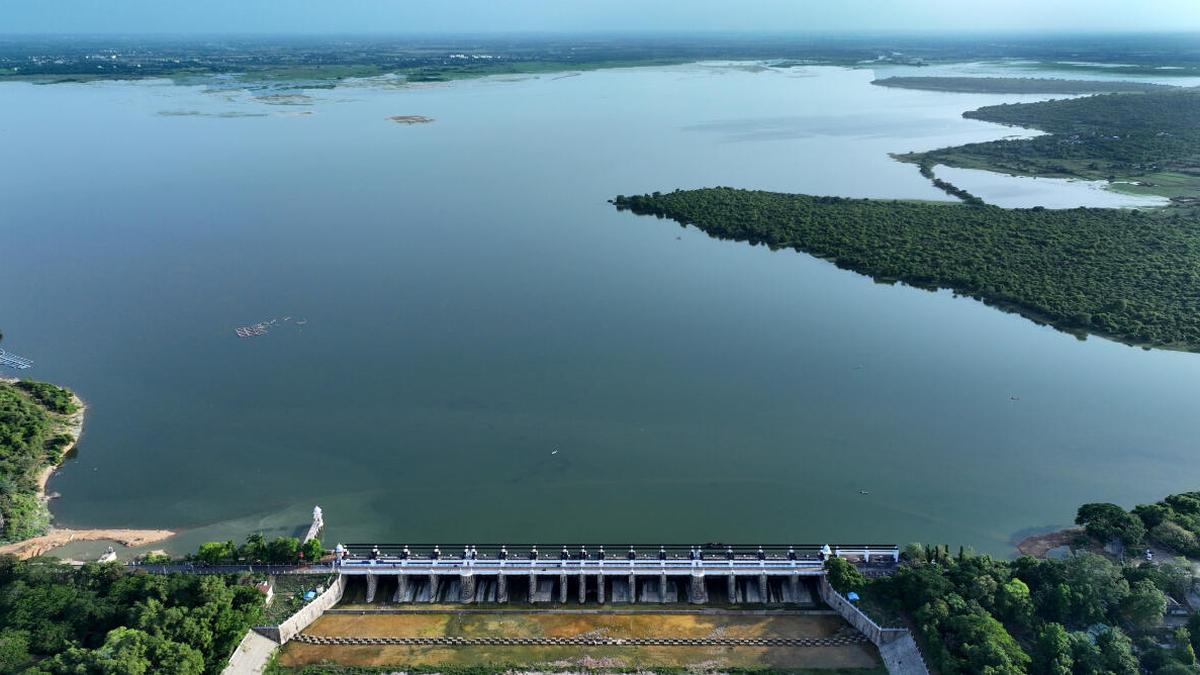
Chennai’s urban water network is being recalibrated ahead of an expected inflow from Andhra Pradesh’s Krishna river system, with authorities beginning to lower storage levels at Poondi reservoir to create capacity for incoming supplies. The move comes at a critical point in the city’s summer water management cycle, when demand typically rises sharply across households, industries, and expanding suburban zones.
Officials associated with the city’s water management operations indicated that water currently stored in Poondi is being redirected to other major reservoirs including Red Hills and Chembarambakkam. The redistribution is intended to optimise storage efficiency before Krishna water is released from Kandaleru reservoir in neighbouring Andhra Pradesh in the coming days. For Chennai, the Krishna water supply remains one of the most significant inter-state lifelines supporting urban water security. The city’s dependence on distant river systems has increased over the years as rapid urbanisation, shrinking wetlands, and fluctuating monsoon patterns continue to strain local freshwater sources. Urban planners say the current exercise reflects how metropolitan regions are increasingly relying on coordinated reservoir management rather than seasonal rainfall alone.
The anticipated Krishna inflow is expected to provide temporary relief to the Chennai water system, particularly as temperatures rise and consumption levels accelerate across residential neighbourhoods and commercial corridors. Water demand has also expanded steadily with the growth of peripheral real estate clusters and industrial activity around the metropolitan region. Experts in urban infrastructure note that reservoir balancing exercises have become more frequent as climate variability alters rainfall distribution across southern India. While Chennai received substantial rainfall during previous monsoon periods, officials remain cautious about long-term storage sustainability due to unpredictable weather cycles and the city’s recurring vulnerability to both droughts and flooding.The preparation at Poondi reservoir also underlines the operational complexity of managing water in a dense coastal metropolis. Authorities must simultaneously maintain adequate drinking water reserves, minimise transmission losses, and ensure equitable distribution across core urban areas and newly urbanised outskirts. Analysts say such interventions are increasingly linked to broader conversations around climate resilience and sustainable urban planning.
Environmental observers have repeatedly stressed that long-term water security for Chennai cannot depend solely on inter-basin transfers. Restoration of lakes, protection of marshlands, groundwater recharge, wastewater recycling, and demand-side conservation are emerging as critical components of a resilient urban water strategy. Several civic experts argue that future infrastructure investments must prioritise decentralised and climate-adaptive systems capable of reducing pressure on distant reservoirs. For now, the incoming Krishna water is expected to stabilise supply conditions and help city administrators navigate peak summer demand. However, the broader challenge of building a water-secure Chennai amid rapid urban expansion and climate uncertainty remains firmly unresolved.