


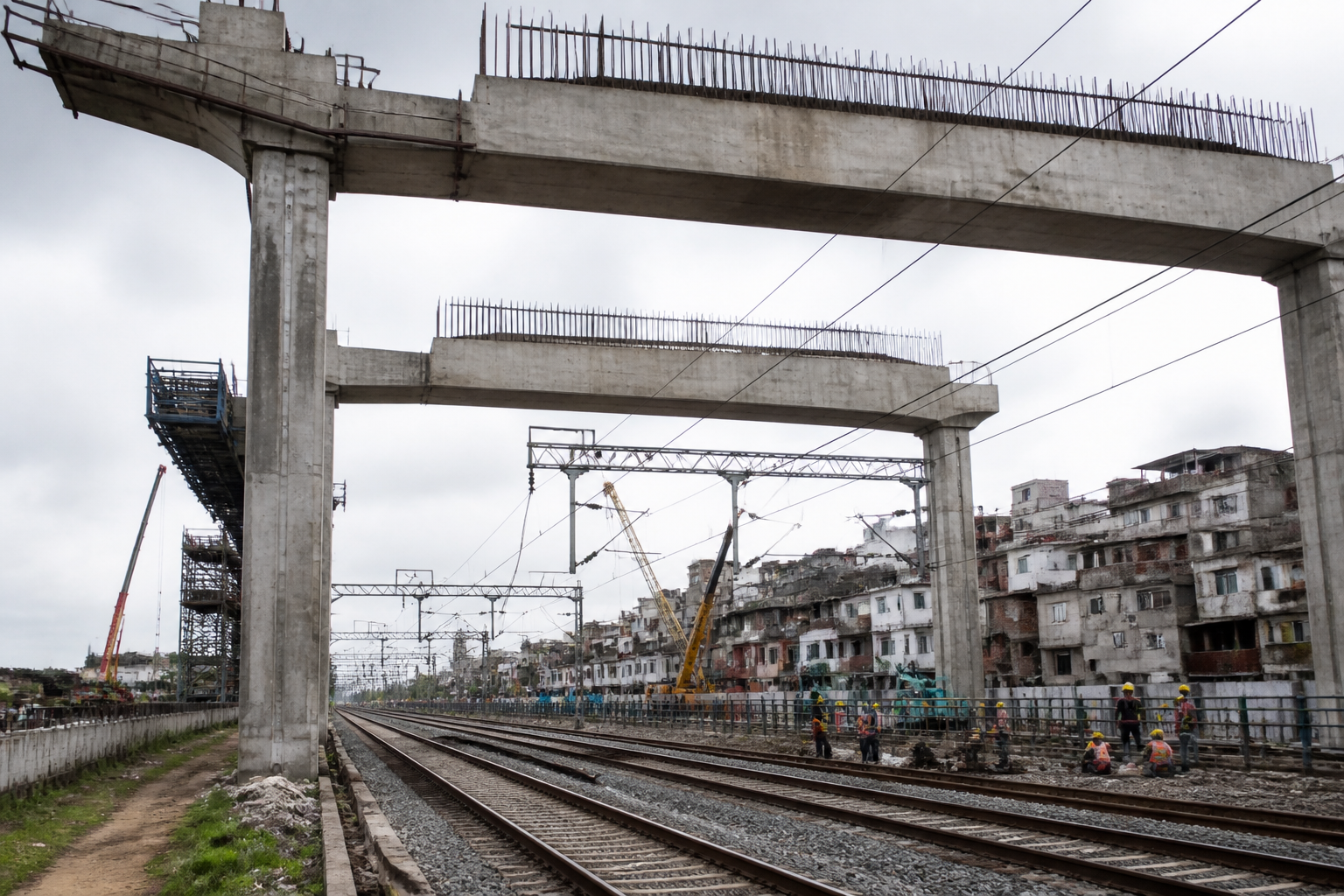
The Mumbai-Ahmedabad bullet train project has completed the installation of all 14 portal beams above the busy Delhi-Mumbai Rajdhani main line in Vadodara, marking a major step in constructing the high-speed corridor through one of its most technically difficult sections, according to a report by Gujarat Samachar – Ahmedabad.
The Vadodara section covered by the work is approximately 8.3 kilometres long and passes through densely built-up areas and a heavily used railway network. The bullet train viaduct must cross five railway lines, including the two main lines of Indian Railways, creating demanding requirements for structural design, train operations and clearance above active tracks.
The portal beams are located at two points along the route. Ten have been installed between Vadodara bullet train station and Vishwamitri railway station, while the remaining four are situated between Vadodara railway station and Chhayapuri railway station. Together, they provide the structural support required for the viaduct’s crossings over the existing railway infrastructure.
The route crosses the Delhi-Mumbai Rajdhani line diagonally. This alignment required specially designed structures to maintain adequate clearance for trains operating below while allowing construction of the elevated high-speed rail corridor above. The work was carried out in conditions where railway operations had to continue and available construction space was limited.
According to the report, each completed portal beam weighs approximately 1,500 tonnes. Because of the active railway network and restricted space, conventional precast launching methods could not be used. The beams were instead cast in situ, meaning that the concrete structures were constructed at their final locations rather than being manufactured elsewhere and transported for installation.
The next stage will involve placing composite girders, each approximately 40 metres long, across the Rajdhani main line using the completed portal structures as support. The remaining portions of the viaduct in this section will be built using span-by-span technology, under which individual spans are assembled sequentially along the alignment.
The Vadodara works illustrate the construction challenges involved when a new elevated railway is inserted into an operating urban transport network. Unlike a greenfield alignment with fewer existing constraints, this section must accommodate active passenger and long-distance train services, multiple railway crossings, dense development and limited working room at the same time.
The report described the completion of the 14 portal beams as the conclusion of the most complex structural work in this part of the bullet train corridor. The upcoming placement of the composite girders over the Rajdhani line will be the next major construction milestone for the Vadodara crossing.

