


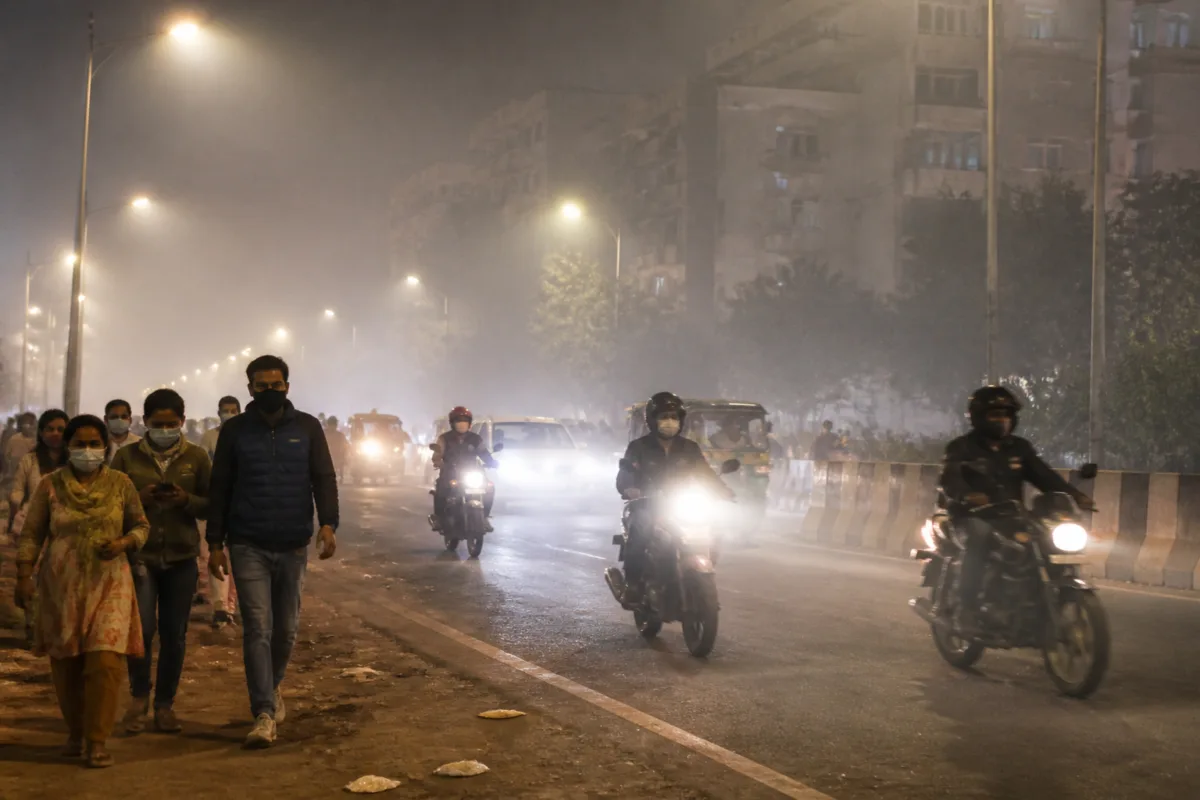
Bhubaneswar’s air quality entered the severe category on Diwali night, with the city recording an average Air Quality Index of 522 as heavy firecracker use drove PM2.5 concentrations to nearly 10 times the permissible limit in some areas. Dense smoke reduced visibility and residents reported breathing difficulties, eye irritation and nasal congestion across the Bhubaneswar-Cuttack region.
The highest pollution levels in Bhubaneswar were recorded between 7 pm and 11 pm, according to Niranjan Mallick, senior environmental scientist at the State Pollution Control Board. The timing coincided with the peak period of firecracker bursting, with pollution levels remaining substantially higher than those recorded in the city during the previous year’s Diwali.
At Unit-VIII, PM2.5 concentrations reached 589 micrograms per cubic metre, against the permissible limit of 60 micrograms per cubic metre. IRC Village recorded 488 micrograms per cubic metre, while the level at Palasuni reached 428 micrograms per cubic metre. The readings indicate that fine particulate pollution in these locations rose to more than eight times the permissible limit during the peak celebration period.
Other areas also recorded significant variation. The Lingaraj Temple area reported an AQI of 278, while the monitoring station near LV Prasad Eye Institute in Patia recorded a comparatively lower AQI of 117. Neighbouring Cuttack recorded an AQI of 287, placing it in the poor category but well below Bhubaneswar’s average reading.
The smoke affected visibility in several parts of the twin cities. In some localities, visibility fell to nearly 10 metres after firecracker activity intensified. Residents reported sneezing, eye irritation, nasal congestion and breathing difficulty. Suman Patnaik, a resident of Nayapalli, told the Times of India that a child in her family became breathless after returning from outside and required medical attention.
Mallick said Bhubaneswar’s pollution levels were higher than last year’s because people appeared to have continued bursting crackers until late at night. He added that the same pattern was not observed to the same extent in Cuttack, where the average AQI remained lower.
Medical specialist Dr K S Kumar said the elevated PM2.5 levels posed a particular respiratory risk. While PM10 particles mainly affect the upper respiratory tract, finer PM2.5 particles can penetrate deeper into the lungs and remain there for longer periods, potentially aggravating existing respiratory conditions.
The monitoring data places the immediate air-quality burden unevenly across the city, with Unit-VIII, Palasuni, Khandagiri, the Capital police station area, IRC Village and Nayapalli identified as major pollution hotspots. The available readings and health complaints show the sharpest deterioration occurred during the hours of peak firecracker use, when pollution monitoring stations recorded the city’s highest particulate concentrations.

