


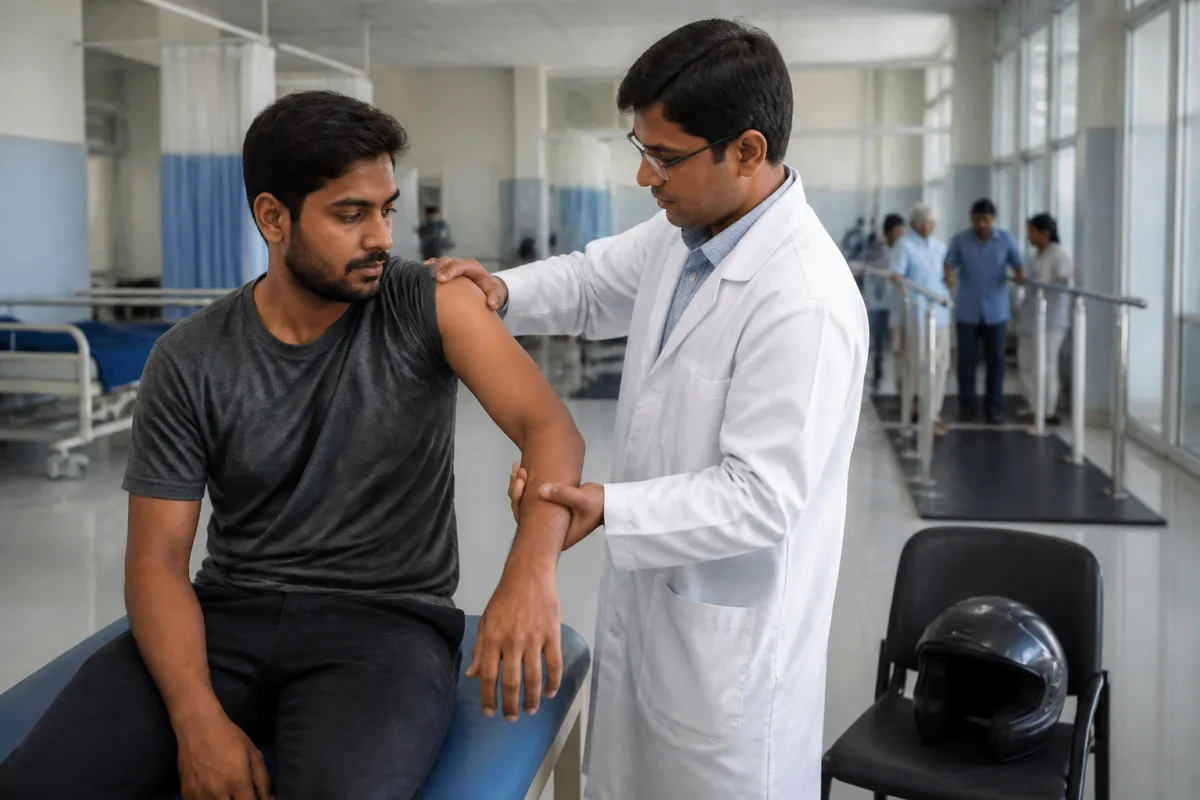
Brachial plexus injuries linked to road crashes account for 43% of surgeries for the condition at AIIMS Bhopal, highlighting a serious consequence of two-wheeler accidents that can leave patients with severe weakness or loss of movement in an arm. The figure was shared by Dr Abhinav Singh, assistant professor in the department of burns and plastic surgery at AIIMS Bhopal.
The brachial plexus is a network of nerves connecting the spinal cord to the shoulder, arm and hand. According to Dr Singh, these nerves can be stretched, compressed or torn when the neck and shoulder are forced in opposite directions during an accident. Damage can affect the nerves controlling arm and hand movement and, in severe cases, leave the limb almost paralysed.
Dr Singh said road traffic accidents, particularly those involving two-wheelers, can cause injuries beyond fractures. The injuries may substantially affect a person’s ability to carry out daily activities, including movements requiring the use of the arm and hand. The report also puts the medical burden in the context of road conditions and accidents in Bhopal, where crashes can produce complex injuries requiring specialised reconstruction and rehabilitation.
“These injuries can leave a patient’s hand and arm almost paralysed, severely affecting daily activities,” Dr Singh said. He added that brachial plexus injuries can have several causes, including fractures, nerve damage during surgery and, in extreme cases, prolonged poor workplace posture that contributes to nerve compression or injury.
The extent of nerve damage determines the treatment required. Depending on the injury, care may involve nerve reconstruction surgery followed by rehabilitation. Dr Singh advised people experiencing weakness or reduced arm movement after an accident or another injury to seek prompt medical attention. He said early diagnosis could improve the chances of functional recovery.
The clinical focus comes as AIIMS Bhopal strengthens its expertise in managing such injuries. Dr Singh recently completed a fellowship under Dr PS Bhandari, whom an institute press release issued on Thursday described as one of India’s leading specialists in brachial plexus surgery. The training is expected to add to the institute’s ability to assess and treat patients with complex nerve injuries.
The figures do not represent all road crash injuries in Bhopal, but specifically the share of brachial plexus surgery cases linked to road traffic accidents, as described by Dr Singh. They underline how the consequences of a crash can extend beyond visible bone injuries and require specialised diagnosis, surgery and long-term rehabilitation. AIIMS Bhopal’s advice is that reduced arm movement or weakness following an accident should be assessed promptly by medical professionals.

