


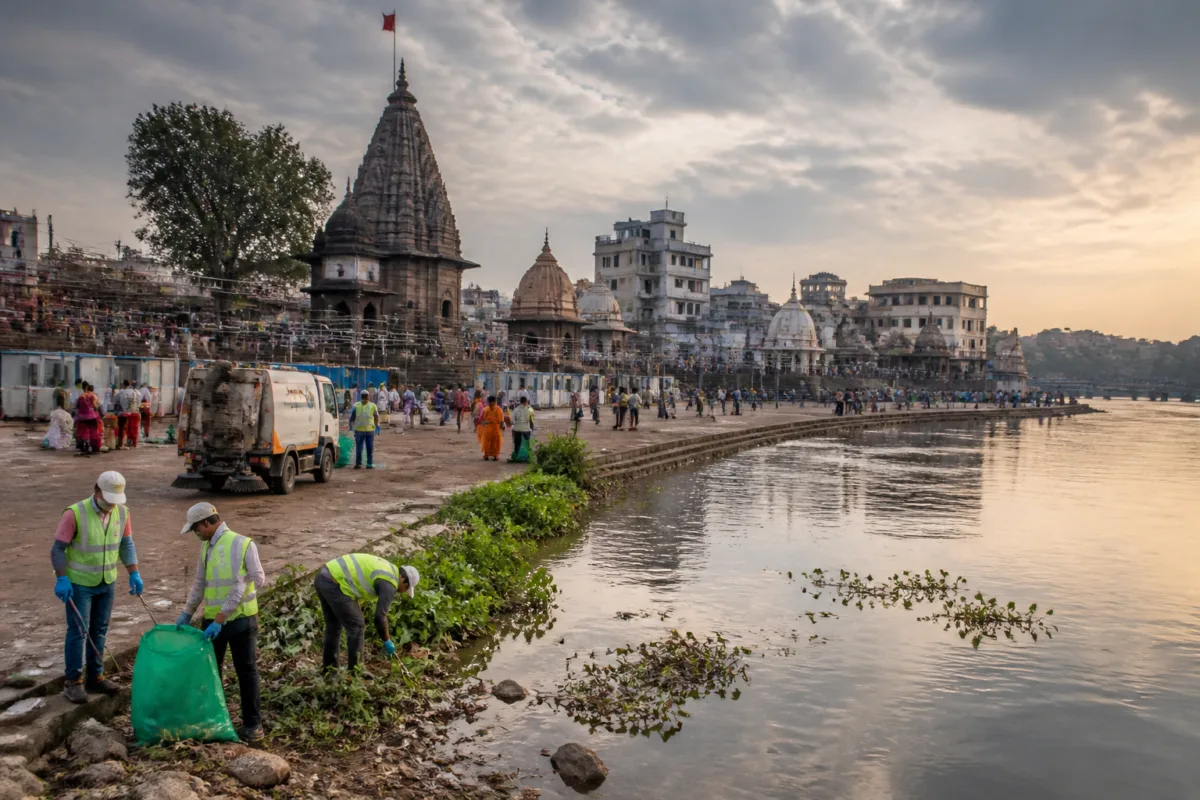
President Droupadi Murmu has urged organisers of the 2027 Nashik-Trimbakeshwar Simhastha Kumbh to combine religious tradition with environmental conservation, cleanliness, scientific waste management and modern civic facilities. She made the appeal while addressing devotees at the Maha Goda Aarti on the banks of the Godavari in Nashik on Saturday evening.
Murmu said the Kumbh should become a model for sustainable large-scale religious gatherings, stressing that faith must be accompanied by responsibility towards rivers, water resources and natural wealth. She also called for cleanliness and scientific waste management during the congregation.
“The Kumbh is not merely an expression of faith. It is also a celebration of India’s cultural values and a message of social unity,” Murmu said. She added that the tradition of spiritual congregations had continued across generations, but the upcoming Simhastha should adopt new dimensions of modernity without losing its traditional character.
The President’s remarks came hours after the Dharma Dhwajarohan ceremony and during the Maha Goda Aarti, an event centred on the Godavari. She performed Godavari pujan before addressing the gathering. Her intervention puts the river and the management of the pilgrimage landscape at the centre of preparations for an event expected to draw millions of pilgrims to Nashik and Trimbakeshwar.
Murmu also referred to Maharashtra’s history of social reform and highlighted the participation of around 6,500 members of tribal communities from 650 villages in the Maha Goda Aarti. She described their presence as a reflection of India’s unity in diversity. Referring to the drought situation in Maharashtra, she said the Centre and the state government would support affected farmers while safeguarding their dignity.
Chief Minister Devendra Fadnavis said the state government was using the Simhastha preparations as an opportunity to transform Nashik and Trimbakeshwar through infrastructure and civic works. He said the government’s role was to create the necessary facilities, while describing sadhus and mahants as the “real owners” of the Kumbh.
Fadnavis said works planned for the two pilgrimage centres were taking shape and reiterated the state’s commitment to making the 2027 Simhastha “grand, divine and beautiful” while improving facilities for the millions of pilgrims expected to attend. The statement did not provide details of specific waste-management systems, river-conservation measures, project costs or completion deadlines.
Governor Jishnu Dev Varma, Deputy Chief Ministers Eknath Shinde and Sunetra Pawar, ministers, public representatives and seers from various akhadas attended the programme. The next phase of preparations will determine how the stated priorities on conservation, sanitation, waste management and infrastructure are translated into facilities and operating arrangements across Nashik and Trimbakeshwar.

