


Nashik has begun an eight- to nine-month race to complete nearly Rs 35,000 crore worth of infrastructure projects before millions of pilgrims arrive for the Simhastha Kumbh Mela in 2027, with land for Sadhugram, roads and Godavari pollution control among the administration’s most urgent tasks.
The countdown began after President Droupadi Murmu hoisted the ceremonial flag at Ramkund on Saturday, formally marking the start of the Simhastha Kumbh Mela. The three major Amrit Snans are scheduled between August and September 2027, while the administration has set March 2027 as the deadline for completing the related works.
According to Nashik-Trimbakeshwar Kumbh Mela Authority commissioner Shekhar Singh, around 51% of the Kumbh-related projects have been completed. Singh said the government machinery was working in coordination and that the works would be completed before the main events next year.
The largest immediate challenge is the proposed Sadhugram at Tapovan, where authorities expect nearly 10 lakh sadhus, compared with around two lakh during the 2015 Kumbh. The planned settlement will cover more than 1,400 acres. However, Nashik Municipal Corporation currently has possession of only 94 acres.
The plan requires the permanent acquisition of 191 acres and the temporary requisitioning of approximately 1,100 acres. Land acquisition, discussions with farmers and finalisation of compensation rates will therefore determine how quickly the Sadhugram can be developed.
Road construction is also under pressure. Around 30 roads covering nearly 150 km are being developed at a cost of Rs 1,400 crore. A 65-km outer ring road, estimated to cost more than Rs 7,000 crore, is under construction, but more than half of the required land is still to be acquired.
Within Nashik city, work is planned on several important corridors, including a 6-km stretch of the Nashik-Pune highway between Dwarka Circle and Datta Mandir. Although the tender process for the corridor has been completed, construction had not started when the report was published.
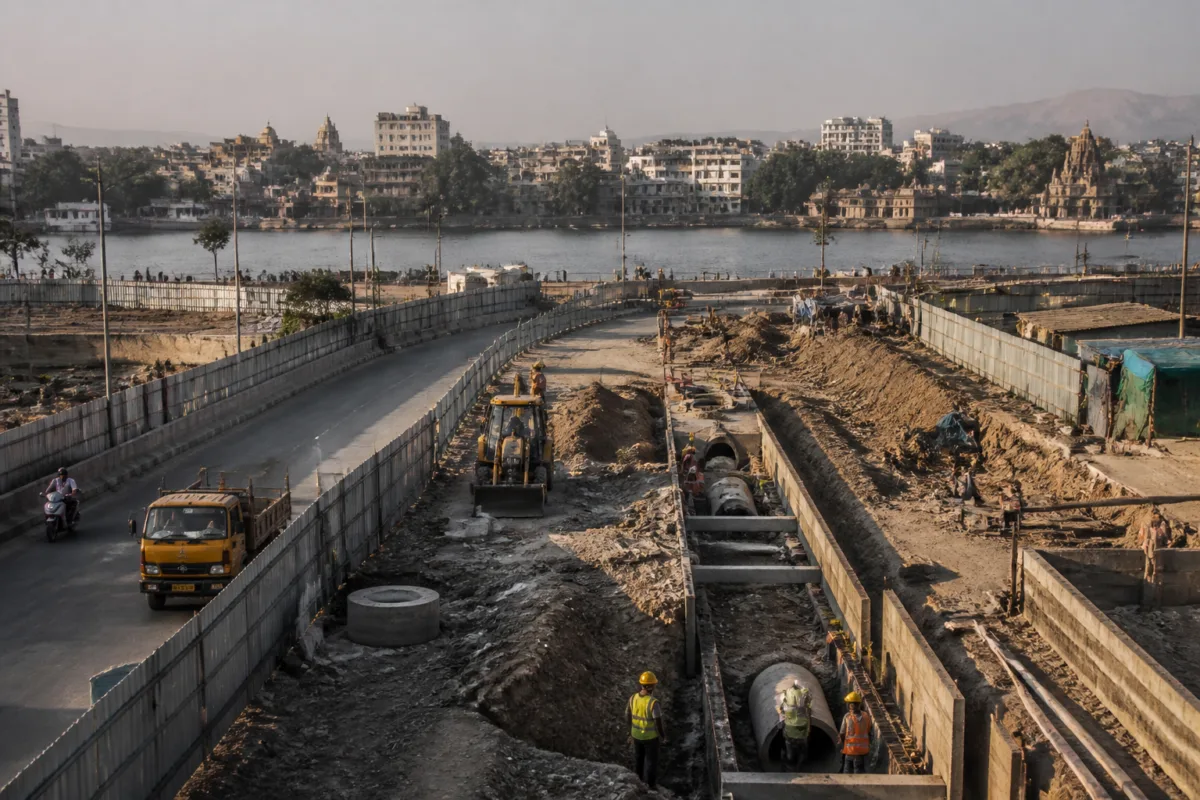
The city’s preparations also include a major effort to prevent untreated sewage from entering the Godavari. Nashik Municipal Corporation is constructing four sewage treatment plants and laying sewer lines as part of the river-cleaning programme.
Kumbh Mela minister Girish Mahajan said the state had launched a Rs 2,200-crore Godavari rejuvenation project covering new sewage treatment plants and a sewerage network. NMC commissioner Manisha Khatri said all concrete works would be completed by January 2027, two months ahead of the overall March deadline.
Khatri said the administration’s target was to make the Godavari pollution-free by March 2027 and bring its water to bathing quality. The next key milestones will be the completion of land arrangements for Sadhugram, progress on road and ring-road construction, and delivery of the sewerage and treatment infrastructure before the first major bathing events in August and September 2027.

