


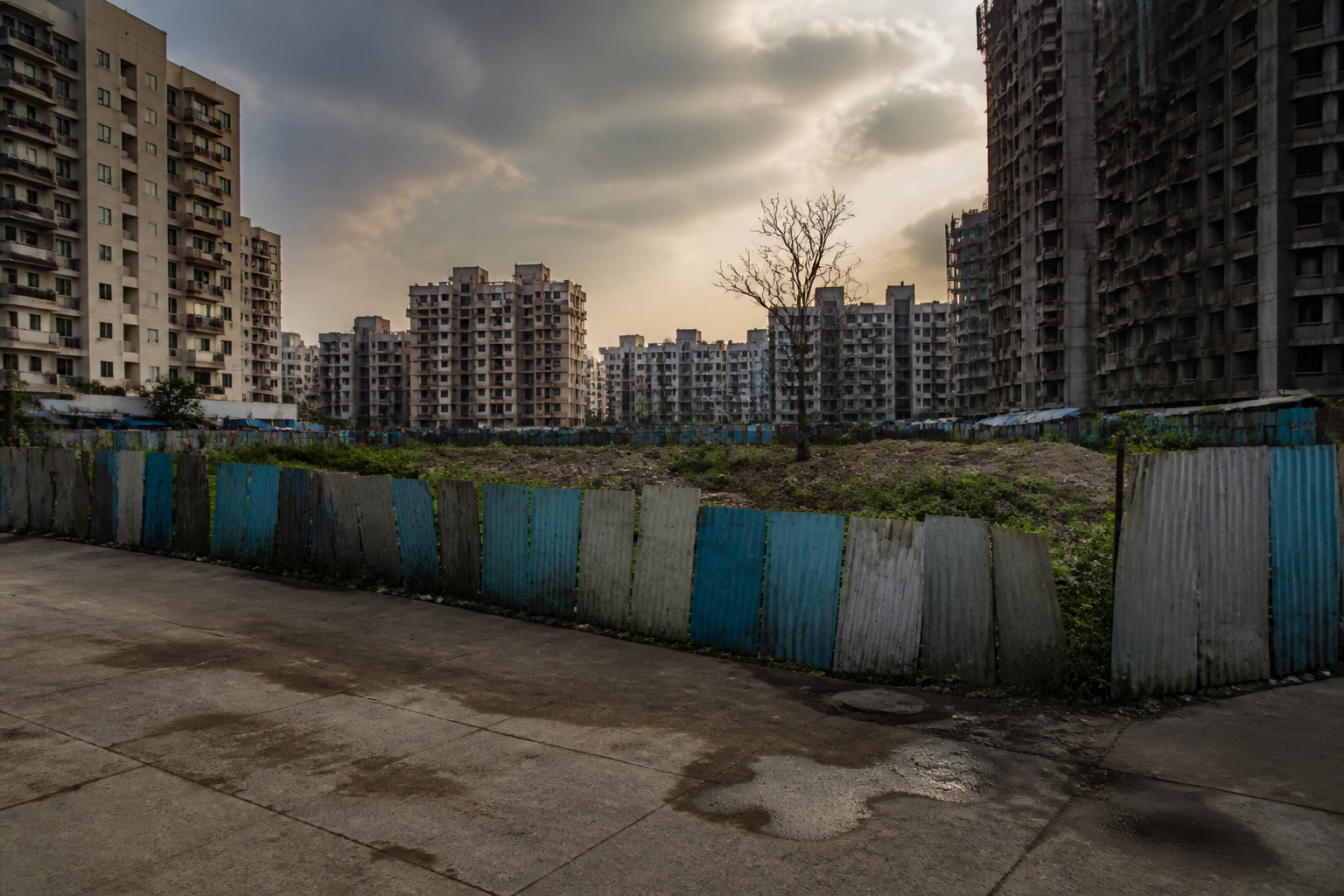
The Bhayandar land dispute involving 81-year-old Asgar Ali Vora shows how a property conflict can remain unresolved even after a developer announces that it is giving up the land and a municipal construction permission is withdrawn. The reported dispute concerns a 2,810-square-metre property in Navghar, Bhayandar East, and now involves the state secretariat, the Mira-Bhayandar Municipal Corporation, the police and multiple developers.
According to the report, Vora bought the land in 1989. He has alleged that Swayam Builders and Seven Eleven Constructions, associated with BJP legislator Narendra Mehta, took possession of the property in 2011. The report does not establish the final judicial status of the ownership dispute, but it records a sequence of administrative and police actions following Vora’s efforts to recover physical control of the land.
The case gained attention after Vora met Prime Minister Narendra Modi on 8 September and submitted a complaint against Mehta, according to the report. Vora and Modi had studied together at BN School in Vadnagar. The account says Vora received a positive response during the meeting, after which government authorities took up the matter. A meeting was subsequently convened at the state secretariat under the chairmanship of Shrikar Pardeshi, the Chief Minister’s principal secretary.
The meeting brought together Vora, Mehta, Mira-Bhayandar Municipal Commissioner Radha Binod Sharma and town planner Purushottam Shinde. This composition is important because the dispute moved beyond a private claim over land. It entered the domain of municipal permissions, planning administration and police complaints. That institutional involvement, however, did not by itself restore possession to the person claiming ownership.
During the meeting, Mehta reportedly submitted a letter to the town planning department stating that he was surrendering possession of the disputed land and giving up the construction permission granted to him. The report says Mehta’s letter also stated that the land had been purchased from Marvin Fernandes in 2019. Separately, in a letter to the police commissioner, Mehta reportedly said he was withdrawing his earlier complaint against Vora because the two sides had reached an agreement.
The central complication is that Mehta’s reported decision to surrender the property did not result in its return to Vora. The article states that developers Mukesh Parekh and Marvin Fernandes continued to control the site. It also reports that, following a complaint by the Shiv Sena, Navghar police registered a non-cognisable offence against Seven Eleven Constructions, Parekh and Fernandes. These are reported allegations and police actions; the supplied account does not provide a court finding establishing unlawful possession by any of the named parties.
This distinction between relinquishing a claim and transferring effective possession is at the heart of the case. A letter surrendering a construction permission addresses the regulatory ability to build. It does not, on the evidence supplied, demonstrate that the site has been physically vacated, handed over or formally recorded as returned to the alleged owner. Similarly, withdrawing a police complaint may reduce one strand of the dispute without resolving title, possession or control of the property.
The case therefore illustrates several separate layers that can become conflated in urban land conflicts. The first is the ownership claim: Vora says he bought the property in 1989. The second is possession: the report says he has not regained control of the land. The third is development permission: Mehta reportedly surrendered the construction approval, and the municipal corporation cancelled the permission previously granted. The fourth is policing: a non-cognisable offence was registered after a complaint naming the construction company and two developers.
These layers involve different institutions and different forms of evidence. Ownership and possession may require documentary and legal determination. A municipal corporation can grant or cancel a building or construction permission under its planning responsibilities, but the cancellation of permission does not automatically decide ownership. The police may record a complaint or offence, but a non-cognisable offence is not the same as a final determination of title or possession. The supplied report does not state that a court has issued a final order settling these questions.
The timeline also demonstrates why long-running property disputes can survive repeated interventions. Vora is reported to have spent about 15 years pursuing the matter before approaching the Prime Minister. The alleged takeover is said to have occurred in 2011, while Mehta’s letter reportedly refers to a 2019 purchase from Fernandes. The report does not provide the complete chain of title, the original sale documents, the municipal approval file, the terms of any agreement between the parties or the legal basis on which possession changed hands.
That missing documentary detail limits what can be concluded from the latest developments. The available account establishes that senior officials convened a meeting, that written representations were submitted, that a construction permission was surrendered and cancelled, and that police recorded a non-cognisable offence after a complaint. It does not establish whether the land has been physically secured, whether a possession memo has been executed, whether the title records have been corrected or whether any civil or criminal court has ruled on the allegations.
For residents, the practical issue is not only who is named in a complaint but whether a person claiming ownership can obtain effective control of a property after administrative action has been taken. A cancelled permission may stop a particular development route, but it does not by itself resolve access to the site. If a property remains under the control of another party, the dispute continues despite the withdrawal of a project approval.
The reported involvement of political figures and senior officials also highlights the uneven way in which property disputes can reach the state’s attention. The case moved into a high-level administrative process after Vora used a personal connection to seek intervention. The supplied report does not establish whether the same institutional response would have followed through ordinary municipal, planning or police channels. That question remains outside the facts currently available, but it is central to understanding the governance dimension of the dispute.
The case should therefore be read as an unresolved test of coordination rather than as a completed settlement. The immediate facts point to partial administrative movement: Mehta reportedly surrendered the permission and withdrew his complaint, the municipal corporation cancelled the construction approval, and police registered a non-cognisable offence against other named parties. The unresolved question is whether these steps have produced the outcome Vora seeks—actual restoration of possession.
Further clarity would depend on the underlying land records, the municipal permission and cancellation documents, the written representations submitted at the state secretariat, the police record and any court proceedings. Until those records establish the legal and physical status of the site, the Bhayandar dispute remains an example of how surrendering a development permission can fall short of resolving the larger conflict over land possession.
