


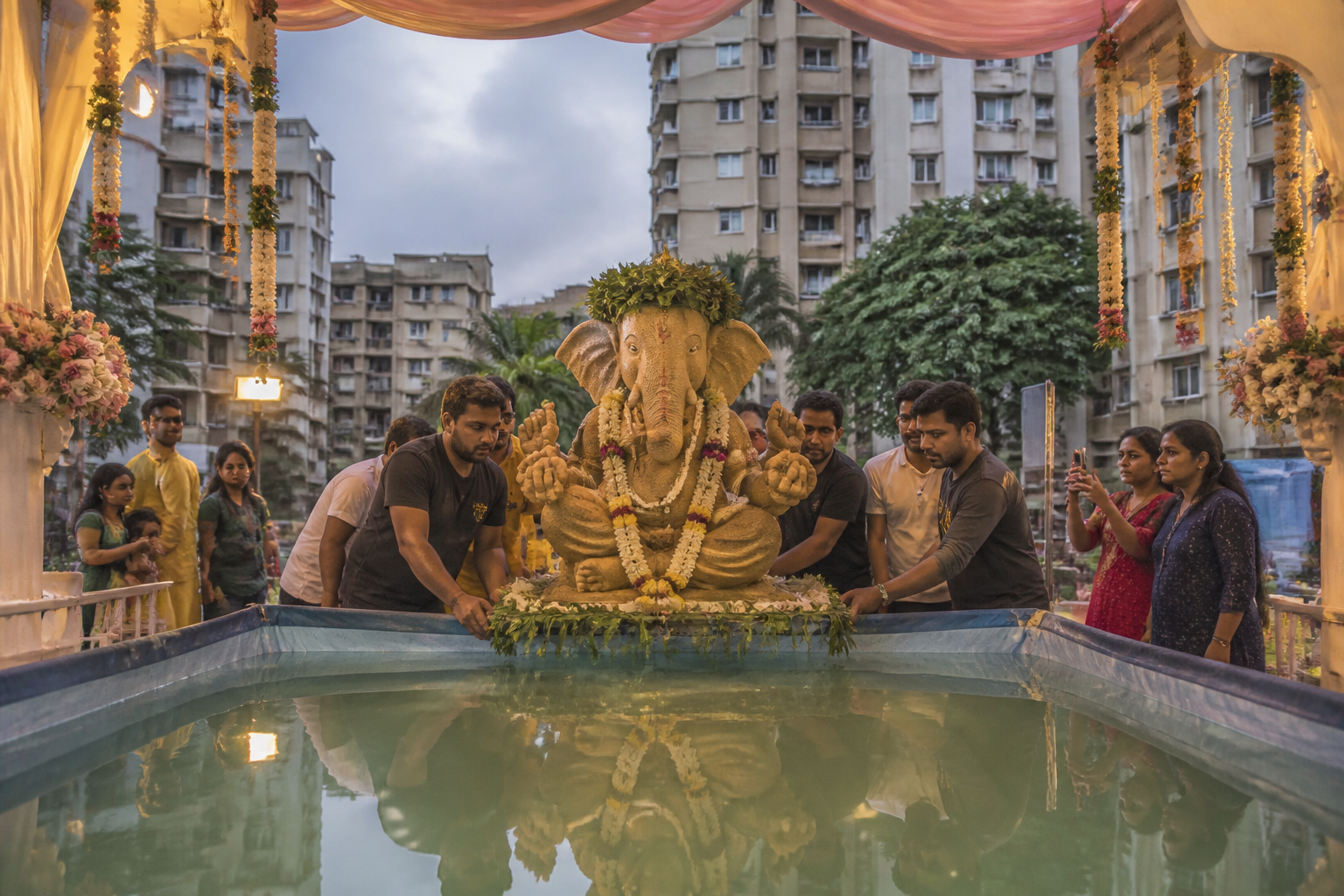
Mira-Bhayandar is seeing a shift among public Ganesh mandals towards eco-friendly idols, with around 25 to 30 mandals expected to conduct immersion at their mandap sites this year, according to the municipal administration. The move could reduce crowding, disputes and environmental pressure linked to large-scale immersions along the creekside.
More than 300 public Ganesh idols are installed across the city each year. These idols are generally kept for seven or 11 days before being immersed. The Mira-Bhayandar Municipal Corporation provides immersion facilities along the creek, but the process has led to congestion and other administrative challenges in recent years.
The environmental impact of idol immersion has also emerged as a concern. Against this backdrop, public festival committees have increasingly begun choosing eco-friendly idols and organising celebrations in ways that reduce the need for creekside immersion.
The number of public mandals adopting this approach was initially limited to one or two. It has now risen to approximately 10 per cent of the city’s public mandals, or about 25 to 30 committees, according to the report. The shift is particularly visible in housing societies, where organisers have shown greater interest in conducting eco-friendly celebrations.
Some idols installed by public mandals are also being made with environmentally friendly materials. Their immersion will take place at the mandap itself rather than through processions to the creek. The municipal administration said this would help reduce the inconvenience caused by processions and immersion activity at the creek.
The change does not eliminate the city’s wider immersion-management requirements, as hundreds of public idols continue to be installed across Mira-Bhayandar. However, the participation of public mandals could reduce the number of large idols reaching creekside facilities and ease the pressure on civic arrangements during the festival period. The municipal administration’s next task will be to manage the remaining immersion activity and support the mandals following the mandap-immersion approach.
