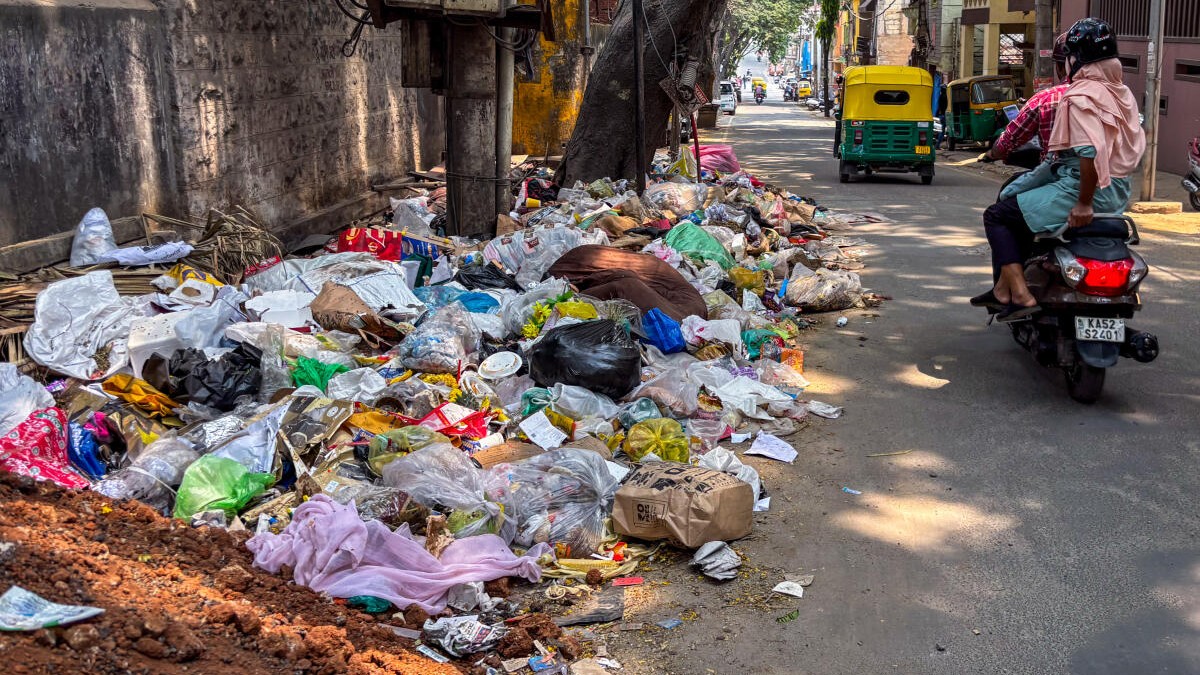
Bengaluru’s solid waste management system is undergoing closer scrutiny as the State Government reviews how waste is collected, transported and processed across the city. A recent inspection of waste-management operations has brought attention to persistent gaps between the volume of waste generated and the capacity of civic systems to handle it efficiently.
The review comes as the city continues to deal with the operational complexity of managing waste from homes, commercial establishments and public spaces. For residents, the effectiveness of the system is ultimately measured not by the number of facilities announced but by whether waste is collected regularly and streets remain clean.
The challenge extends beyond collection. Bengaluru waste management depends on a chain that includes segregation at source, door-to-door collection, transportation, processing and scientific disposal. A weakness at any point can create additional pressure elsewhere in the system. Urban waste experts say segregation remains particularly important. When wet and dry waste are mixed, recyclable material can become contaminated and organic waste becomes harder to process. Better separation at household and commercial levels can therefore reduce the amount ultimately requiring disposal while improving the recovery of useful materials. The city’s growing population and expanding built-up area add to the pressure. More homes, businesses and construction activity generate larger and increasingly diverse waste streams.This makes capacity planning essential, particularly for processing facilities and transport infrastructure located close to areas generating large quantities of waste.
There is also a land-use dimension to the problem. Bengaluru has limited urban land, and waste facilities compete with other infrastructure and development needs. Moving waste over long distances can increase fuel consumption, vehicle traffic and operating costs. A more distributed network of processing facilities, combined with stronger segregation, could reduce unnecessary transportation. The inspection also underscores the importance of monitoring contractors and civic operations through measurable service standards. Collection frequency, missed pickups, processing rates and disposal volumes can provide clearer indicators of performance than periodic clean-up drives. For residents, reliable Bengaluru waste management is closely linked to public health, neighbourhood liveability and environmental quality. Open dumping and poorly managed waste can block drains, attract pests and contribute to pollution, while overloaded systems can become particularly vulnerable during periods of heavy rainfall.
The immediate priority is therefore to identify operational bottlenecks and close them with consistent monitoring. Over the longer term, Bengaluru will need a waste system that treats discarded material as a resource where possible, minimises landfill dependence and keeps collection and processing infrastructure aligned with the city’s continuing growth.