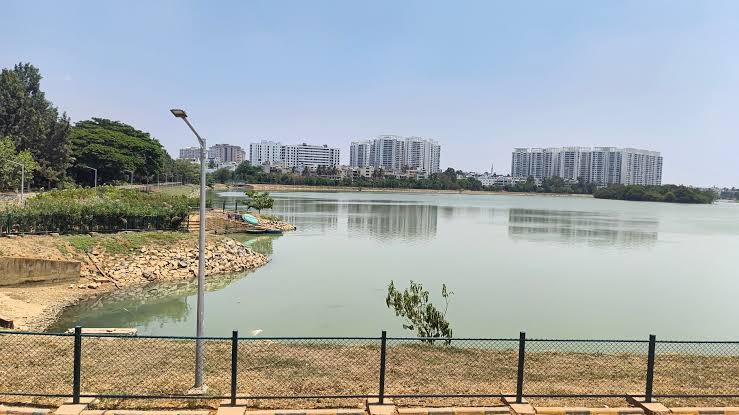
Bengaluru Lake Encroachments Face Fresh Administrative Scrutiny
Bengaluru’s efforts to reclaim lake land have come under renewed scrutiny after the Lokayukta questioned delays in clearing encroachments across several water bodies in the city’s southern taluks. The intervention puts administrative follow-through at the centre of the lake protection debate, highlighting how prolonged land disputes can undermine flood management, water security and the ecological function of urban lakes.
The issue concerns Bengaluru lake encroachments that have remained unresolved despite official identification and directions for action. Five tahsildars from Bengaluru South were questioned over delays in clearing such cases, bringing attention to the gap between identifying public land violations and physically restoring affected areas. For a city increasingly exposed to intense rainfall and localised flooding, protecting lake boundaries has consequences beyond land records. Lakes and their interconnected drainage channels provide storage during heavy rain, while wetlands and lake margins can slow water movement and support groundwater recharge. Urban planners note that an encroached lake boundary can also create a cumulative infrastructure problem. When natural storage areas are reduced, stormwater is forced into narrower channels and built-up areas. This can increase pressure on roads, drains and downstream lakes during intense rainfall. The administrative challenge is complicated by the nature of encroachment cases. Some involve disputed ownership, while others require surveys, documentation, notices and enforcement before land can be recovered. Delays at any stage can leave affected areas vulnerable to further construction or changes in land use.
The Bengaluru lake encroachments issue also carries implications for future urban development. As land values rise, publicly owned lakebeds and buffer areas can come under increasing pressure. Clear and publicly accessible land records, regular boundary surveys and faster resolution of disputes can help reduce uncertainty while protecting environmentally sensitive land. Restoration, however, should not end with demolition or removal. Reclaimed areas need to be secured against renewed encroachment and, where appropriate, restored as functioning ecological infrastructure. This includes maintaining inlet and outlet channels, protecting wetland zones and ensuring that surrounding development does not obstruct natural drainage. The Lokayukta scrutiny places responsibility on the administration to demonstrate measurable progress rather than relying solely on inspection reports or identification lists. A transparent tracking system showing cases identified, notices issued, land recovered and restoration completed could make enforcement easier to monitor.
For Bengaluru, the larger lesson is that lake protection cannot be separated from urban planning. As rainfall patterns become less predictable and development continues outward, safeguarding remaining water bodies is increasingly part of the city’s basic infrastructure strategy. The immediate task is to turn long-pending enforcement proceedings into completed land recovery and durable ecological protection.