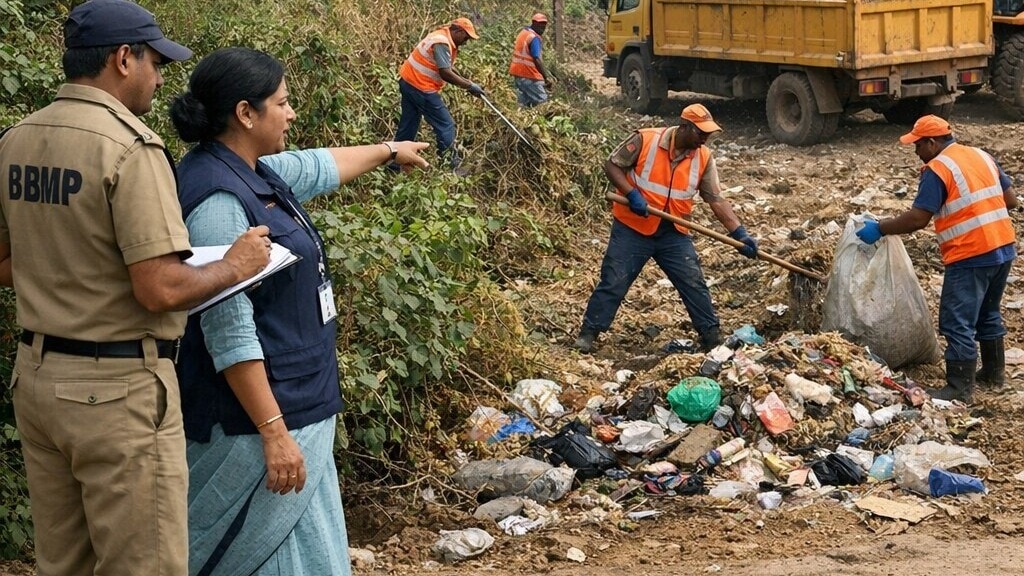
Bengaluru has begun clearing neglected private vacant plots after property owners missed a civic deadline to remove vegetation, construction debris and accumulated waste. The move puts maintenance costs directly on property owners and signals a tougher approach to unmanaged land, which can affect neighbourhood cleanliness, drainage and public safety as the city expands.
The Greater Bengaluru Authority (GBA) started the latest phase on August 27 after the extended deadline for owners expired on August 22. Owners had initially been given until August 15 to clear their properties themselves. According to the civic administration, about 30% complied, leaving roughly 70% of identified properties requiring intervention. Under the current arrangement, the authority will undertake cleaning and recover the cost from the respective property owners through property tax. Charges are being calculated according to the prescribed Schedule of Rates and the size of each plot.The first civic-led cleaning will not attract a separate penalty, although repeat neglect can lead to penalties under the applicable rules. The issue is significant beyond the appearance of vacant land. Overgrown plots can become difficult-to-maintain pockets within otherwise developed neighbourhoods, while dumped construction material can obstruct local drainage paths and worsen waterlogging during intense rainfall. Such sites can also complicate pedestrian movement where waste spills onto adjoining public areas. The scale of the wider cleanup points to the extent of Bengaluru’s construction-waste challenge.
The citywide drive has so far involved the removal of more than 67,000 metric tonnes of construction and demolition waste by the GBA alone. Across participating government agencies, the reported total has crossed 1.22 lakh metric tonnes. The authority has also begun placing notices on properties where owners have not maintained their land. Notices have been affixed to 189 vacant plots across the city’s five corporations as cleaning operations get underway. Operational constraints could influence how quickly the exercise progresses. Civic officials said some heavily overgrown sites require machinery and several hours of work. Restrictions on tipper movement also limit waste transportation, with disposal operations constrained to one trip a day in some cases. For Bengaluru’s expanding real estate landscape, the policy establishes a clearer link between land ownership and neighbourhood-level environmental responsibility. Vacant plots are private assets, but their condition can affect surrounding public infrastructure and residents. The longer-term test will be whether the cleanup becomes a regular maintenance system rather than a one-time intervention.
Clear ownership records, periodic inspections, timely notices and transparent recovery of costs could help prevent neglected plots from repeatedly becoming sources of waste and drainage stress. As Bengaluru adds new developments and vacant parcels gradually transition into built-up areas, keeping undeveloped land responsibly managed will remain part of creating cleaner, safer and more climate-resilient neighbourhoods.