


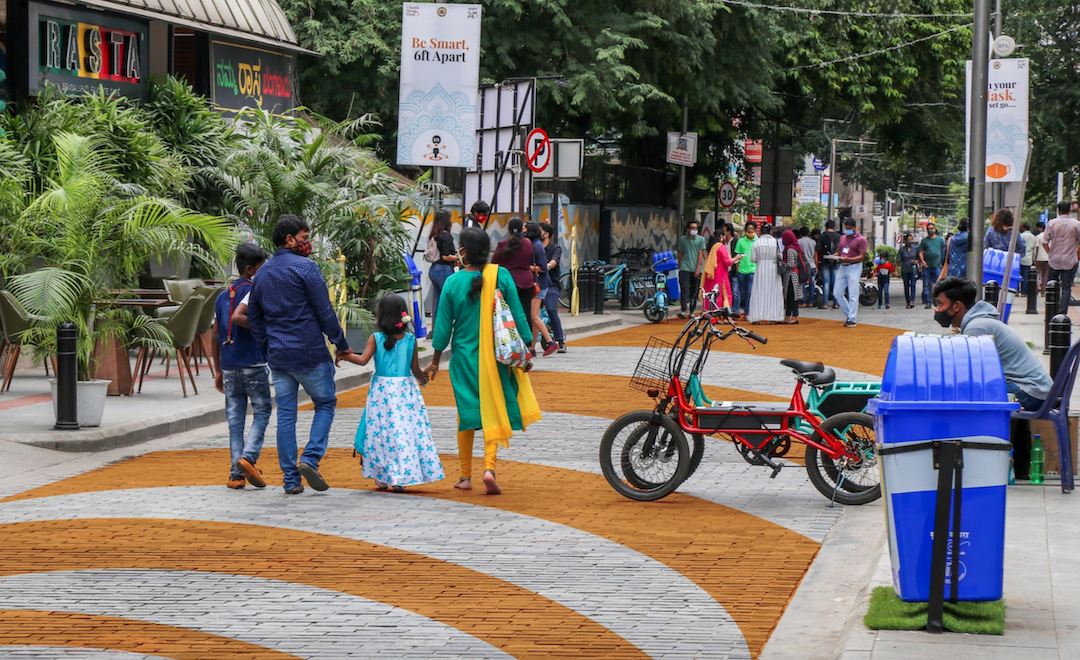
A community-led street activation programme in Nandini Layout has brought renewed attention to the growing demand for safer, people-centric public spaces in Bengaluru amid increasing traffic congestion and declining pedestrian access across the metropolitan region.The concluding edition of the “Happy Streets” initiative transformed sections of neighbourhood roads into temporary vehicle-free zones, allowing residents to participate in recreational activities, fitness programmes, cycling, cultural performances, and community interaction in spaces usually dominated by traffic movement.
Urban planners say such events are becoming increasingly significant in rapidly urbanising Indian cities where public streets are often designed primarily around vehicular mobility rather than community use. Bengaluru’s expanding road congestion and shrinking pedestrian infrastructure have intensified conversations around reclaiming urban spaces for walking, cycling, and social interaction.The Bengaluru Happy Streets programme reflects broader global trends promoting active mobility and liveable neighbourhood planning. Public health experts note that temporary car-free initiatives can encourage healthier lifestyles, reduce localised emissions, and improve awareness around sustainable mobility alternatives.Residents participating in the event highlighted the contrast between vehicle-heavy daily commuting conditions and the accessibility of pedestrian-friendly public spaces. Mobility researchers argue that such experiences often reveal how urban environments can become more inclusive when streets are designed for people rather than solely for traffic throughput.The initiative also arrives at a time when Bengaluru is grappling with growing infrastructure stress linked to rapid population growth, increased private vehicle ownership, and fragmented public transport integration.
Environmental planners say reclaiming neighbourhood streets for community use can play an important role in improving urban liveability and reducing dependence on short-distance motorised travel.The Bengaluru Happy Streets model further aligns with climate-responsive urban planning approaches increasingly adopted across global cities. Encouraging cycling, walking, and public interaction within local neighbourhoods can contribute to lower emissions, improved mental wellbeing, and stronger social cohesion in dense metropolitan environments.However, urban governance specialists caution that temporary events alone cannot address long-term mobility challenges unless supported by permanent infrastructure changes. Experts advocate for wider footpaths, protected cycling lanes, shaded public spaces, and traffic-calming measures to create safer environments for non-motorised transport users.The programme has also drawn attention to the economic and social value of accessible public spaces in cities where rapid commercialisation and infrastructure expansion often reduce open community areas. Urban sociologists note that shared civic spaces play a critical role in strengthening neighbourhood identity and social inclusion.
As Bengaluru continues to evolve under mounting transport and environmental pressures, initiatives such as Happy Streets are increasingly shaping conversations around the future of urban mobility and public space design.For many residents, the event offered a glimpse of how Indian cities could become more walkable, community-oriented, and environmentally resilient if future planning places equal importance on people, health, and accessibility alongside infrastructure growth.
Also Read:Bengaluru Soil Health Debate Shifts Toward Sustainability
