


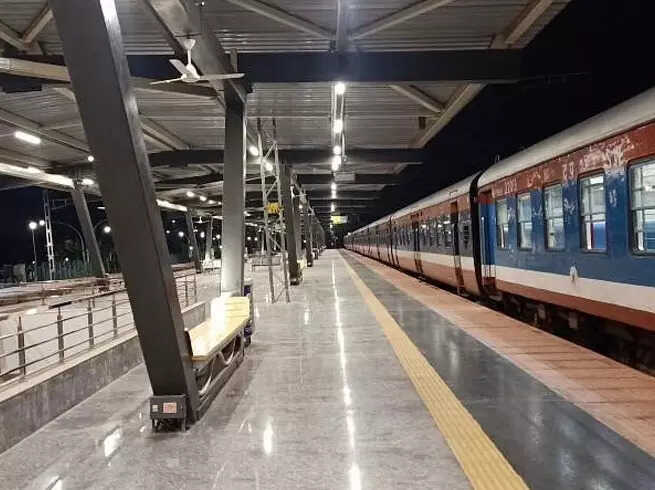
Bengaluru’s flagship railway terminal, developed as a next-generation transit hub with airport-style ambitions, is facing growing scrutiny from passengers over operational shortcomings, raising larger questions about how Indian cities measure success in transport modernisation projects.The Sir M Visvesvaraya Terminal, positioned as a landmark infrastructure upgrade for Bengaluru’s expanding mobility network, was envisioned to reduce congestion at the city’s older stations while delivering a more seamless passenger experience.
Yet frequent commuters and rail users report that gaps in accessibility, connectivity and basic commuter convenience continue to undermine the terminal’s premium positioning.Concerns have emerged around last-mile connectivity, limited public transport integration and the availability of essential services during peak travel hours. Urban mobility experts say such issues reflect a recurring challenge in Indian infrastructure planning, where capital-intensive projects often prioritise architectural transformation without equal focus on commuter movement ecosystems.The Bengaluru railway terminal occupies a strategically important role in the city’s transportation network as passenger demand continues to rise alongside rapid metropolitan expansion. However, planners note that large transit hubs can only function efficiently when linked with dependable feeder systems such as buses, metro corridors, pedestrian access and non-motorised transport infrastructure.Commuters travelling to the terminal from key residential and employment districts reportedly continue to depend heavily on private vehicles and app-based transport services, increasing travel costs and traffic pressure around the station precinct.
This dependence runs counter to broader urban sustainability goals aimed at reducing congestion and lowering transport-related emissions in major cities.Transport economists argue that railway infrastructure investments must increasingly be evaluated through passenger usability indicators rather than construction scale alone. Features such as intuitive navigation, integrated ticketing, accessibility for elderly and disabled travellers, affordable connectivity options and safe pedestrian movement are becoming central benchmarks for modern urban mobility systems.The issue also reflects Bengaluru’s wider infrastructure paradox. While the city continues investing heavily in metro expansion, road corridors and transit-oriented development, coordination between agencies responsible for railways, urban transport and civic planning often remains fragmented.Such institutional disconnects can dilute the effectiveness of otherwise ambitious public infrastructure projects.Urban development observers say the long-term success of the Bengaluru railway terminal will depend less on its visual identity and more on operational adaptability.Enhancing bus connectivity, improving signage, creating shaded pedestrian access and integrating real-time mobility information could significantly improve commuter confidence and station usage.
As Bengaluru’s population and regional travel demand continue to grow, transport infrastructure will increasingly be judged by inclusivity, reliability and climate-responsive planning rather than symbolic modernisation alone. For India’s technology capital, the evolution of the Bengaluru railway terminal may ultimately serve as a broader test of whether urban mobility projects can truly become people-first public assets.
Also Read:Bengaluru E-Khata Reform Improves Digital Property Services
