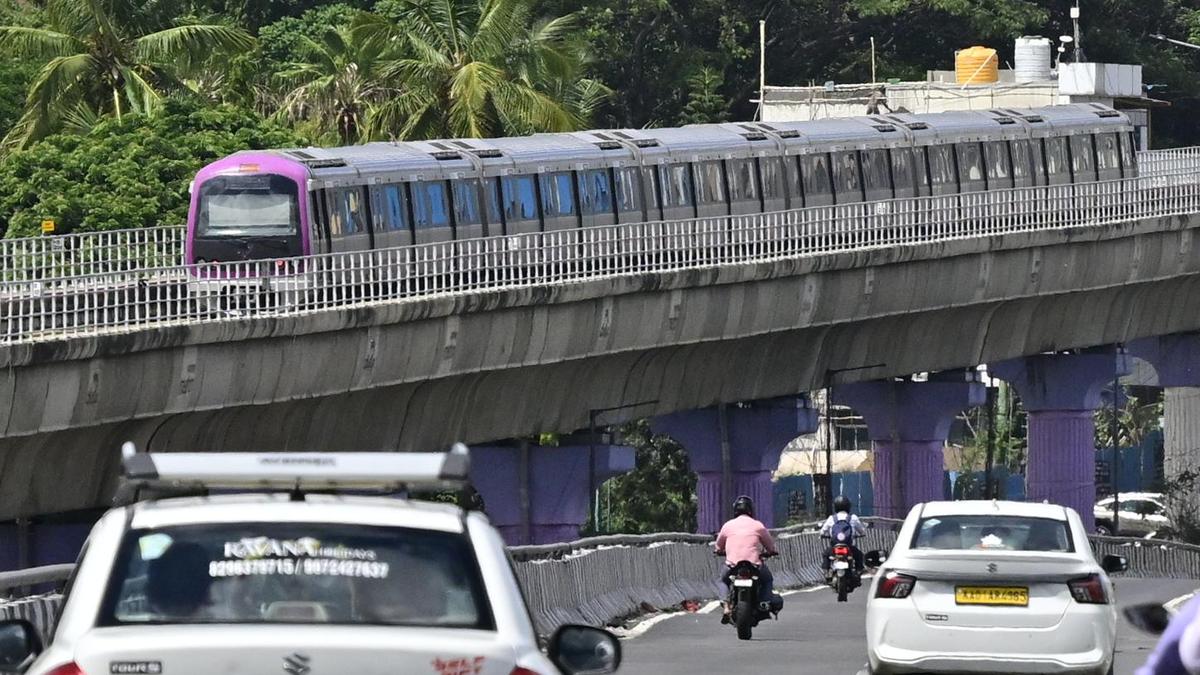
Metro services on a section of Bengaluru’s Purple Line are set to operate at reduced speeds after infrastructure concerns emerged along the Benniganahalli–Baiyappanahalli stretch. Trains will be restricted to 40 kmph on the affected section, potentially adding to journey times but prioritising passenger safety while corrective work is undertaken on the corridor.
The restriction covers the stretch between Benniganahalli and Baiyappanahalli, an important section of the Purple Line connecting eastern Bengaluru with the city’s established central transport network. The speed reduction is expected to remain in place while necessary engineering measures are carried out. The affected section has experienced concerns relating to track and infrastructure conditions. Reducing train speeds is a standard safety response when railway infrastructure requires closer monitoring or remedial work. For passengers, the immediate consequence is slower movement through the affected section, although the measure is intended to reduce operational risk. The Purple Line is among Bengaluru’s most heavily used metro corridors and serves passengers travelling between eastern suburbs, commercial areas and central parts of the city. Even a relatively short speed restriction can have network-wide effects when trains operate at frequent intervals and interchange with other lines. For commuters, the change may be noticeable during peak periods, when small increases in running time can accumulate across multiple services. Passengers connecting to buses or other metro corridors could face tighter transfer windows, particularly if delays increase during periods of high demand.
The episode highlights the importance of preventive maintenance as Bengaluru’s metro network ages and expands. Rail infrastructure is exposed to continuous loading, vibration, weather and operational stress. Regular inspection and timely renewal of track components can reduce the likelihood of larger disruptions and help maintain passenger confidence. The temporary slowdown also illustrates a broader trade-off in public transport: reliability should not be measured only by speed. A slower but safe service is preferable to maintaining scheduled speeds when infrastructure conditions require intervention. At the same time, extended restrictions can affect the attractiveness of public transport if passengers experience persistent delays. Clear communication about the reason for the restriction, expected duration and progress of repairs can help commuters plan their journeys and maintain trust in the system. The affected corridor is also important from a sustainability perspective. Bengaluru’s metro network enables large numbers of people to travel without relying on private vehicles, reducing pressure on major road corridors. Maintaining dependable rail infrastructure is therefore central to the city’s broader effort to shift trips towards public transport.
The immediate priority will be completing the required engineering work and restoring normal operating speeds only when the corridor is considered safe. For Bengaluru, the episode reinforces a basic infrastructure lesson: expanding a metro network matters, but maintaining existing assets to a high standard is equally critical to delivering reliable urban mobility.