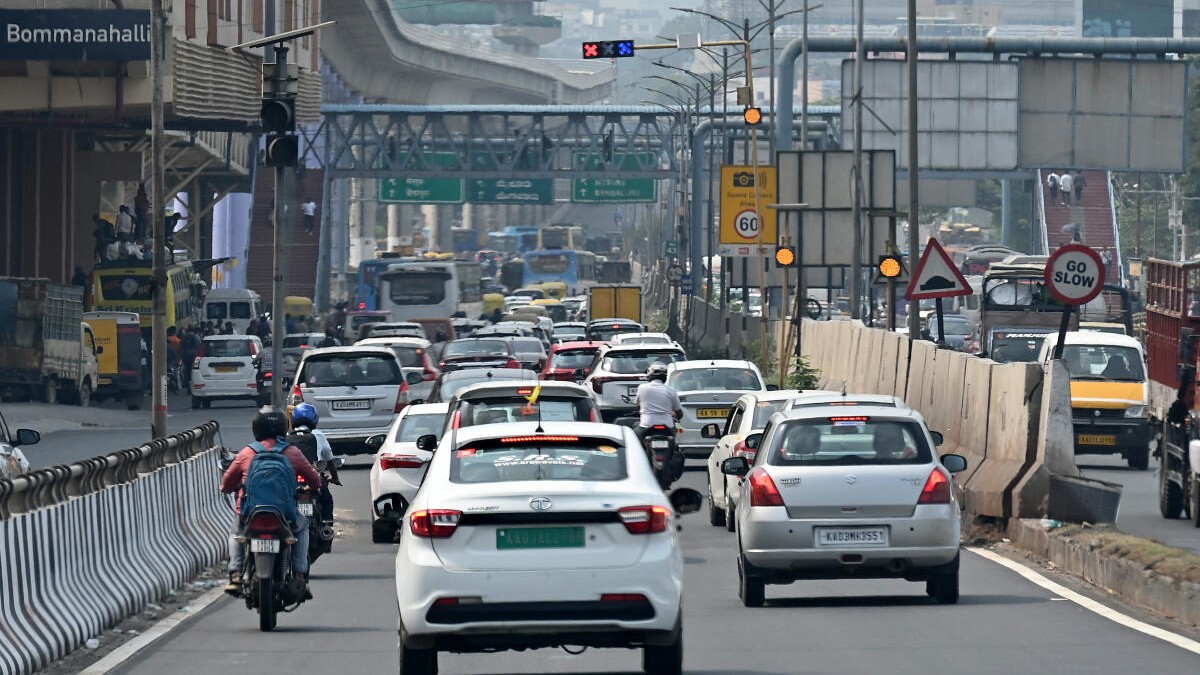
Bengaluru Flyovers Get New Restrictions From September 4
Bengaluru traffic authorities will introduce vehicle restrictions on five major flyovers from September 4, with separate rules for two-wheelers, autorickshaws and goods vehicles. The move is intended to improve traffic movement and safety on elevated corridors, but its impact will extend beyond the flyovers themselves as diverted vehicles shift towards surface roads and alternative routes.
The restrictions will cover the BGS Sirsi Circle, Peenya, Silk Board-Ragigudda, Ballari Road and Electronics City elevated corridors. The measures are being introduced after traffic assessments identified operational and safety concerns on stretches carrying different categories of vehicles at varying speeds. Two-wheelers and autorickshaws will face the most significant restrictions on selected elevated corridors. The Electronics City elevated road and Ballari Road flyover will see round-the-clock restrictions on these categories, while other flyovers will have controls covering particular vehicle types or periods. The change is particularly relevant to Bengaluru because two-wheelers remain a major component of everyday mobility. They provide relatively affordable access to employment, education and services, especially for people travelling across areas where public transport connections remain incomplete. Consequently, the effectiveness of the Bengaluru flyover restrictions will depend partly on the quality of alternatives available below and around these structures.If diverted traffic encounters already congested junctions, narrow service roads or inadequate pedestrian infrastructure, the intervention could redistribute pressure instead of reducing it.
Traffic planners have increasingly focused on managing elevated corridors according to their design capacity and safety requirements. Elevated roads are generally intended to separate through traffic from surface-level movements, but their entry and exit points can still create bottlenecks when demand exceeds available capacity. The new restrictions also underline a larger challenge facing Bengaluru’s transport network: infrastructure expansion alone cannot resolve congestion. The city needs coordinated investment in mass transit, safe walking and cycling infrastructure, efficient junction management and better integration between elevated and surface-level roads. There is also an economic consideration. Changes to established routes can affect delivery workers, small businesses and commuters whose travel depends on predictable journey times. Any traffic-management intervention therefore needs to be assessed not only through vehicle speeds but also through its effect on accessibility and travel costs. Authorities are expected to monitor the measures after implementation and assess traffic conditions across affected corridors. Such monitoring will be important in determining whether restrictions should remain, be modified or be extended to other locations.
For Bengaluru, the immediate test will be whether the new rules make elevated corridors safer without transferring congestion and mobility costs to surrounding neighbourhoods. The longer-term solution lies in building a transport network where high-capacity public transit and well-managed roads work together, reducing dependence on any single corridor.