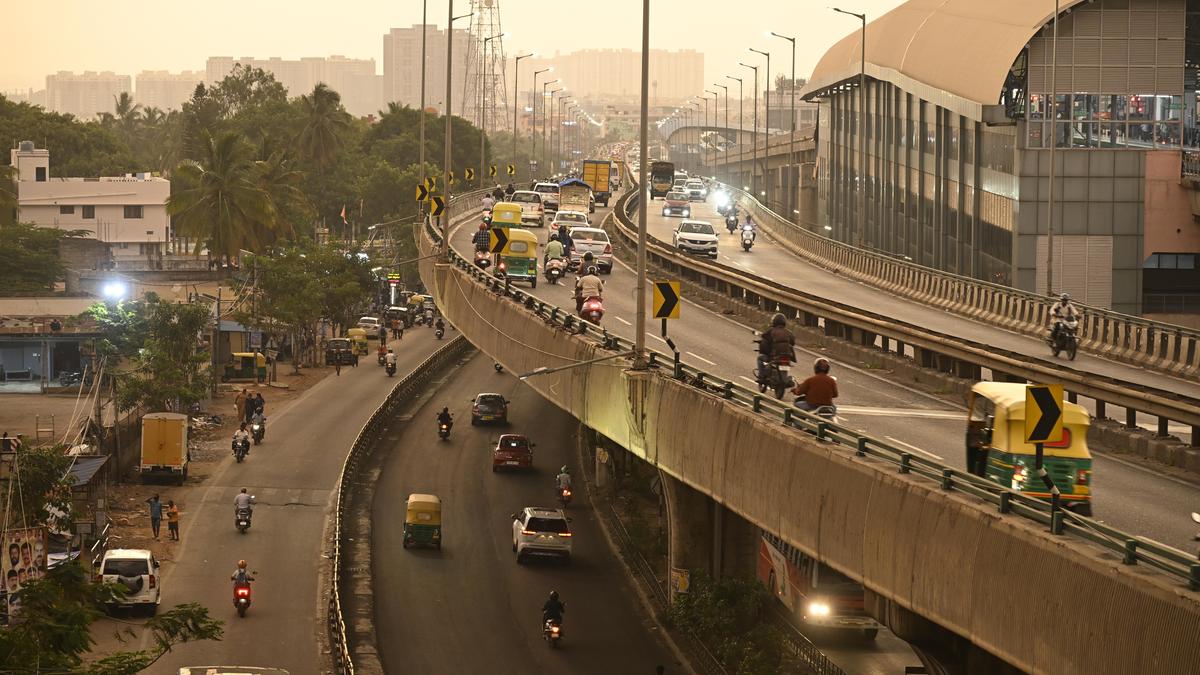
Bengaluru is preparing to restrict certain vehicle movements on five flyovers as part of a broader effort to improve road safety and manage traffic risks. The proposed controls are aimed at reducing unsafe interactions on elevated stretches, but their effectiveness will depend on whether alternative routes and ground-level traffic management can absorb diverted vehicles without creating new bottlenecks.
The restrictions are being considered on flyovers where traffic conditions and road-user behaviour have raised safety concerns. Such structures are designed primarily to maintain vehicle flow across busy junctions, but their operating conditions can change as traffic volumes, vehicle mixes and surrounding development increase. For Bengaluru, the move highlights a wider challenge in managing ageing and heavily used road infrastructure. Flyovers can improve junction capacity in the short term, but they do not eliminate congestion when traffic demand continues to grow. Restrictions may therefore be necessary at specific locations, but they need to form part of a wider mobility strategy rather than function as isolated interventions.Urban transport planners point out that traffic safety depends on predictable movement. Sudden lane changes, merging conflicts, speeding and interaction between different vehicle types can make elevated corridors particularly difficult to manage. Restricting selected categories of vehicles or movements can reduce these conflicts if enforcement is consistent. The proposed Bengaluru flyover restrictions could also affect travel patterns for two-wheelers, heavy vehicles and other road users, depending on the final rules.
Any diversion onto surface roads will need careful monitoring because ground-level streets may already operate close to capacity. This makes real-time traffic assessment important. Authorities can track vehicle volumes before and after restrictions to determine whether congestion is simply shifting from flyovers to neighbouring junctions. Signal coordination, lane management and improved pedestrian facilities may be needed alongside the restrictions. There is also a broader sustainability consideration. When traffic is diverted into longer routes, vehicles can spend more time idling or travelling through congested corridors, increasing fuel use and emissions. The most effective road-safety measures should therefore reduce conflict without unnecessarily increasing travel distances. For pedestrians and cyclists, the benefits could be significant if the restrictions are accompanied by safer surface-level crossings and better junction design. A safer road system needs to protect people moving outside private vehicles as well as improve vehicle flow. The Bengaluru flyover restrictions are expected to provide authorities with an opportunity to assess how specific traffic controls influence safety and congestion.
The key measure will be whether risk falls without simply transferring pressure to nearby roads.As Bengaluru continues to grow, managing existing infrastructure efficiently will be as important as building new roads. Targeted restrictions, reliable enforcement, better public transport and safer street design together can help the city move towards a transport system that prioritises both mobility and road-user safety.