


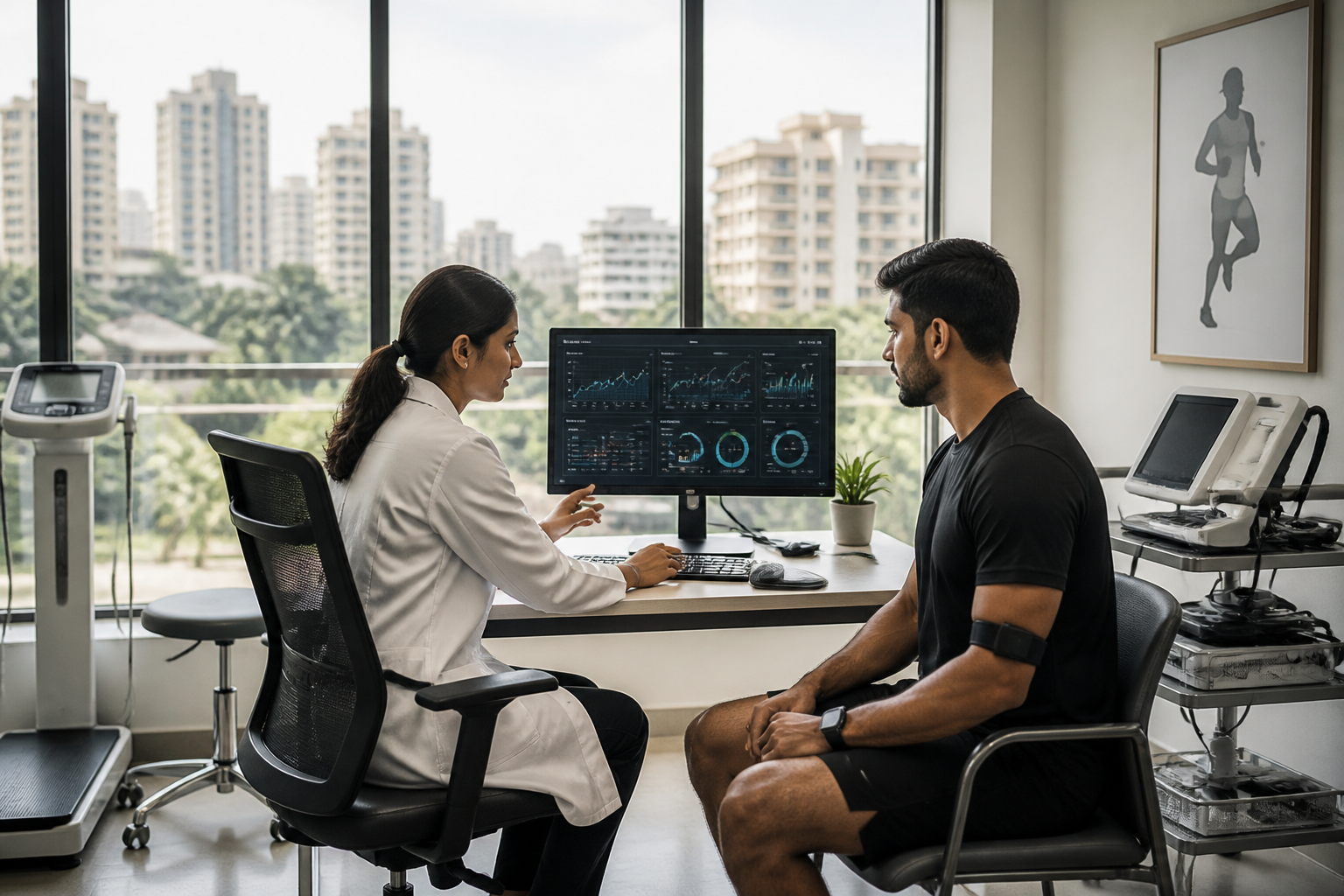
Bengaluru’s wellness industry is turning the measurement of the human body into a service market. Across performance and longevity centres, clients are tracking sleep, nutrition, exercise, hormones, blood markers and biological age, while paying for interventions ranging from personalised diets to cryotherapy, intravenous drips and hyperbaric oxygen therapy.
The trend is being described by providers as “health optimisation” or “proactive preventive healthcare” rather than biohacking, a term associated with do-it-yourself biology and technology-driven self-tracking. The distinction reflects both the industry’s attempt to present these services as medically supervised and the controversy attached to treatments that may be marketed beyond the strength of available evidence.
The issue came into sharper focus after the Karnataka Food Safety and Drug Administration cancelled Bengaluru’s first peptide party last week, citing concerns over the unsupervised use of peptides for longevity. The event placed a fast-growing but lightly understood segment of the city’s wellness economy alongside questions of medical oversight, consumer information and the boundaries between healthcare and lifestyle services.
At the centre of this market is data. Shagun Ohri, a 32-year-old entrepreneur who divides her time between Bengaluru and San Francisco, tracks her sleep, food, water intake, workouts and menstrual cycle. She uses an Apple Watch and the Welltory app, gets blood tests every six months and has previously built a tool to monitor her macronutrients. Her daily targets include seven hours of sleep, 115 grams of protein, up to 15,000 steps and up to three and a half litres of water.
For Ohri, the numbers provide a framework for managing an irregular working life. She says the data has helped her understand her hormones and allergies and recognise that stress affects how her body stores water. At the same time, she acknowledges that numbers are not “cardinal truths”. That tension captures the central promise and limitation of the sector: measurement can make patterns visible, but it does not automatically turn every metric into a diagnosis or every intervention into an effective treatment.
Bengaluru’s providers are building services around people who want to improve performance rather than treat an identified disease. Clients arrive with concerns such as brain fog, unexplained muscle cramps, weight gain, poor sleep or post-surgical pain and inflammation. Others want to improve performance in running, swimming, paddle sports or pickleball, or maintain independence as they age.
The services on offer cover a wide range. Centres cited in the report provide genetic assessments, gut microbiome tests, heavy metal screening, AI-based motion analysis and dashboards for tracking progress. Some offer pressurised chambers in which clients breathe pure oxygen, whole-body cryotherapy at temperatures as low as minus 110°C, electrical muscle stimulation, far-infrared sauna therapy and intravenous drips marketed for energy, detoxification, hair loss or vitamin deficiencies.
The price structure makes clear that this is not simply a mass preventive-health programme. An IV drip can cost from Rs 1,799, while stem cell therapies marketed for conditions ranging from arthritis and fatigue to fertility and ageing can cost up to Rs 5 lakh. Annual memberships can reach Rs 2 lakh for diagnostics covering as many as 3,500 biomarkers. Other year-long protocols cited in the report cost Rs 10 lakh or Rs 15 lakh, depending on the number of machine-based sessions, IV drips and specialist consultations included.
That pricing creates a two-level health landscape. The language of prevention and early intervention is broadly relevant to urban residents, but the ability to purchase extensive testing and repeated machine-based sessions is concentrated among people with substantial disposable income. The city’s biohacking market therefore sits at the intersection of healthcare, luxury consumption and professional performance, rather than functioning only as an extension of routine primary care.
The providers also describe a demand that is more deliberate than casual curiosity. NutriFuel on Residency Road has been piloting a performance programme for three years. Its current batch has six clients, including an athlete seeking to reduce his time from 11 seconds to 9.58 seconds and clients seeking help with cognition, nutrition and daily fatigue. At Align Health and Longevity Centre, which has branches in Koramangala and Electronics City, about 75% of clients are described as long-term users. Most are between 30 and 55 years old, while 60% to 70% reportedly seek longevity services to perform at their best regardless of age.
The Wellness Co in Jayanagar similarly says that only 5% to 10% of walk-in clients are merely curious. Another 5% are turned away after consultations identify contraindications. These figures come from the providers themselves and are not an independent measure of the industry, but they show how the centres are positioning their clients: not as passive consumers of a fad, but as people pursuing structured, continuing programmes.
That positioning depends heavily on medical language and data interpretation. Align Health and Longevity Centre uses an AI-based model to analyse biomarkers, compare biological and chronological ages, recommend therapies and allow clients to track progress through a web application. Ultrahuman Performance Lab in Indiranagar says its diagnostics can assess up to 3,500 biomarkers across genetics, gut health, blood, cardiopulmonary function, metabolism, cognition and biomechanics.
The volume of information can appear comprehensive, but the report also shows why interpretation matters. Ultrahuman says it does not examine biomarkers in isolation, instead correlating them to build a broader picture of the body. For a younger client pursuing weight loss, the centre tracks body composition and fasting glucose rather than relying only on the number on a weighing scale. For older clients approaching 70, assessments may focus on bone health, musculoskeletal strength and the ability to reduce risks such as falls.
These examples point to a more defensible version of health optimisation: regular routines, nutritional support, exercise, screening and professional supervision. They also reveal the risk of treating a large volume of data as proof of clinical value. The report does not establish that every test or therapy offered by these centres improves health outcomes, nor does it provide independent clinical evidence comparing the interventions. The distinction is important because the market’s vocabulary biological age, cellular rejuvenation, detoxification and longevity can make uncertain claims sound precise.
The providers themselves acknowledge that biohacking is not a shortcut. Dr Simran, founder and medical director of Align Health and Longevity Centre, says people have normalised feeling tired and that symptoms such as persistent fatigue, daytime brain fog, waking tired after adequate sleep, dehydration and unexplained cramps may indicate that something is wrong. But she also says therapies require consistent attendance, with weekly sessions for at least six weeks to show results. At The Wellness Co, a client with elevated cadmium and mercury levels reportedly saw only marginal improvement because he did not attend sessions regularly.
This emphasis on adherence changes the meaning of the service. It suggests that the expensive equipment and testing are only one part of the programme; the other is the ability to sustain a routine. A client who attends weekly sessions, changes diet and follows professional guidance may experience a different outcome from someone who purchases a single procedure. Yet the market’s most visible products are often the procedures themselves, which can be easier to advertise than the slower work of sleep, nutrition, strength training and medical follow-up.
The policy landscape remains visible mainly through isolated points of intervention. The cancellation of the peptide event by the Karnataka Food Safety and Drug Administration demonstrates that authorities are prepared to act when they identify concerns over unsupervised use. But the supplied material does not establish a comprehensive regulatory framework for the full range of services described, nor does it specify how each centre, therapy or diagnostic claim is licensed and monitored.
That gap matters because the sector combines different categories of activity. Some services resemble familiar clinical diagnostics or physiotherapy. Others are wellness treatments, performance tools or commercial protocols combining several interventions. The same customer may move between a blood test, a nutrition plan, a machine-based session and an IV drip, even though each may involve different standards of evidence, supervision and risk.
Bengaluru’s urban conditions help explain the appeal. The city’s technology workforce includes people working across time zones, travelling frequently and managing demanding schedules. Ohri’s account of odd working hours and travel, along with the centres’ focus on executives, athletes and older adults, shows how health optimisation is being sold as a way to protect productivity, physical performance and independence. The post-pandemic interest in wellness and personalised healthcare has added to that demand, according to the report.
But the city’s performance culture can also intensify anxiety about falling behind. The report notes that a small share of clients pursue longevity because of fear of missing out or misleading content on Instagram. In that setting, tracking can shift from a tool for understanding the body to a permanent demand for improvement. More biomarkers, more sessions and more interventions may be interpreted as evidence of greater care, even when the relationship between the measurement and the outcome is unclear.
The larger urban question is not whether residents should track sleep, exercise or nutrition. It is how a city’s expanding private health market communicates evidence, risk and uncertainty to consumers. Bengaluru’s centres are responding to real concerns fatigue, poor sleep, declining fitness and the desire to remain independent but they are also operating in a market where wellness language can blur the boundary between a clinically indicated service and a premium lifestyle purchase.
The evidence available in the report confirms that biohacking has moved beyond individual wearable use into a network of commercial centres offering diagnostics, therapies and long-term memberships. It also confirms that prices vary sharply, providers use medical supervision as a point of distinction, and at least one recent event prompted regulatory action over unsupervised peptide use. What remains unclear is the independent evidence base for the full range of interventions and the extent of oversight across the sector. Those are the questions that will determine whether Bengaluru’s health-optimisation economy develops as supervised preventive care, high-end performance coaching or an expensive market built around the appearance of precision.
