


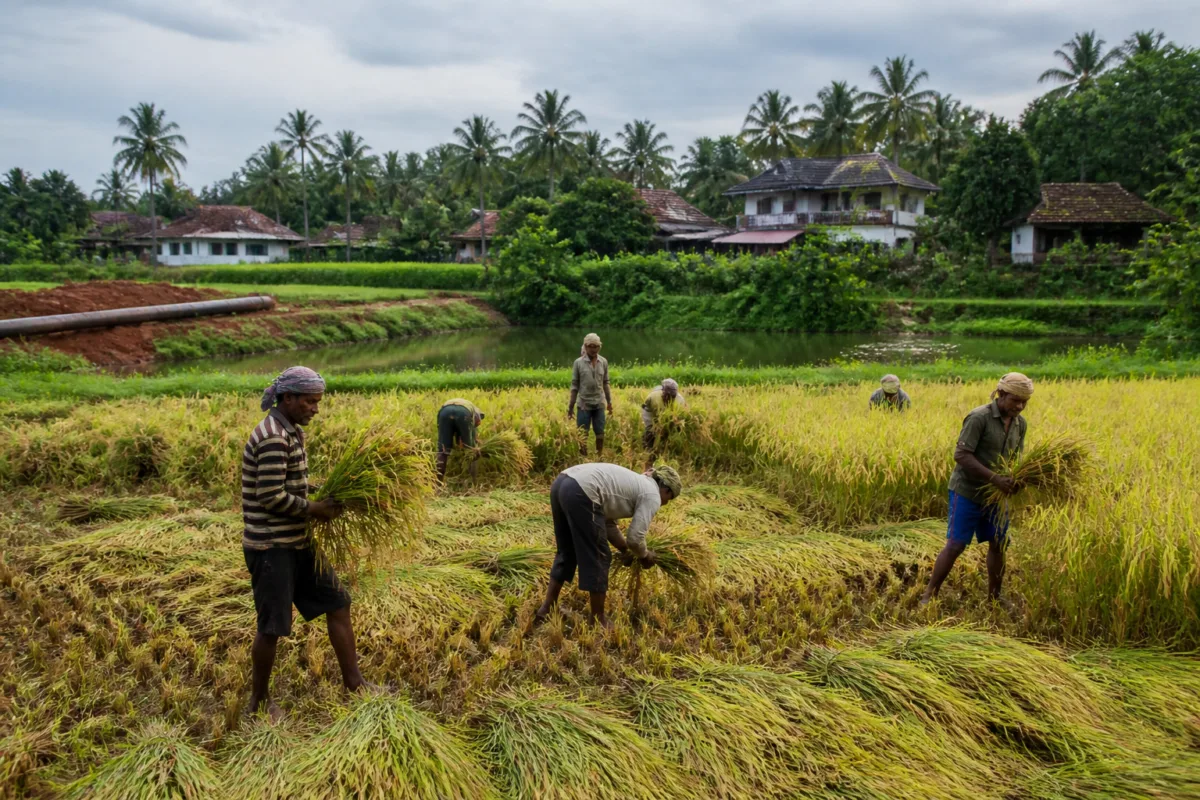
Assolna farmers in Goa have harvested around five tonnes of paddy from nearly 10 acres despite delayed cultivation, erratic rainfall and concerns over water availability. The harvest has highlighted both the potential of community-led farmland restoration and the risks posed by disrupted traditional drainage channels.
The farmers transplanted the Jaya and Jyoti paddy varieties towards the end of July, later than the usual schedule. According to Biodiversity Management Committee chairperson Frederick Borges, Jaya performed better during the season.
Goa recorded a 32% seasonal rainfall deficit, according to the report. With early monsoon showers insufficient, farmers relied on stored water. Borges said water conserved in another lake was released gradually to maintain supplies to the fields. He added that post-monsoon rainfall in October helped the crop recover and develop.
The larger concern for the farming community is the reported obstruction of a drainage channel at Naya Bandh in Cuncolim. Borges said construction activity and the placement of pipes had affected the natural movement of water towards Assolna, Ambelim and neighbouring villages. Farmers have approached the water resources department seeking intervention to restore the channel and ensure its continued flow.
The issue illustrates how local construction decisions can affect agricultural water systems beyond an individual site. Traditional channels can support cultivation by moving available water across connected fields, particularly when rainfall is irregular. In this case, the farmers’ account links the condition of the channel directly to the viability of cultivation, although the report does not include a response from the department or the parties responsible for the construction and pipe placement.
The harvest is part of a wider effort by the community farming group Assolna Xetkarancho Ekvott to bring abandoned farmland back into use. The group comprises 27 farmers and had begun restoring one lakh square metres of farmland in its first phase, with plans to eventually bring nearly 10 lakh square metres under mechanised cultivation, according to an earlier Times of India report cited in the article.
The outcome in Assolna shows that stored water, favourable late-season rainfall and coordinated cultivation can help farmers manage a difficult season. It also leaves unresolved whether the reported obstruction at Naya Bandh will be removed and how traditional water channels will be protected as construction expands around the connected villages.

